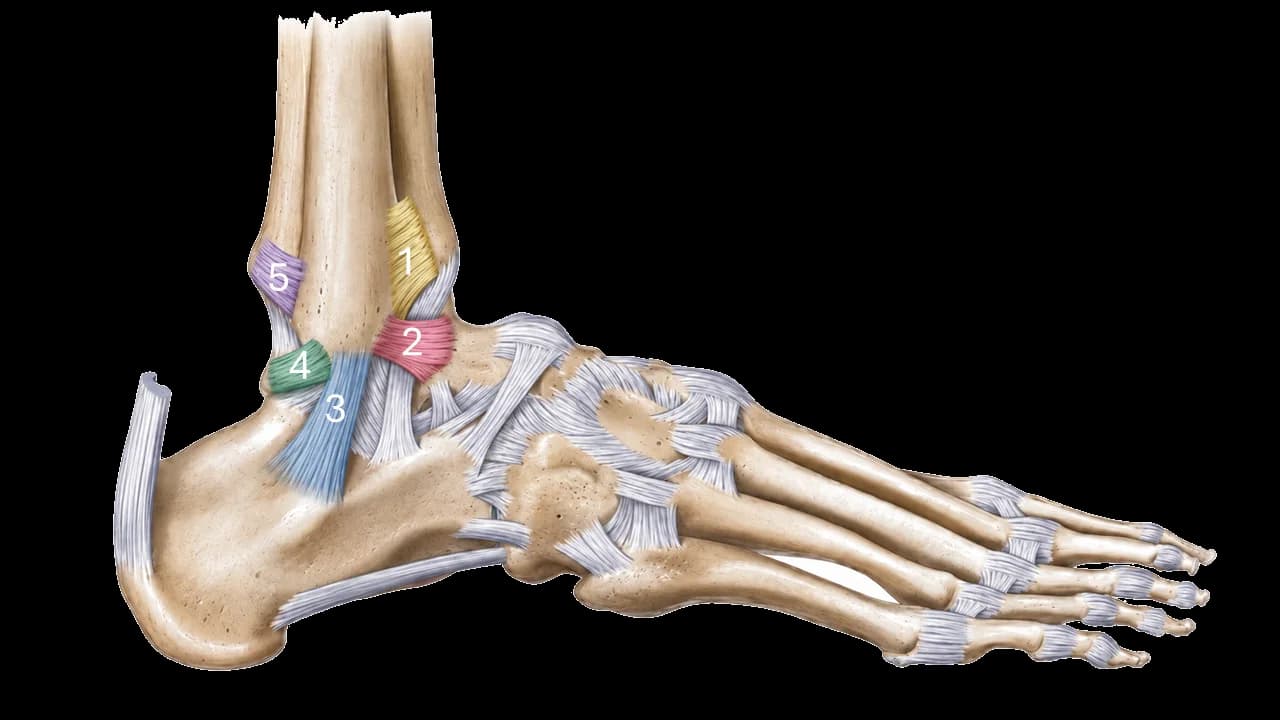
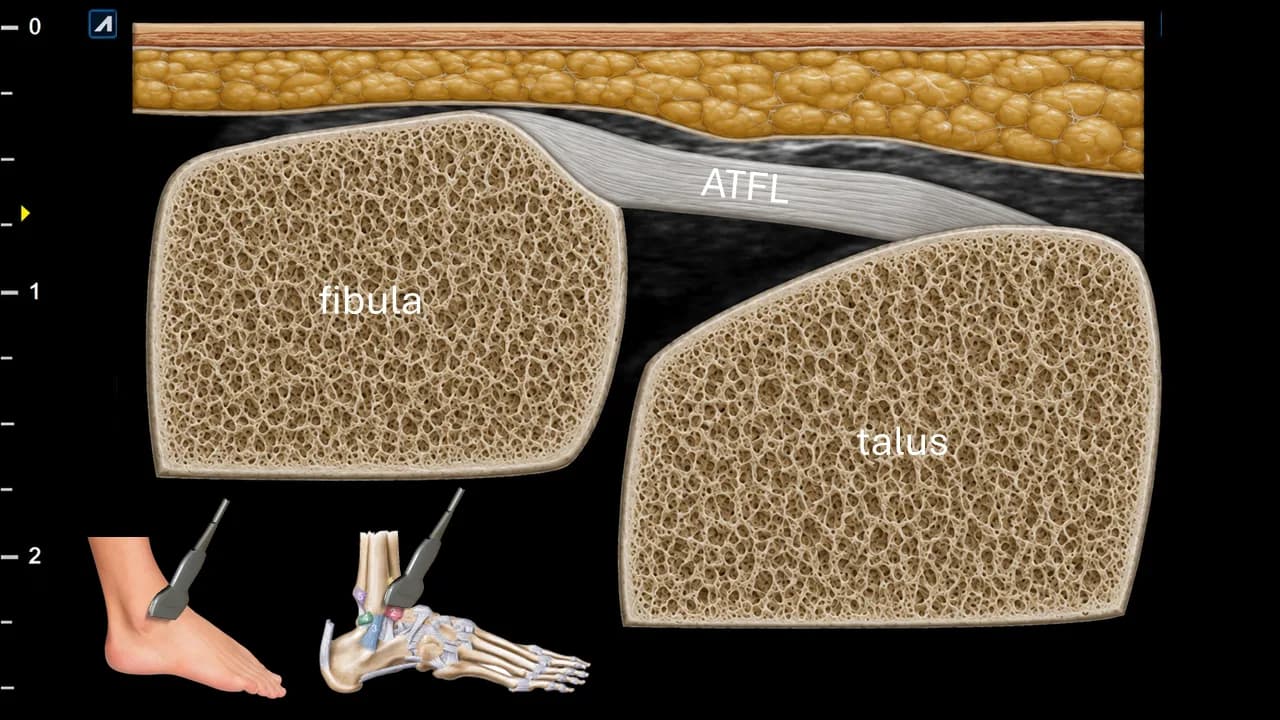
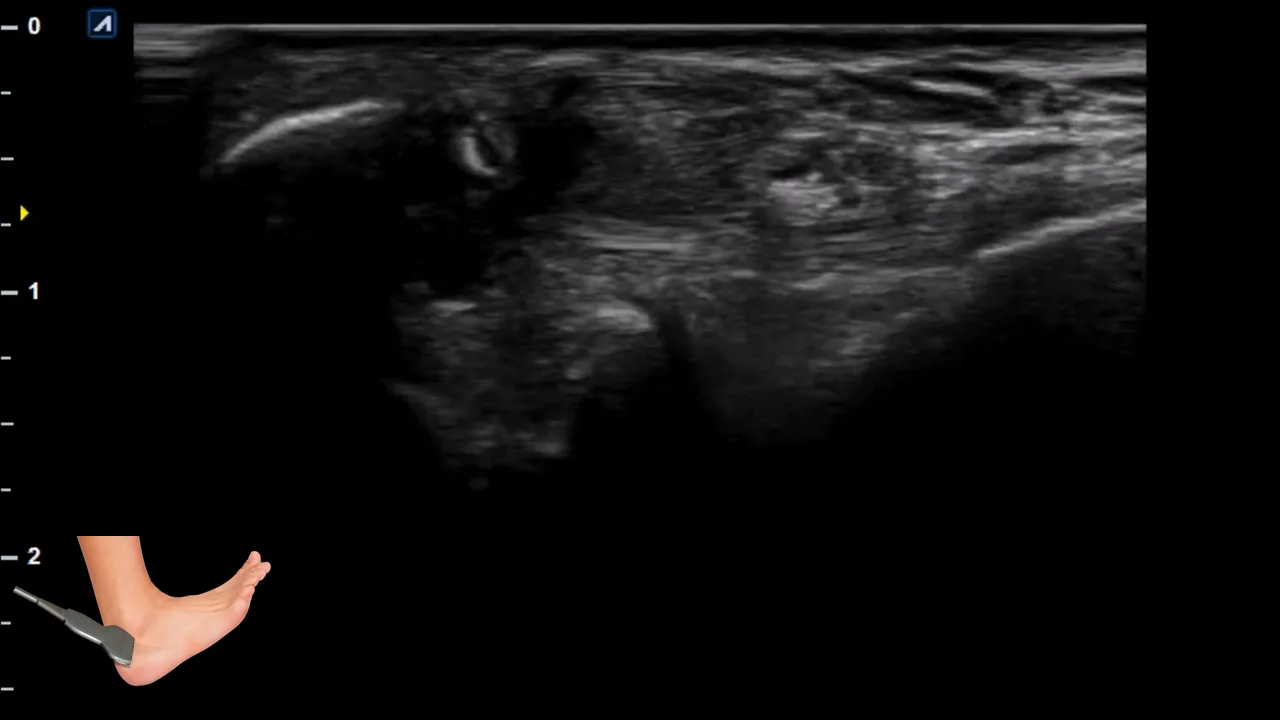
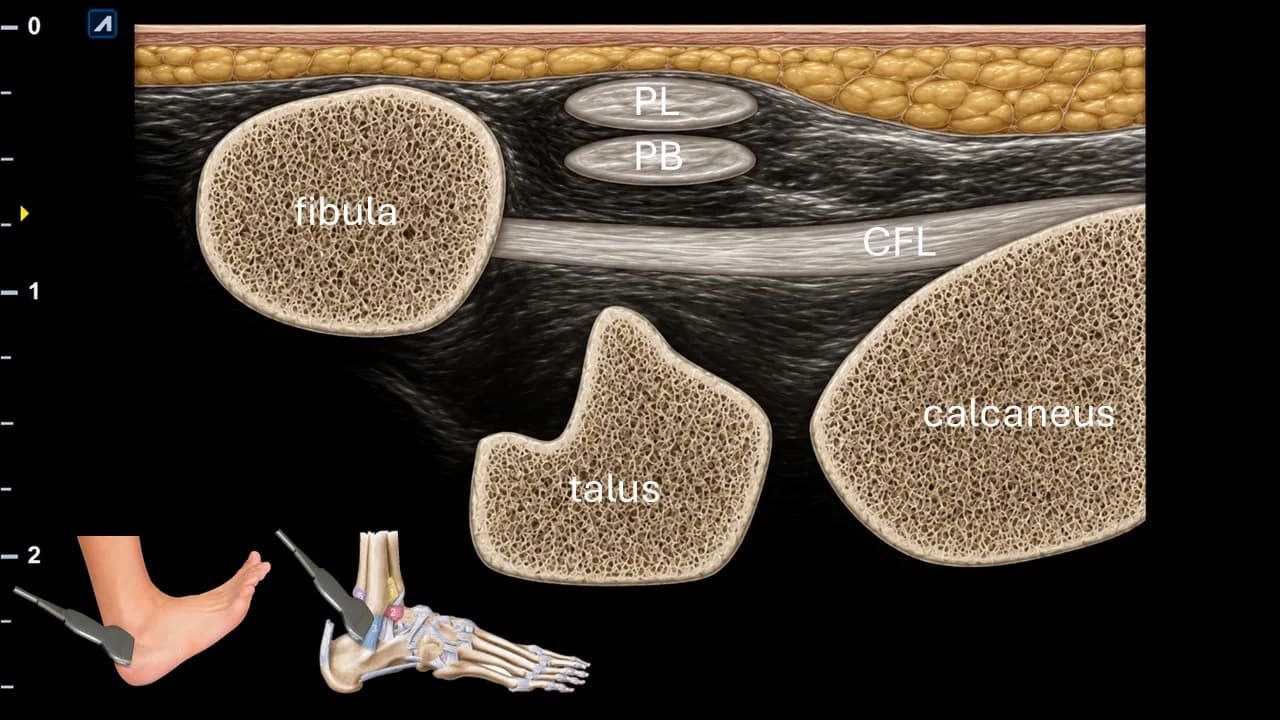
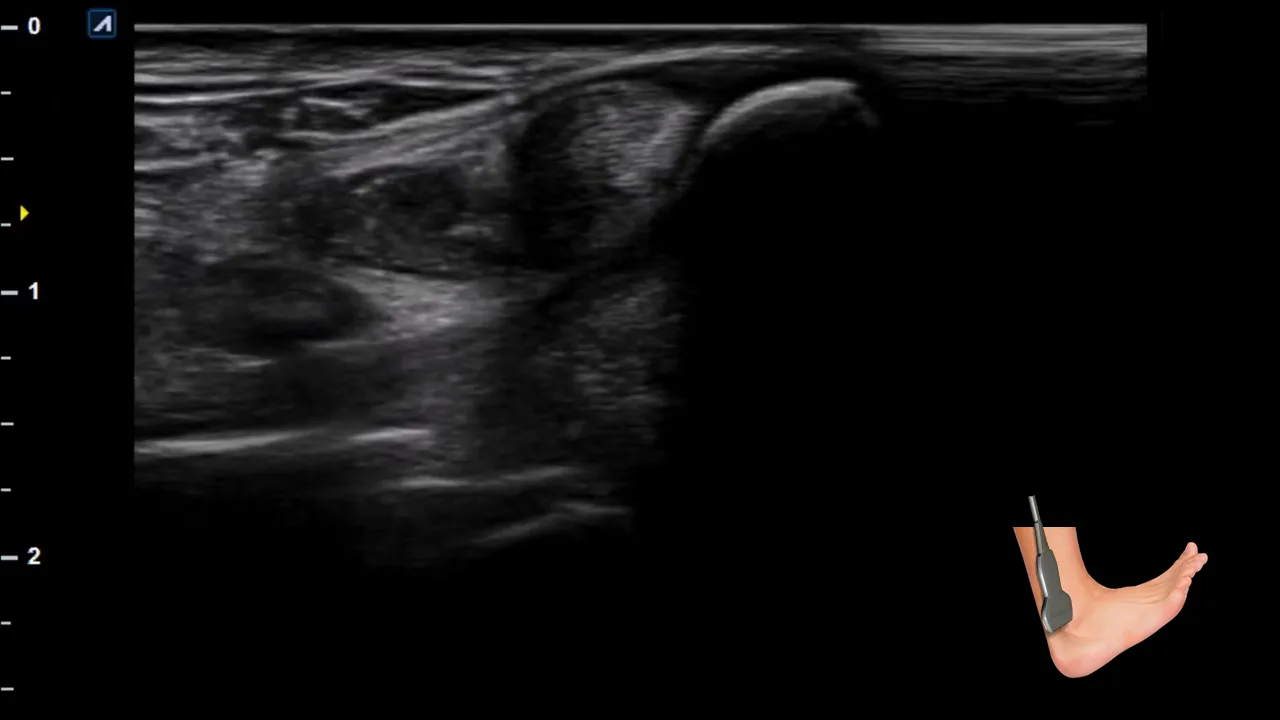
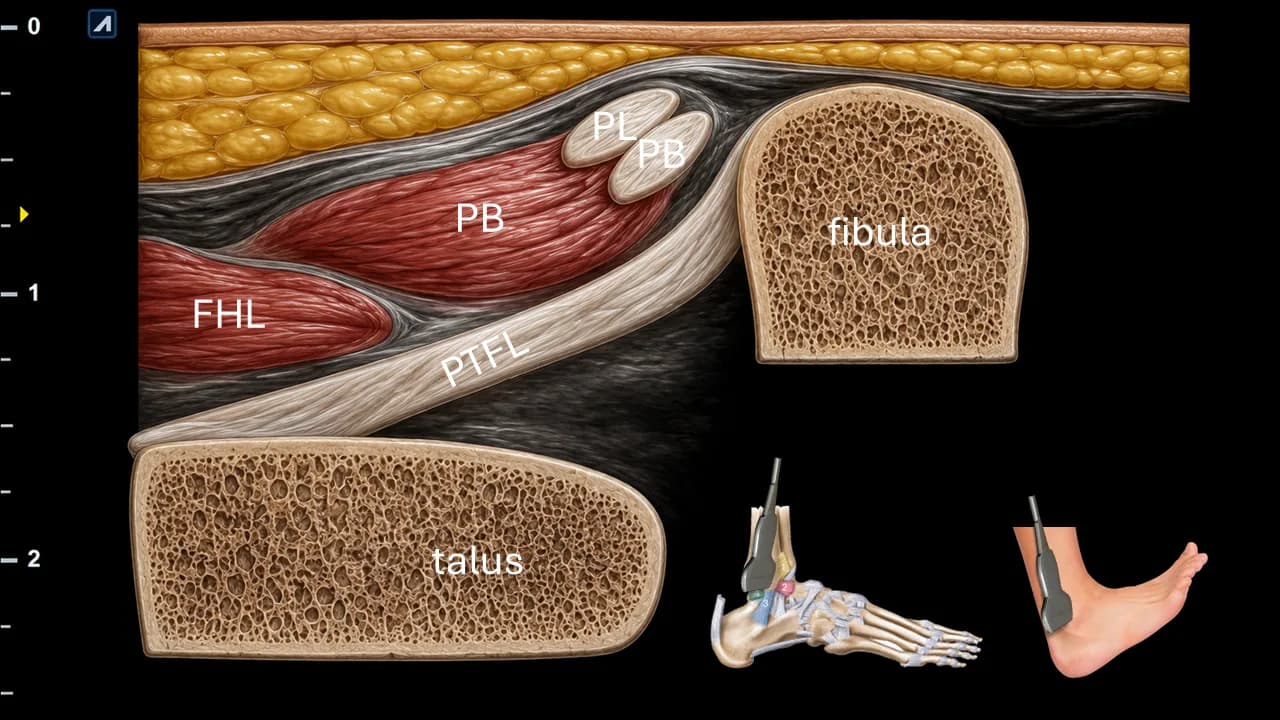
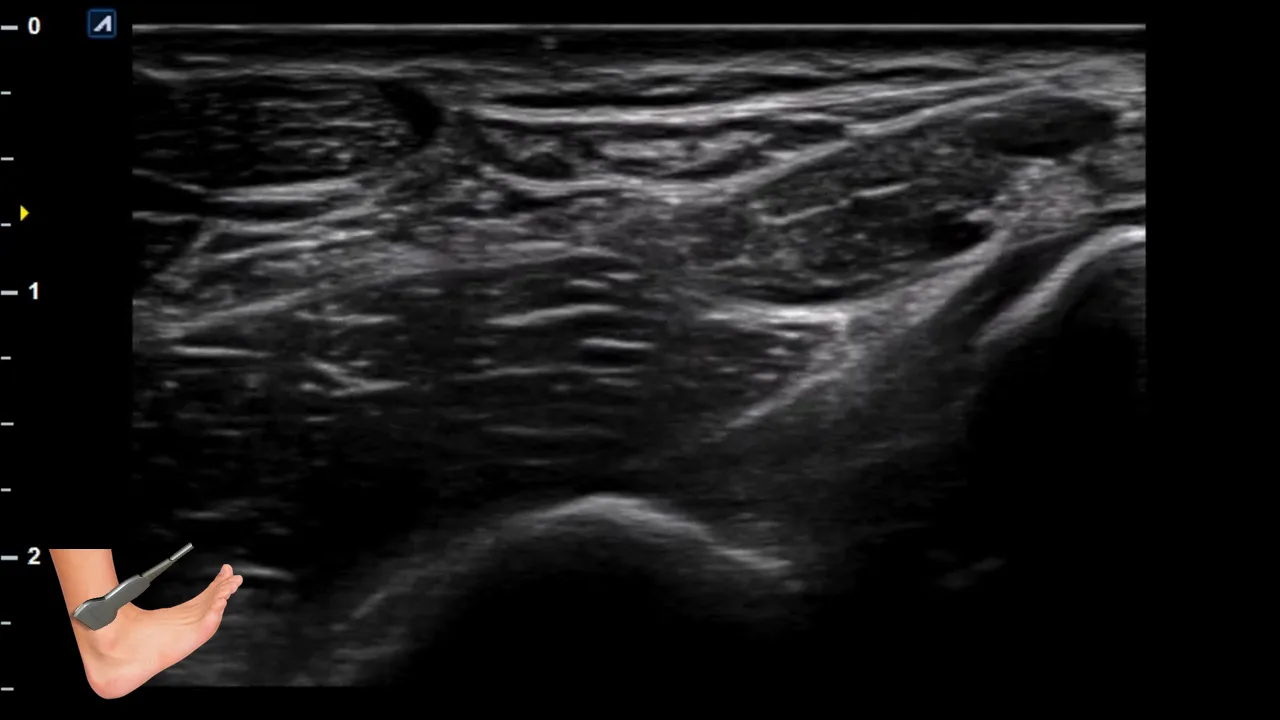
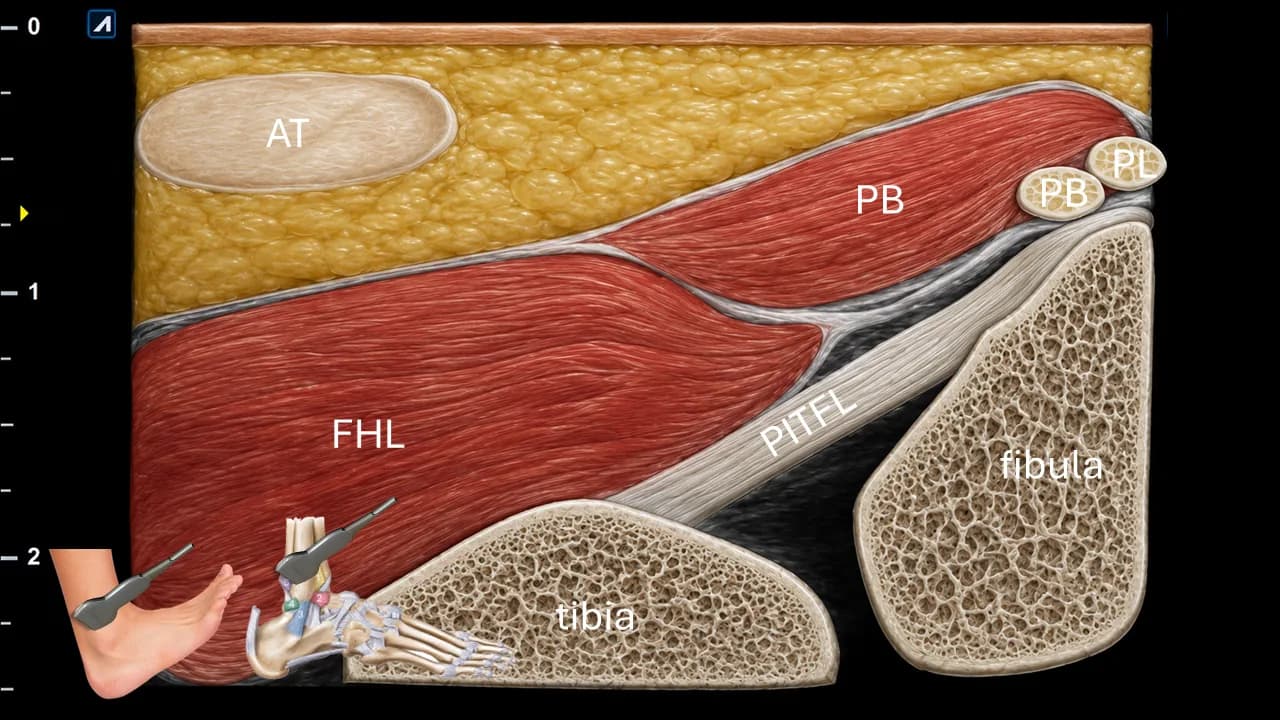
Abbildung 1. Laterale Bänder des Sprunggelenks. 1: anteriores inferiores tibiofibuläres Band, 2: Ligamentum talofibulare anterius, 3: Ligamentum calcaneofibulare, 4: Ligamentum talofibulare posterius, 5: posteriores inferiores tibiofibuläres Band
Die sonografische Untersuchung der lateralen Bänder des Sprunggelenks konzentriert sich auf den lateralen Kollateralbandkomplex und die distale tibiofibulare Syndesmose. Das vordere untere tibiofibulare Band, das vordere talofibulare Band, das kalkaneofibulare Band, das hintere talofibulare Band und das hintere untere tibiofibulare Band sollten systematisch sowohl in der Kurz- als auch in der Längsachse beurteilt werden.
Ein wesentliches Untersuchungsprinzip besteht darin, jedes Band unter angemessener Spannung zu beurteilen. Die korrekte Positionierung des Fußes ist daher entscheidend, da ein entspanntes Band wellig, schlecht abgrenzbar oder fälschlich verdickt erscheinen kann. Je nach untersuchtem Band sollte der Fuß vorsichtig so positioniert werden, dass das Band gespannt wird, wodurch sich seine fibrilläre Struktur, Dicke, Kontinuität und eine mögliche Verletzung besser darstellen lassen.
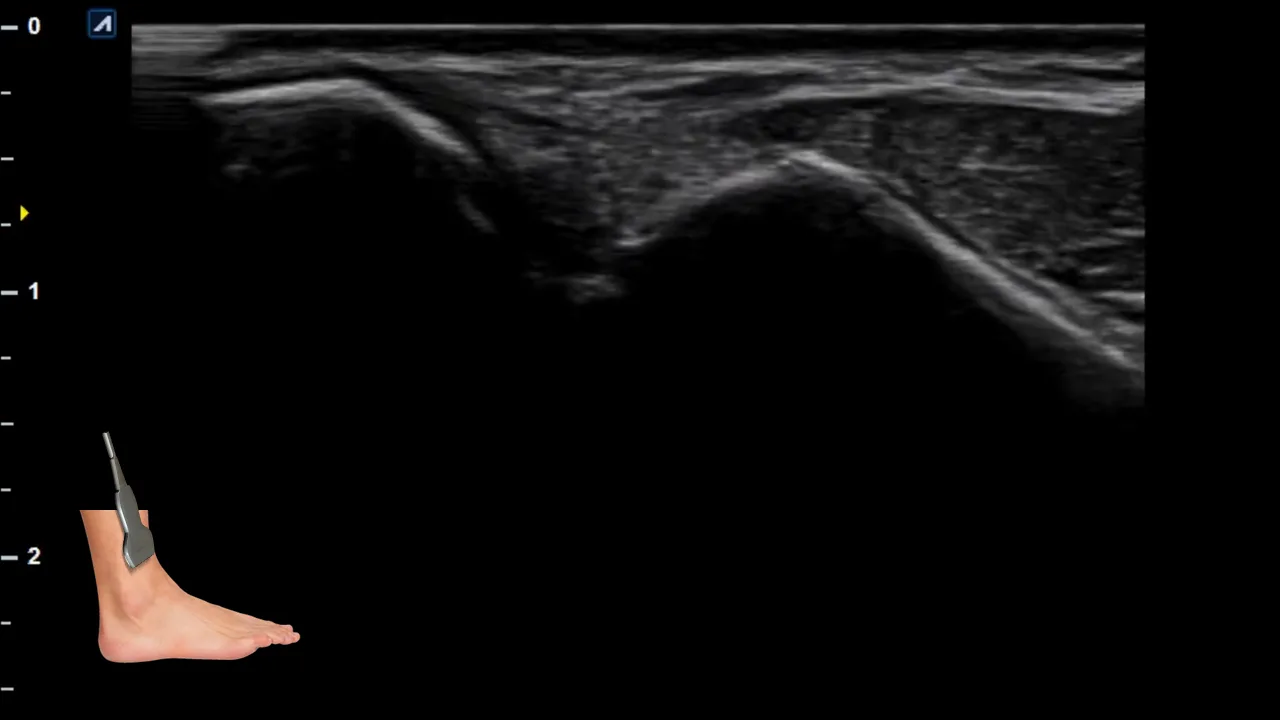
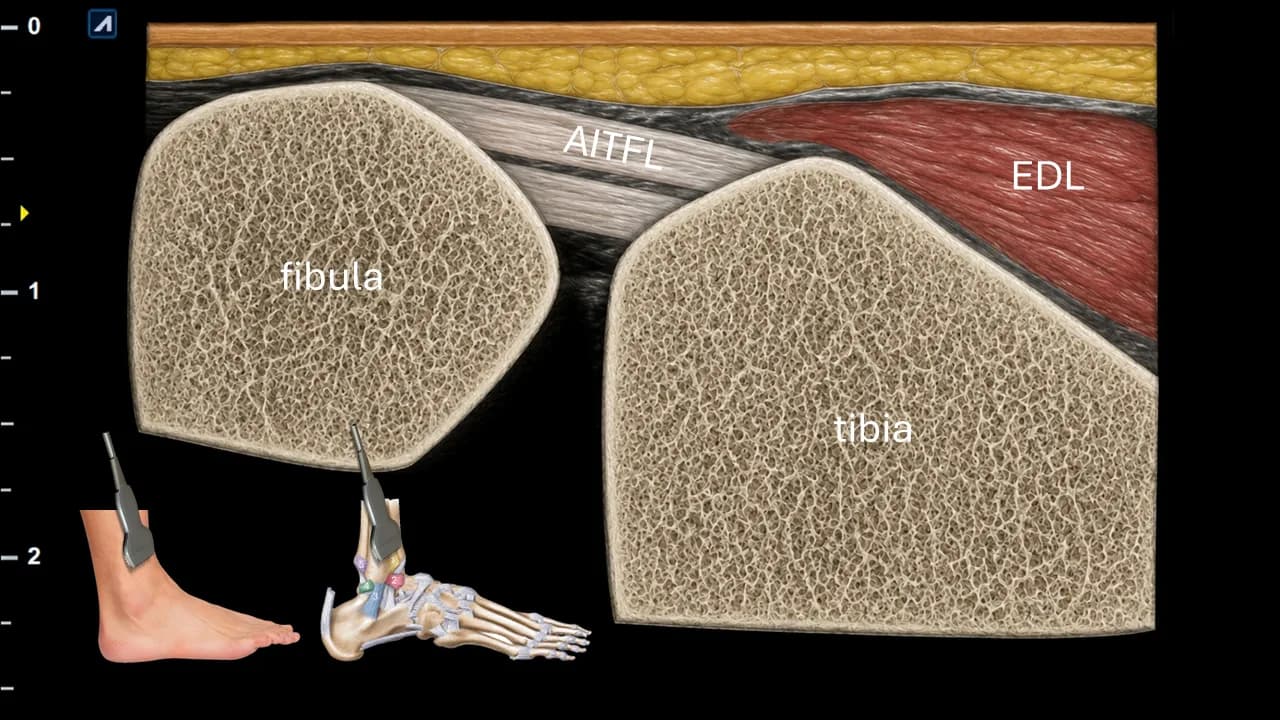
1. Vorderes unteres Tibiofibularband - AITFL: Neutralstellung oder leichte Plantarflexion mit geringer Innenrotation des Fußes; die Syndesmose sollte vorsichtig unter Spannung gebracht werden.
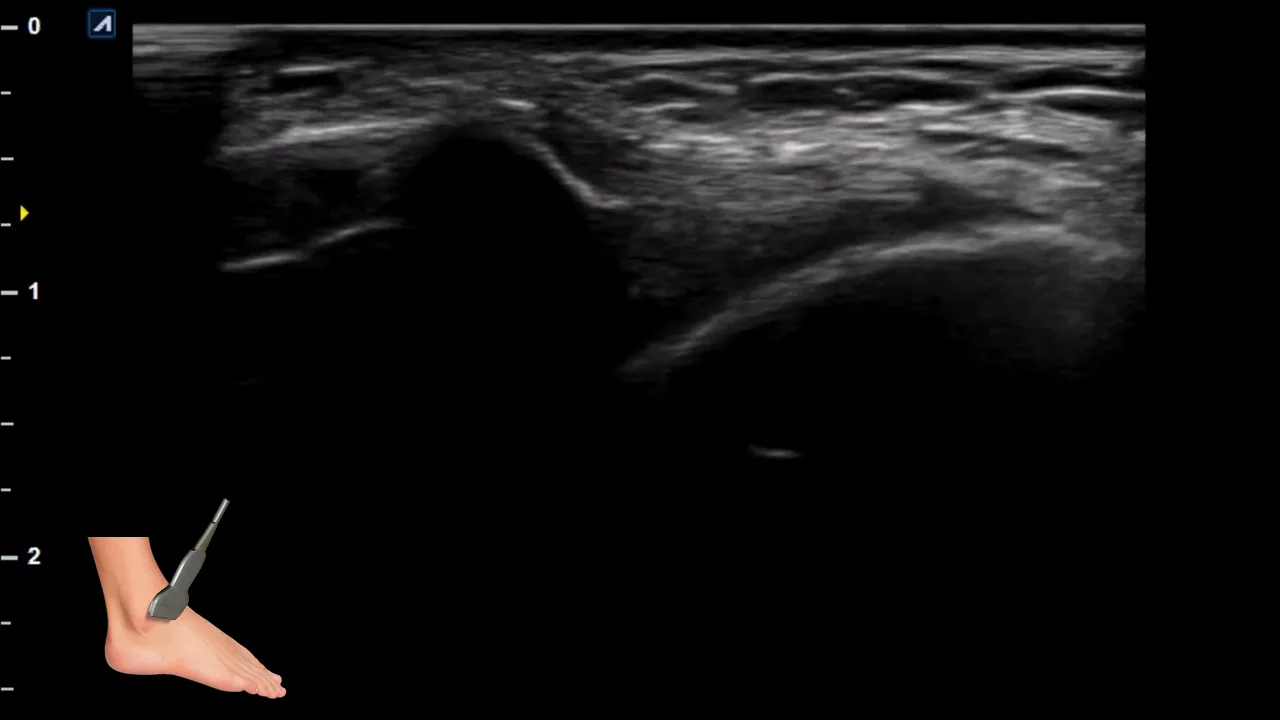
2. Ligamentum talofibulare anterius - ATFL: Plantarflexion mit leichter Inversion des Fußes. Diese Position spannt das ATFL an und verbessert die Darstellung seiner Fasern zwischen dem Malleolus lateralis und dem Talus.
3. Ligamentum calcaneofibulare - CFL: Dorsalflexion mit Inversion des Rückfußes. Diese Position trägt dazu bei, das CFL anzuspannen, das von der Fibula zum Calcaneus unterhalb der Peronealsehnen verläuft.
4. Ligamentum talofibulare posterius - PTFL: Dorsalflexion mit leichter Außenrotation oder Neutralstellung des Fußes. Der posteriore Anteil des lateralen Bandkomplexes sollte bei leicht angespannten posterioren Fasern untersucht werden.
5. Ligamentum tibiofibulare posterius inferius - PITFL: Neutralstellung bis Dorsalflexion, bei Bedarf mit sanftem Außenrotationsstress zur Beurteilung der posterioren Syndesmosenfasern.
 MSK Academy