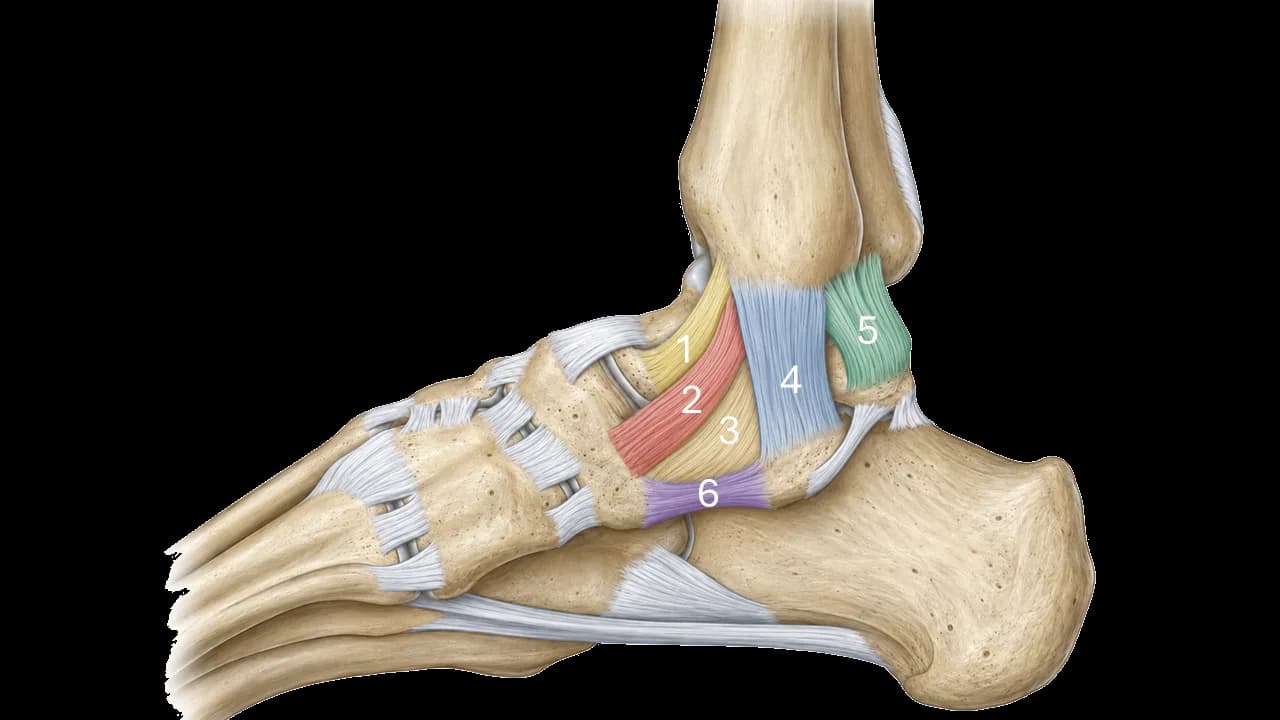
Figure 1. Medial Ankle Ligaments. 1: anterior tibiotalar ligament, 2: tibionavicular ligament, 3: tibiospring ligament, 4: tibiocalcaneal ligament, 5: posterior tibiotalar ligament, 6: spring ligament
Die sonografische Untersuchung der medialen Sprunggelenkbänder konzentriert sich auf die Komponenten des Deltabandkomplexes und das Spring-Ligament. Das anteriore tibiotalare Band, das tibionavikulare Band, das Tibiospring-Band, das tibiocalcaneare Band, das posteriore tibiotalare Band und der superomediale Anteil des Spring-Ligaments sollten systematisch sowohl in Kurz- als auch in Längsachsendarstellung beurteilt werden.
Ein wesentliches Untersuchungsprinzip besteht darin, jedes Band unter angemessener Spannung zu beurteilen. Daher ist die korrekte Positionierung des Fußes entscheidend. Je nach untersuchtem Band sollte der Fuß vorsichtig so positioniert werden, dass das Band gespannt wird, wodurch sich seine fibrilläre Struktur, Dicke, Kontinuität und eine mögliche Verletzung besser darstellen lassen.
1. Ligamentum tibiotalare anterius: leichte Plantarflexion mit geringgradiger Eversion/Außenrotation des Fußes.
2. Ligamentum tibionaviculare: Neutralstellung oder leichte Plantarflexion; das mediale Fußgewölbe sollte vorsichtig geöffnet und das Band unter leichter Spannung gehalten werden.
3. Ligamentum tibiospring: Neutralstellung bis leichte Dorsalextension mit leichter Eversion des Fußes.
4. Ligamentum tibiocalcaneale: Dorsalflexion mit leichter Eversion des Rückfußes.
5. Ligamentum tibiotalare posterius: Dorsalextension des Sprunggelenks; diese Position setzt den posterioren Anteil des Ligamentum deltoideum unter Spannung.
6. Spring-Ligament: leichte Dorsalflexion mit leichter Eversion/Pronation des Fußes, sodass das mediale Längsgewölbe und der kalkaneonavikuläre Komplex unter Spannung gebracht werden.
 MSK Academy