Anatomy
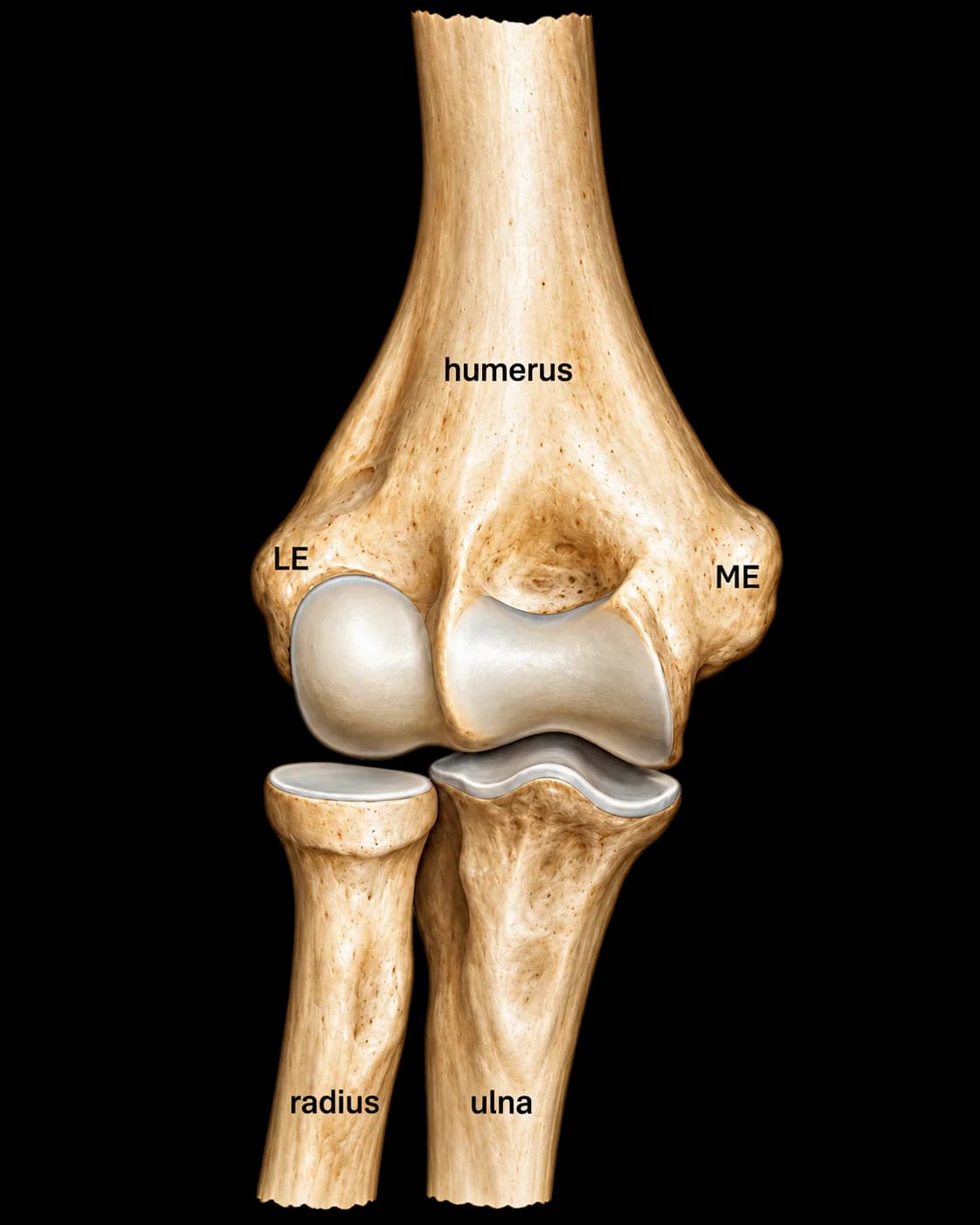
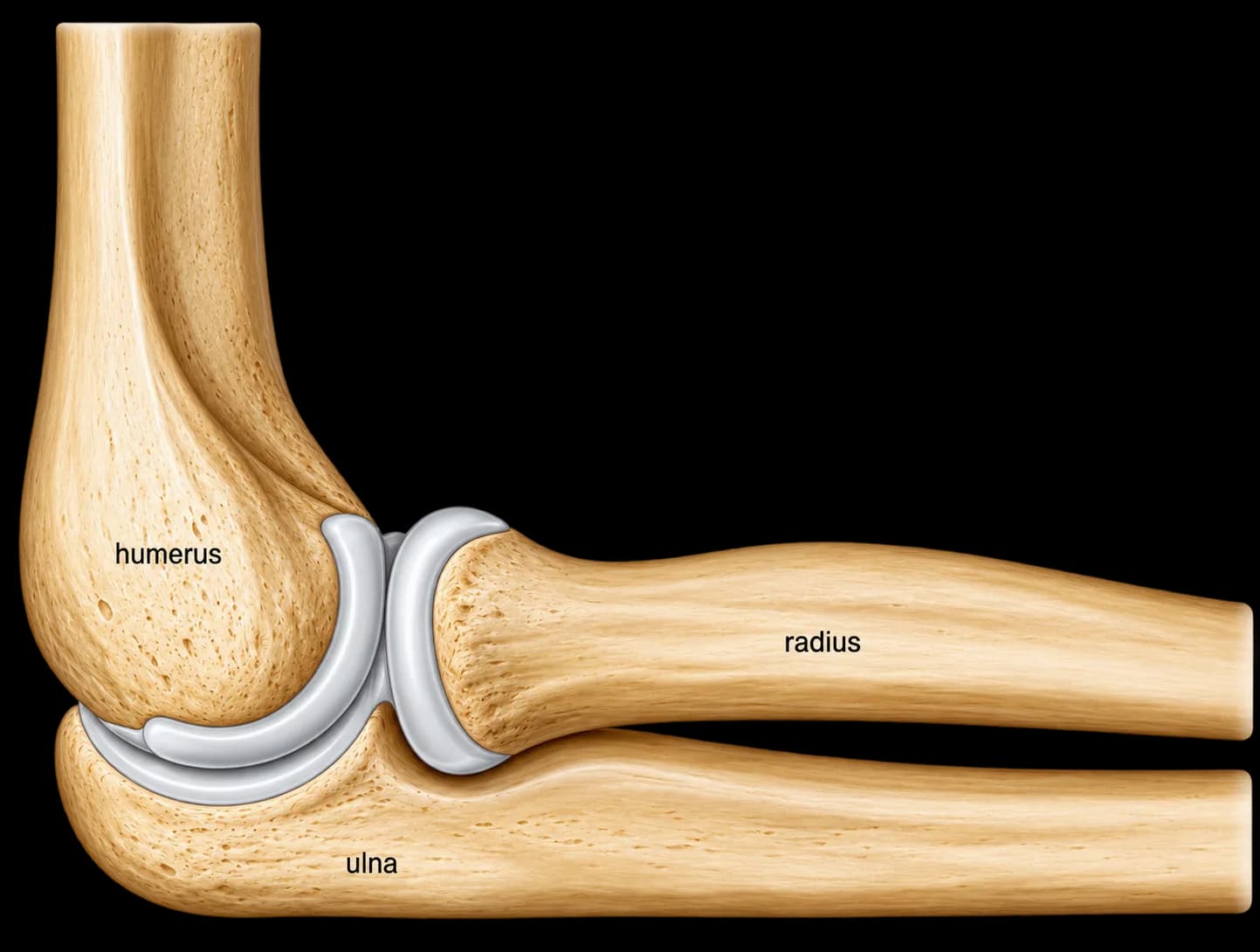
The elbow is a stable joint complex with a smaller but highly functional range of motion. For ultrasound, orientation between the humerus, radius and ulna and knowledge of the relationship of joint recesses, tendons, ligaments and nerves is essential. Precise anatomical orientation enhances both examination quality and clinical interpretation of findings.
Bone Landmarks
Bone landmarks are fundamental reference points during scanning. They help guide the probe correctly and quickly distinguish normal anatomy from pathology.
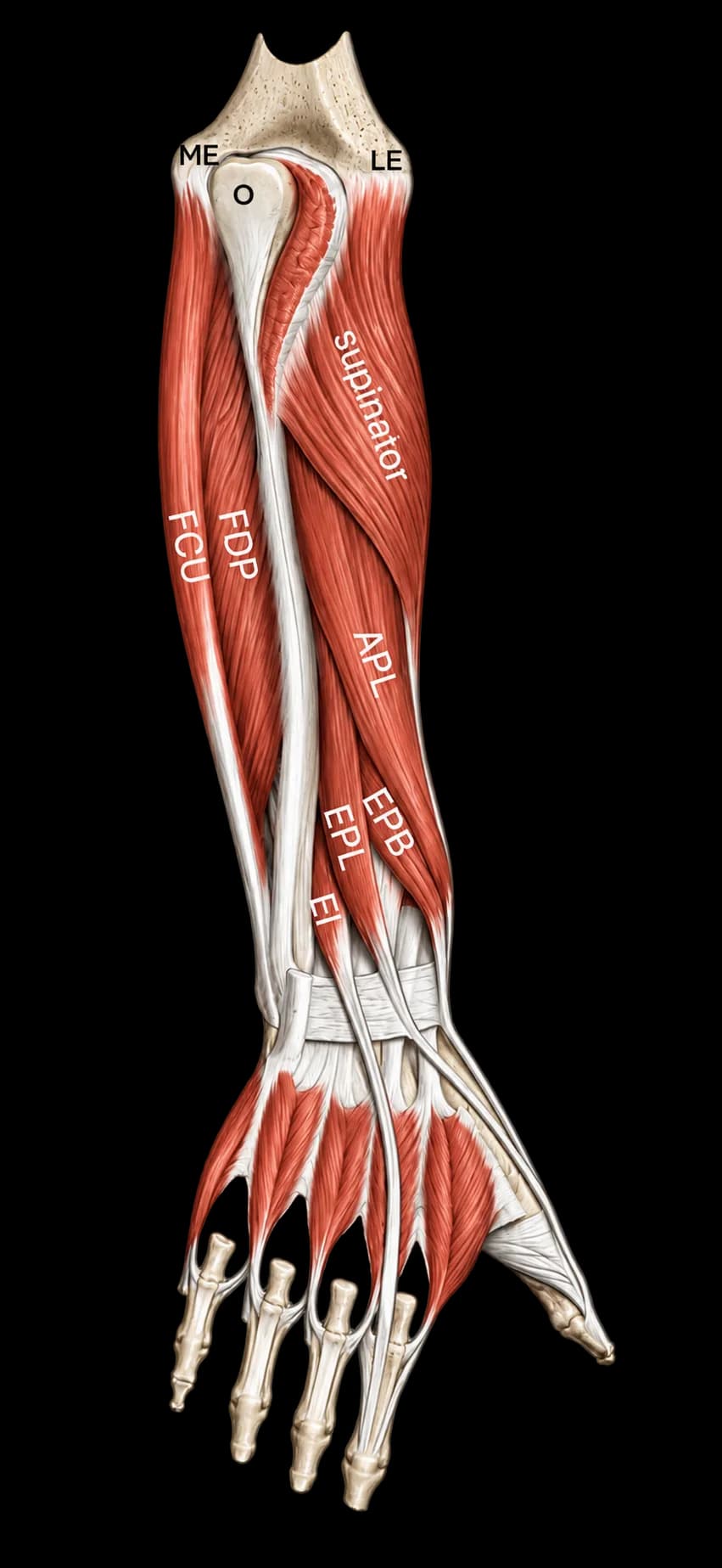
- Medial epicondyle - orientation for the common flexor attachment and n. ulnaris.
- Lateral epicondyle - landmark for common extensor origin.
- Olecranon - key posterior landmark for triceps tendon and olecranon bursa.
- Radial head - orientation for humeroradial and proximal radioulnar articulation.


Muscles
Key muscle groups
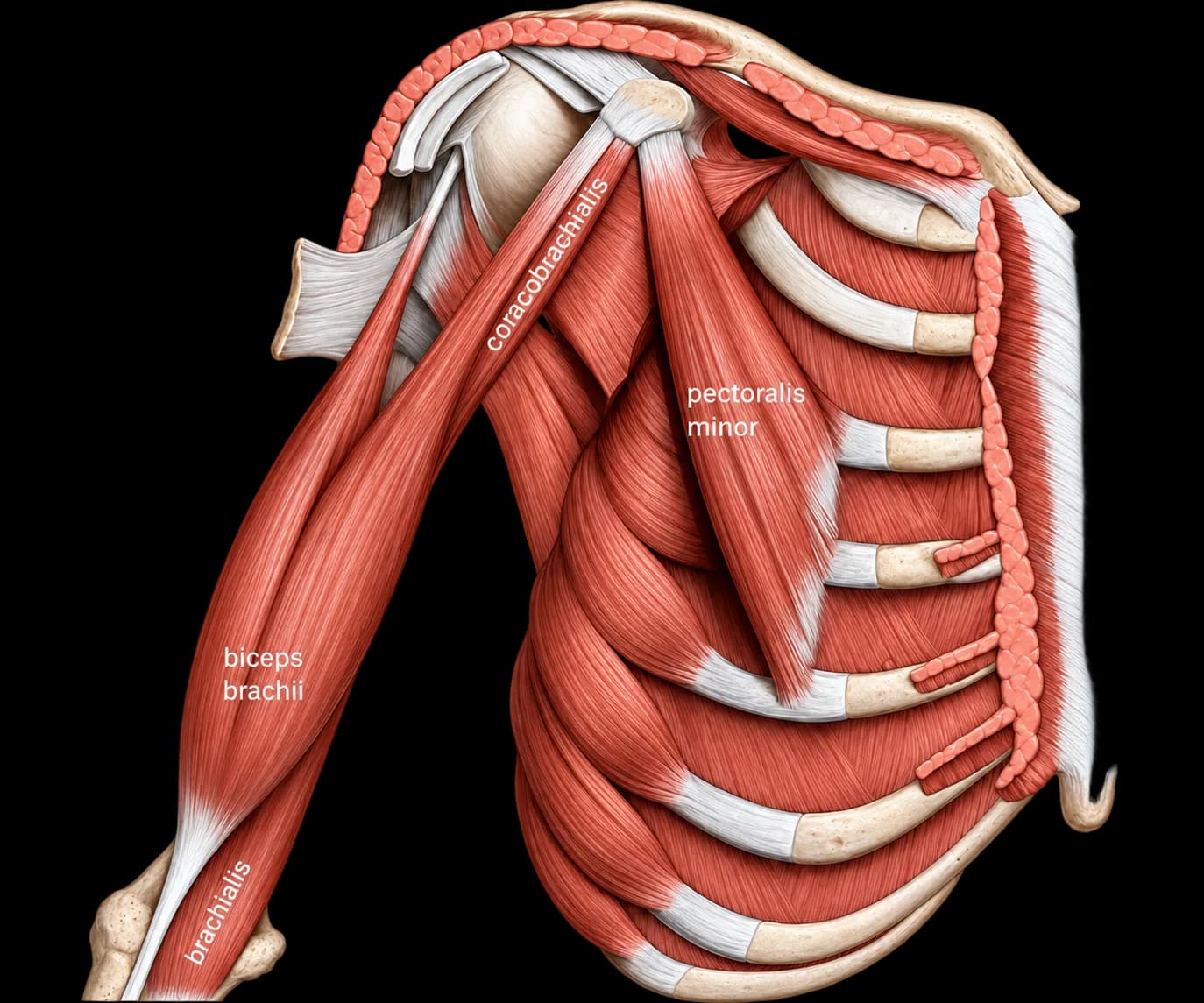
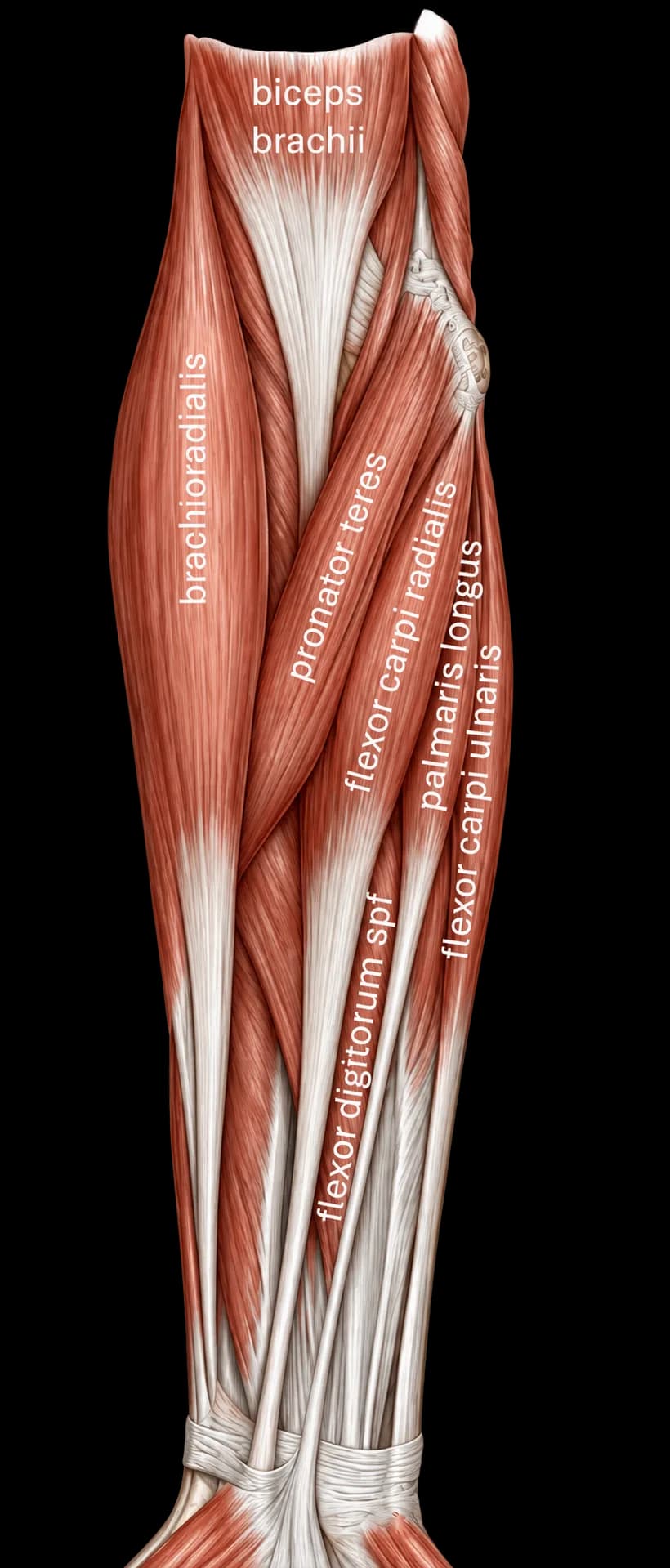
- Biceps brachii - elbow flexion and supination; distal tendon is a key ultrasound target.
- Brachialis - primary elbow flexor; relevant in anterior elbow pain.
- Triceps brachii - elbow extension; assessment of distal tendon and olecranon bursa.
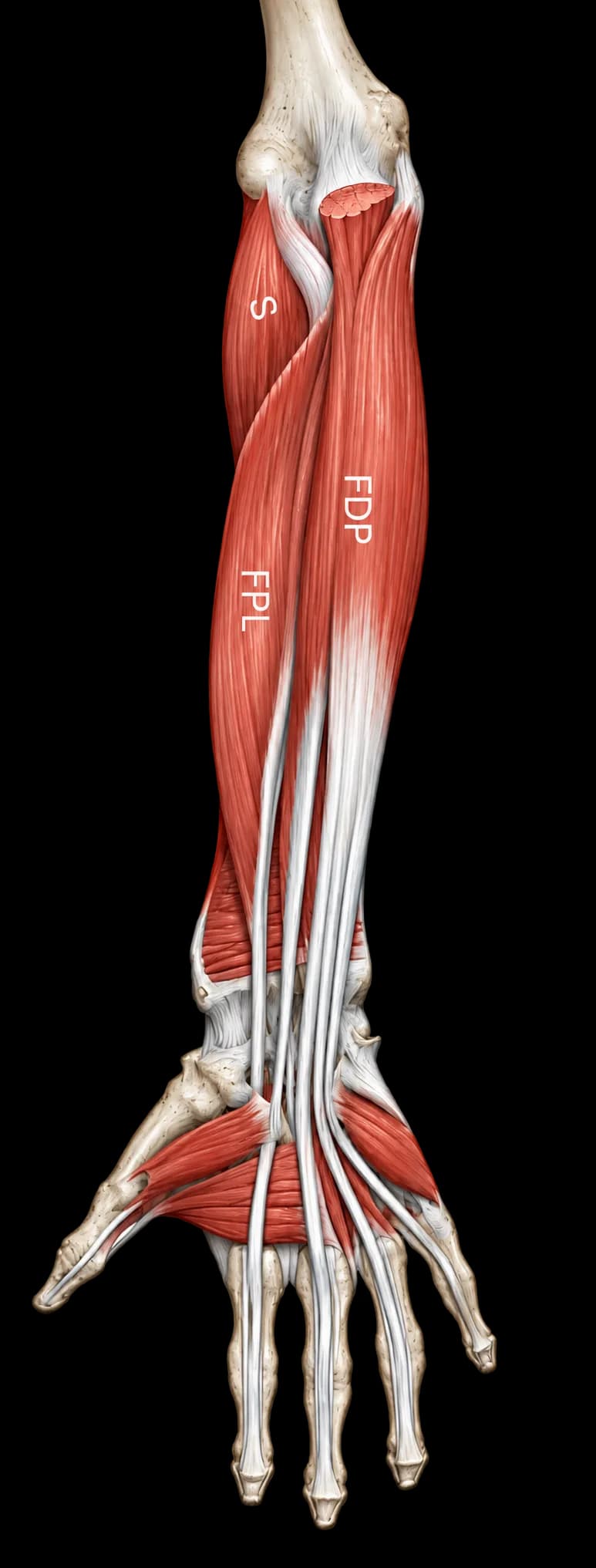
- Common flexor-pronator group - medial elbow, key in medial epicondylitis.
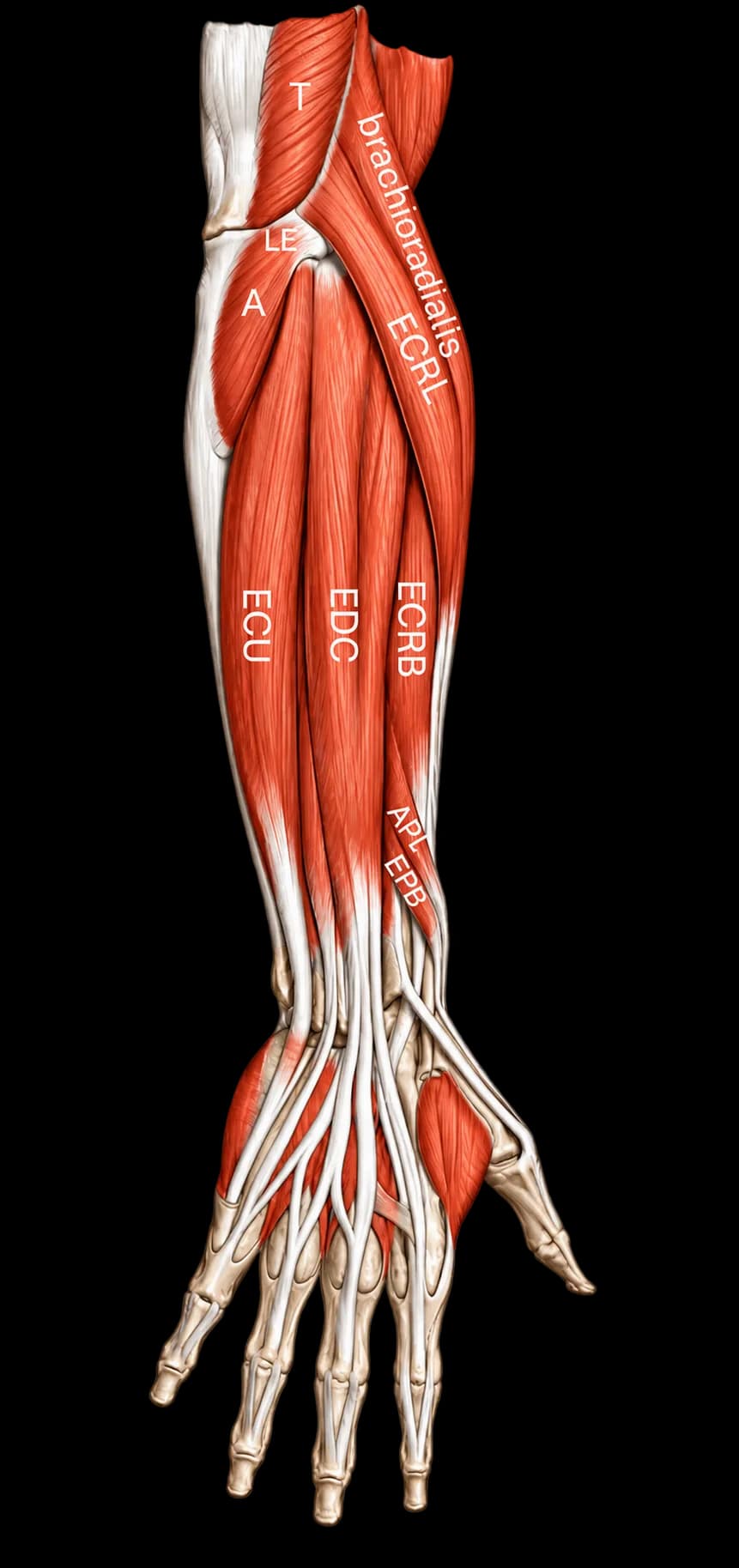
- Common extensor-supinator group - lateral elbow, key in lateral epicondylitis.
Other important muscles
- Anconeus - assists elbow extension and contributes to stability.
- Supinator - forearm supination; important when radial nerve compression is suspected.