 MSK Academy
Anatomie
Der N. medianus entsteht aus der Vereinigung von Fasern aus dem lateralen und medialen Faszikel des Plexus brachialis, am häufigsten aus den Nervenwurzeln C6–T1. Er ist der Hauptnerv der anterioren Muskelgruppe des Unterarms und ein bedeutender Nerv der Hand. Die Querschnittsanatomie ist entscheidend für das Verständnis des sonografischen Erscheinungsbildes, da die Sonografie Strukturen in einzelnen Schnitten darstellt. Im Folgenden betrachten wir fünf Schlüsselebenen der Querschnittsbildgebung, denen wir entlang des Nervs folgen werden.
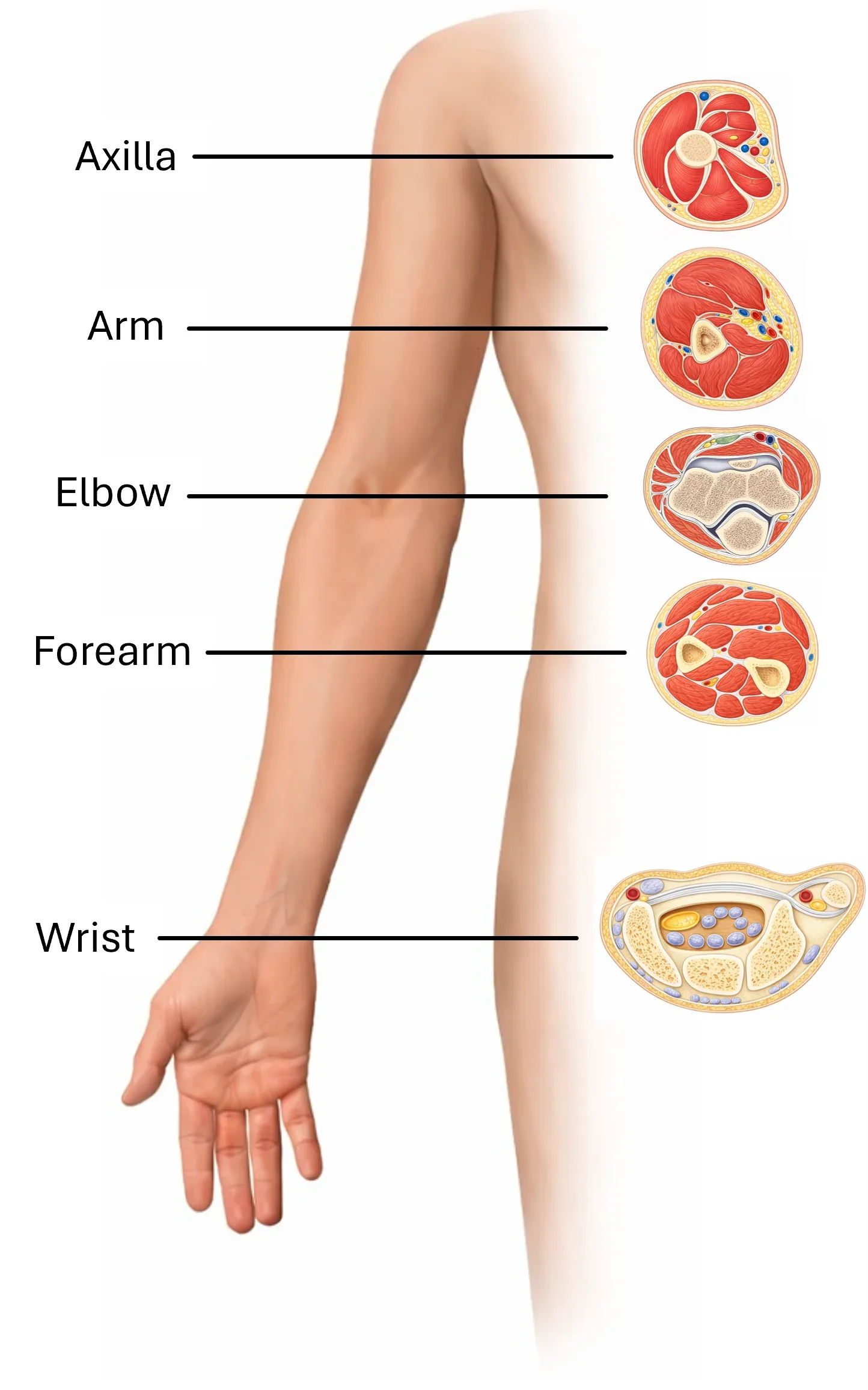
Axilla
In der Axilla wird der n. medianus durch die Vereinigung der radix lateralis aus dem fasciculus lateralis und der radix medialis aus dem fasciculus medialis des plexus brachialis gebildet. Bei der Ultraschalluntersuchung ist er in der Regel gut als der in Relation zur A. axillaris am weitesten anterior gelegene Nerv zu erkennen.
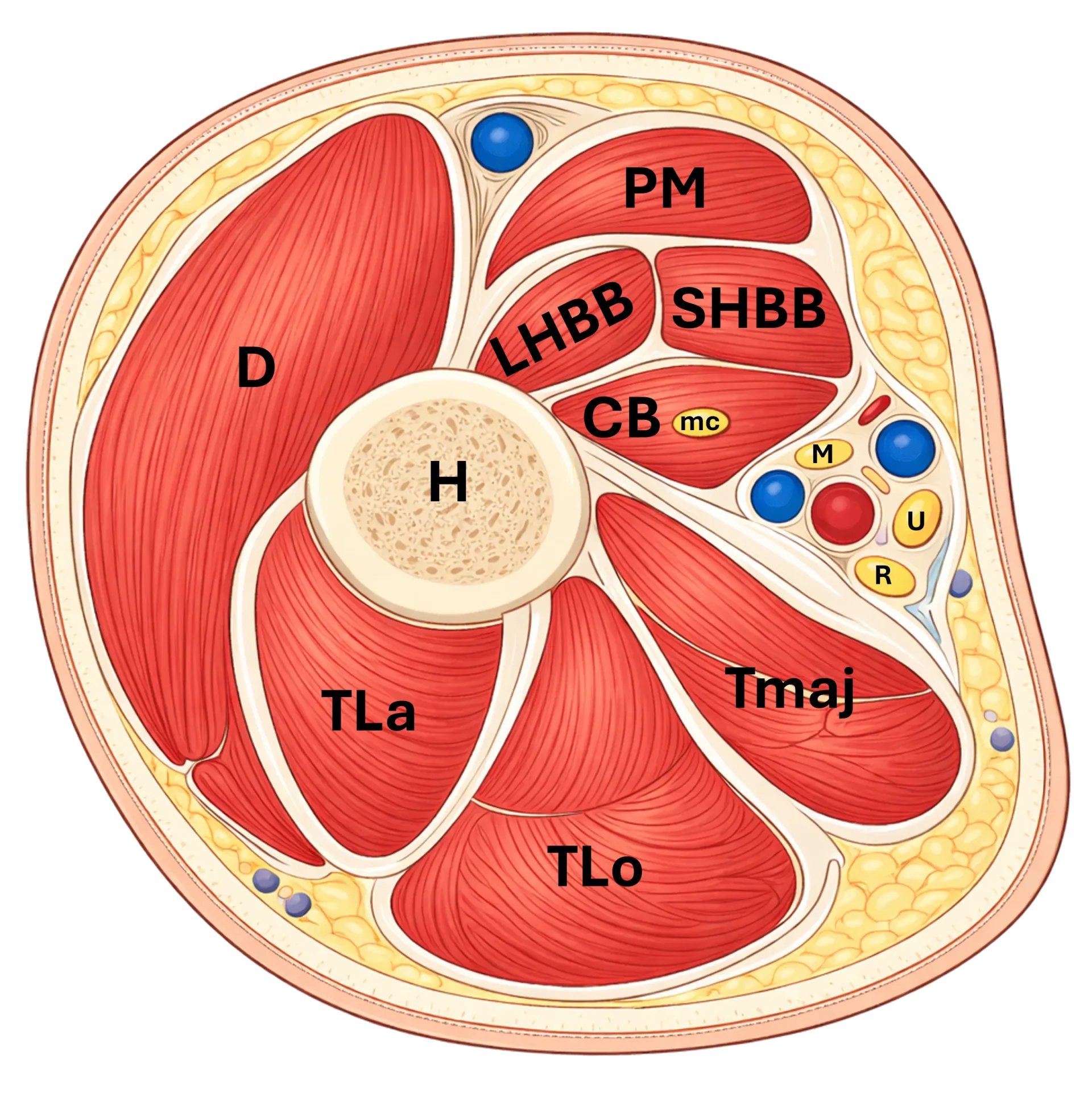
Abbildung 1: Querschnitt durch die Axilla. D - m. deltoideus, PM - m. pectoralis major, LHBB - caput longum m. biceps brachii, SHBB - caput breve m. biceps brachii, CB - m. coracobrachialis, mc - n. musculocutaneus, M - n. medianus, U - n. ulnaris, R - n. radialis, Tmaj - m. teres major, TLa - caput laterale m. triceps brachii, TLo - caput longum m. triceps brachii, H - humerus
Oberarm
Am Oberarm verläuft er gemeinsam mit der a. brachialis im neurovaskulären Bündel. Proximal liegt er häufiger lateral der Arterie, distal kreuzt er auf deren mediale Seite. Er liegt zwischen dem m. biceps brachii und dem m. triceps brachii. Für die Sonografie ist entscheidend: Der n. medianus ist im Brachium ein typischer Begleiter der a. brachialis.
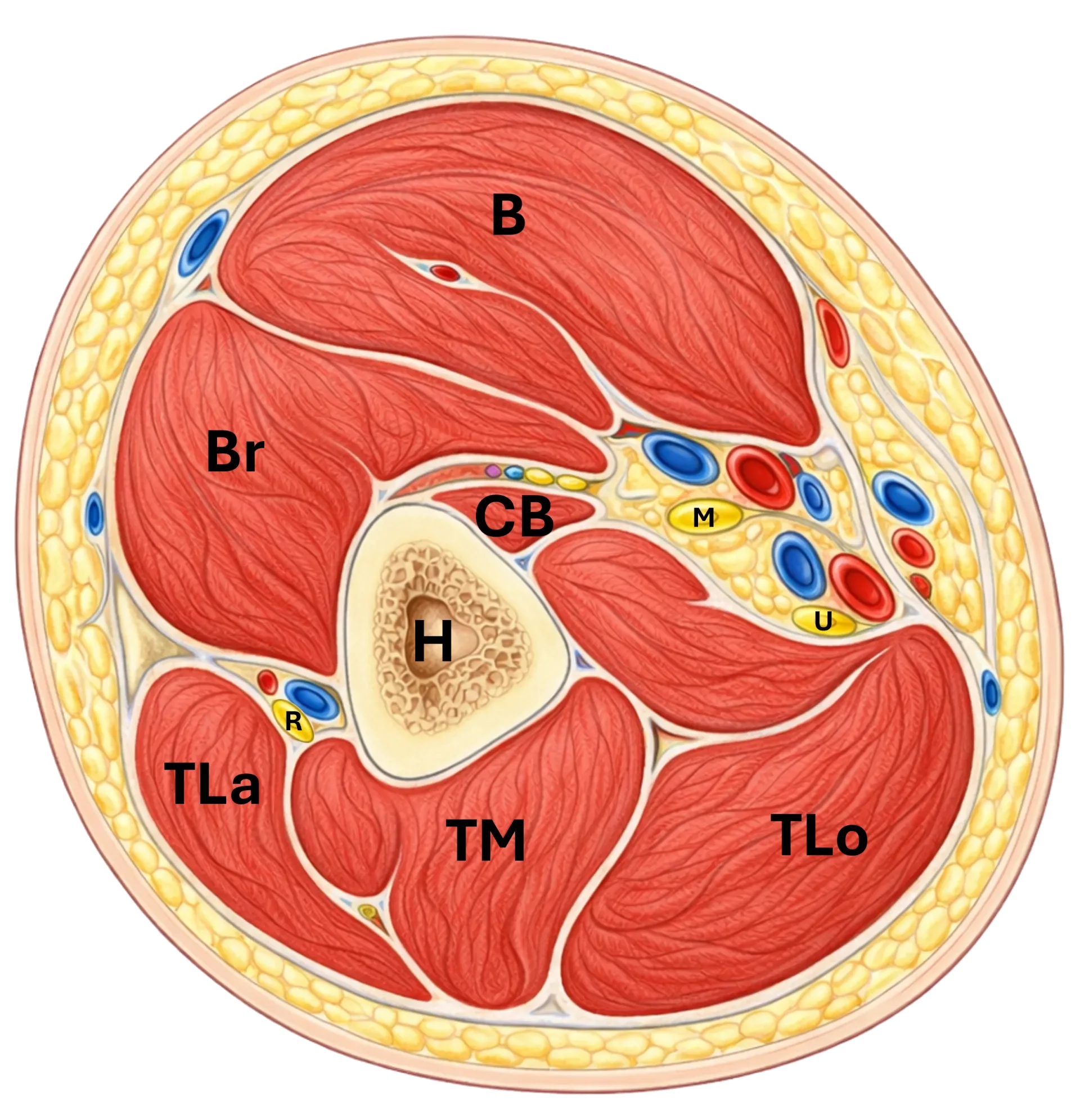
Abbildung 2: Querschnitt des Oberarms. B – m. biceps brachii, Br – m. brachialis, CB – m. coracobrachialis, H – humerus, TLa – caput laterale m. triceps brachii, TM – caput mediale m. triceps brachii, TLo – caput longum m. triceps brachii, R – n. radialis, M – n. medianus, U – n. ulnaris
Ellenbogen
In der Fossa cubitalis liegt der N. medianus medial der A. brachialis und unter dem Lacertus fibrosus. In dieser Region lässt sich das Orientierungsschema BAM gut anwenden: Bizepssehne – A. brachialis – N. medianus. Distal verläuft er weiter zwischen dem humeralen und ulnaren Kopf des M. pronator teres, einer der häufigen möglichen Kompressionsstellen.
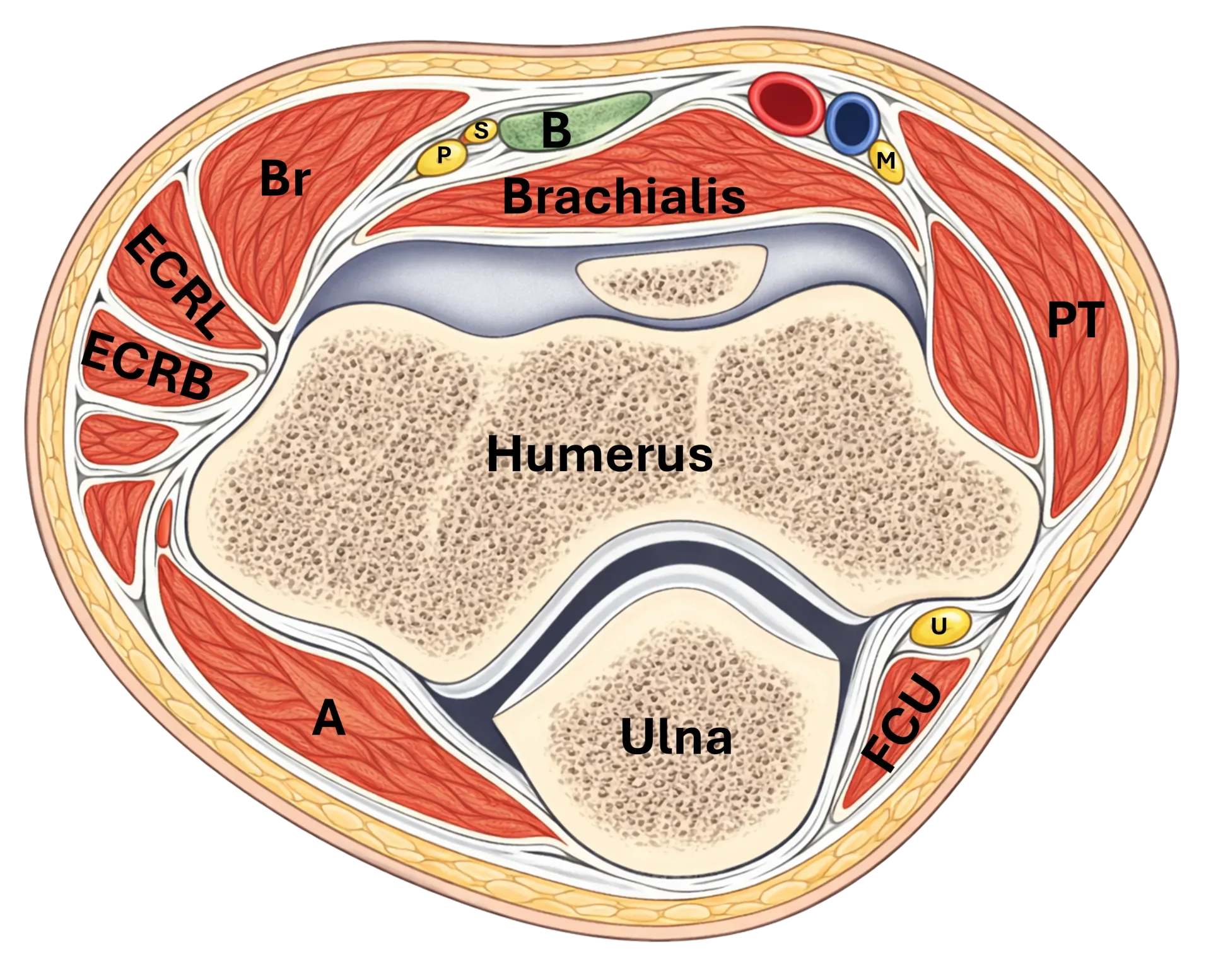
Abbildung 3: Querschnitt durch den Ellenbogen. Br – m. brachioradialis, ECRL – m. extensor carpi radialis longus, ECRB – m. extensor carpi radialis brevis, B – Sehne des m. biceps brachii, S – r. superficialis n. radialis, P – r. profundus n. radialis (n. interosseus posterior), M – n. medianus, PT – m. pronator teres, U – n. ulnaris, FCU – m. flexor carpi ulnaris, A – m. anconeus
Unterarm
Am Unterarm verläuft er zunächst unter dem Bogen des m. flexor digitorum superficialis und anschließend zwischen der oberflächlichen und der tiefen Flexorenschicht. Im mittleren Teil des Unterarms steht er hauptsächlich in Beziehung zu FDS, FDP und FPL. Distal verläuft er oberflächlicher und liegt nahe der Sehne des m. flexor carpi radialis.
Wichtige Äste:
n. interosseus anterior – entspringt am proximalen Unterarm und verläuft tiefer entlang der Membrana interossea
ramus cutaneus palmaris – entspringt proximal des Karpaltunnels und verläuft oberflächlich zur Hohlhand
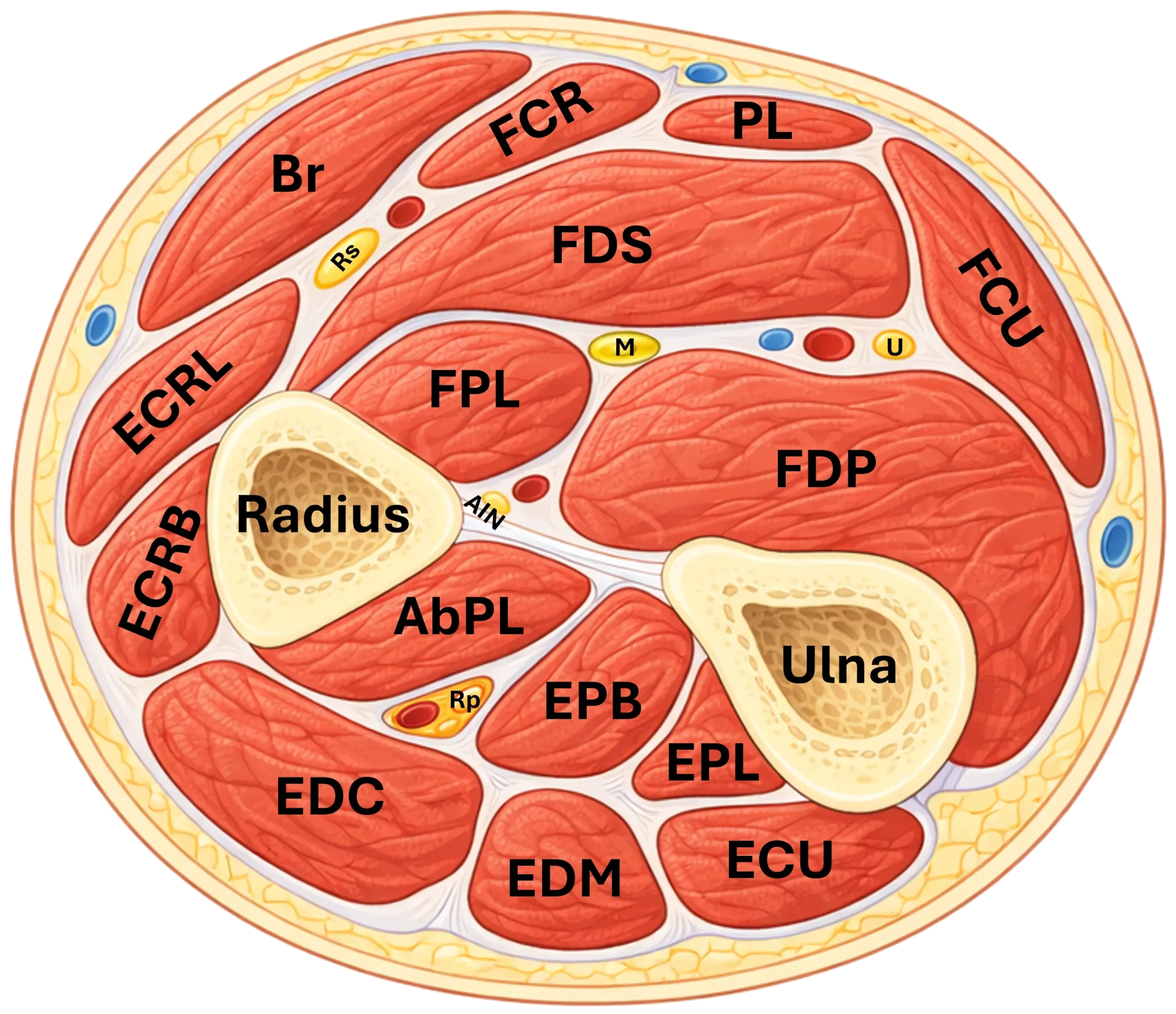
Abbildung 4: Querschnitt durch den Unterarm. Br – m. brachioradialis, ECRL – m. extensor carpi radialis longus, ECRB – m. extensor carpi radialis brevis, EDC – m. extensor digitorum communis, EDM – m. extensor digiti minimi, ECU – m. extensor carpi ulnaris, AbPL – m. abductor pollicis longus, EPB – m. extensor pollicis brevis, EPL – m. extensor pollicis longus, FCR – m. flexor carpi radialis, PL – m. palmaris longus, FDS – m. flexor digitorum superficialis, FPL – m. flexor pollicis longus, FDP – m. flexor digitorum profundus, FCU – m. flexor carpi ulnaris, M – n. medianus, U (Nerv) – n. ulnaris, Rs – r. superficialis n. radialis, Rp – r. profundus n. radialis (n. interosseus posterior), AIN – n. interosseus anterior, R – radius, U (Knochen) – ulna
Handgelenk
Im Bereich des Handgelenks tritt der n. medianus unterhalb des Retinaculum flexorum in den Karpaltunnel ein. Dies ist seine wichtigste Kompressionsstelle.
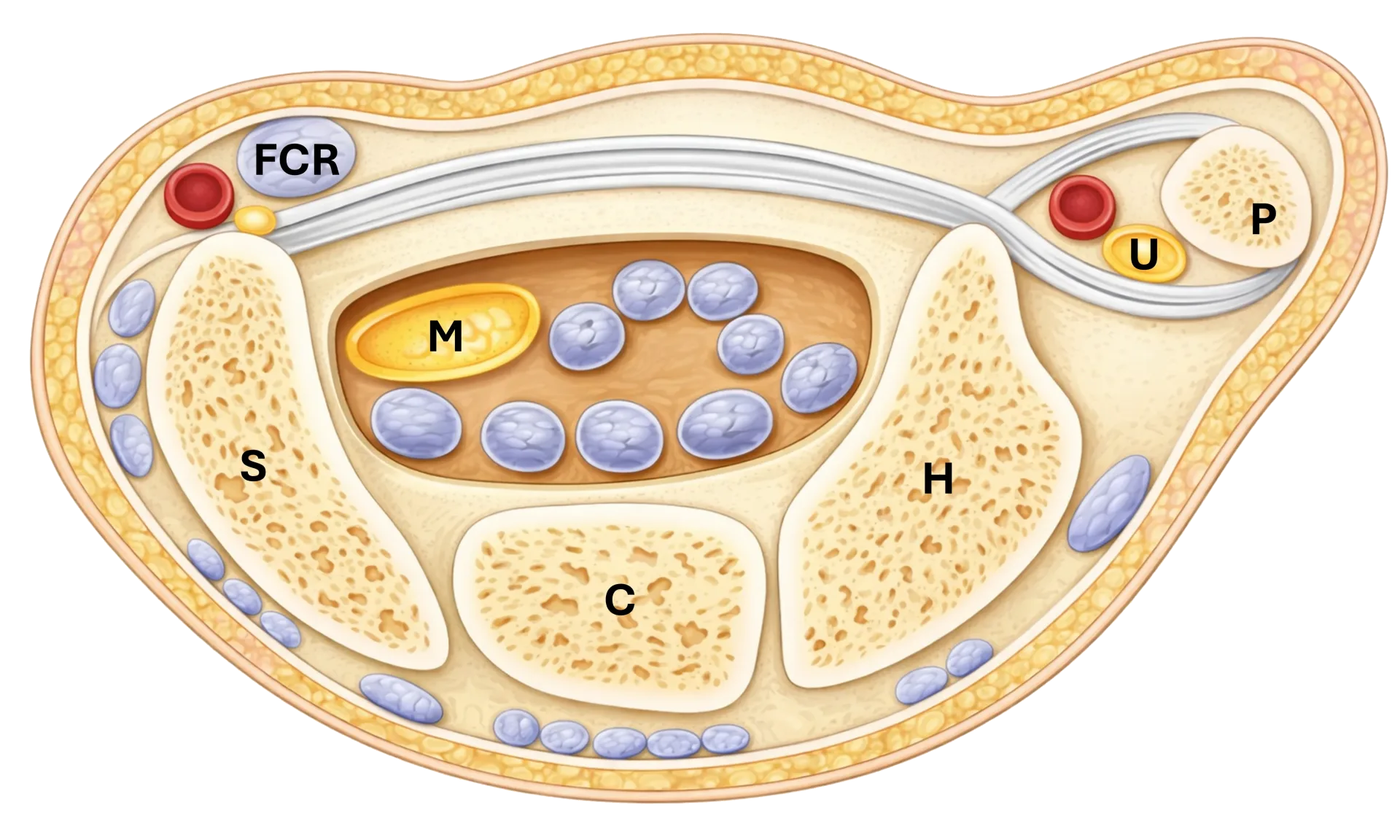
Abbildung 5: Querschnitt des Handgelenks. FCR – m. flexor carpi radialis, M – n. medianus, U – n. ulnaris, P – os pisiforme, H – os hamatum, C – os capitatum, S – os scaphoideum
Praktische anatomische Orientierungspunkte für US
in der Axilla: anterior der a. axillaris
am Oberarm: angrenzend an die a. brachialis
in der Fossa cubitalis: BAM, unterhalb des lacertus fibrosus
distal des Ellenbogens: zwischen den Köpfen des m. pronator teres
am Unterarm: unter dem Bogen des FDS
am Handgelenk: im Karpaltunnel unterhalb des Retinaculums