 MSK Academy
Einleitung
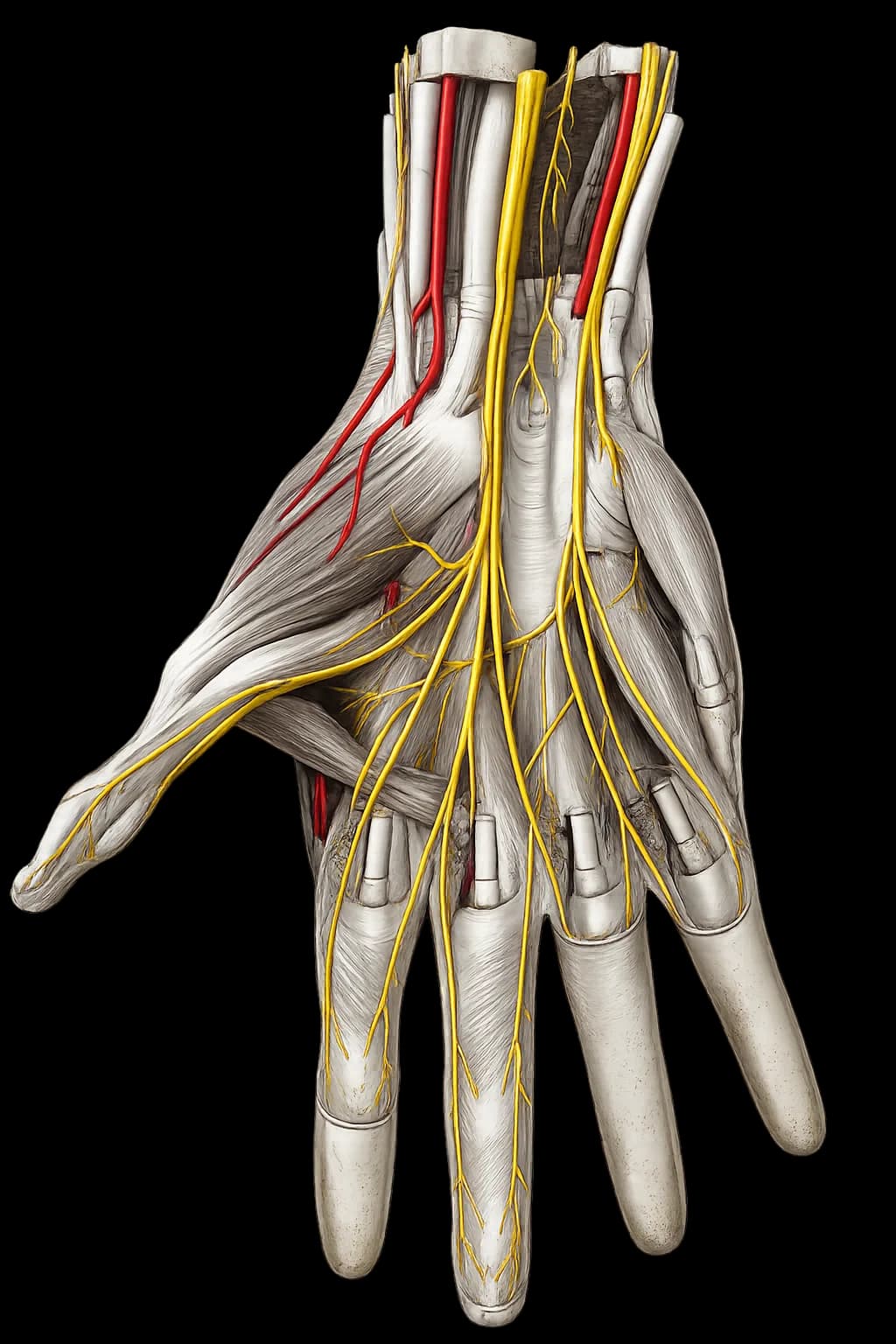
Die Sonografie des N. medianus ist in der PMR besonders wichtig, wenn Symptome im Bereich des Karpaltunnels, des Unterarms oder der Fossa cubitalis auftreten, da sie rasch Veränderungen des Nervenkalibers, einen Verlust des faszikulären Musters und die Beziehung des Nervs zu benachbarten Sehnen und zum Retinaculum darstellt. Sie hilft, ein Karpaltunnelsyndrom von einer weiter proximal gelegenen Kompression zu unterscheiden, entzündliche oder posttraumatische Veränderungen zu erkennen und die Planung von Rehabilitation, Injektion oder Operation gezielter zu unterstützen. Ein weiterer wesentlicher Vorteil besteht im dynamischen Vergleich mit der kontralateralen Seite und in der kontinuierlichen Verfolgung des Nervs über Hochrisikoabschnitte hinweg, in denen eine Kompression nicht nur im Karpaltunnel, sondern auch weiter proximal in der Nähe des M. pronator teres oder des Lacertus fibrosus auftreten kann.