 MSK Academy
Ultraschalluntersuchung
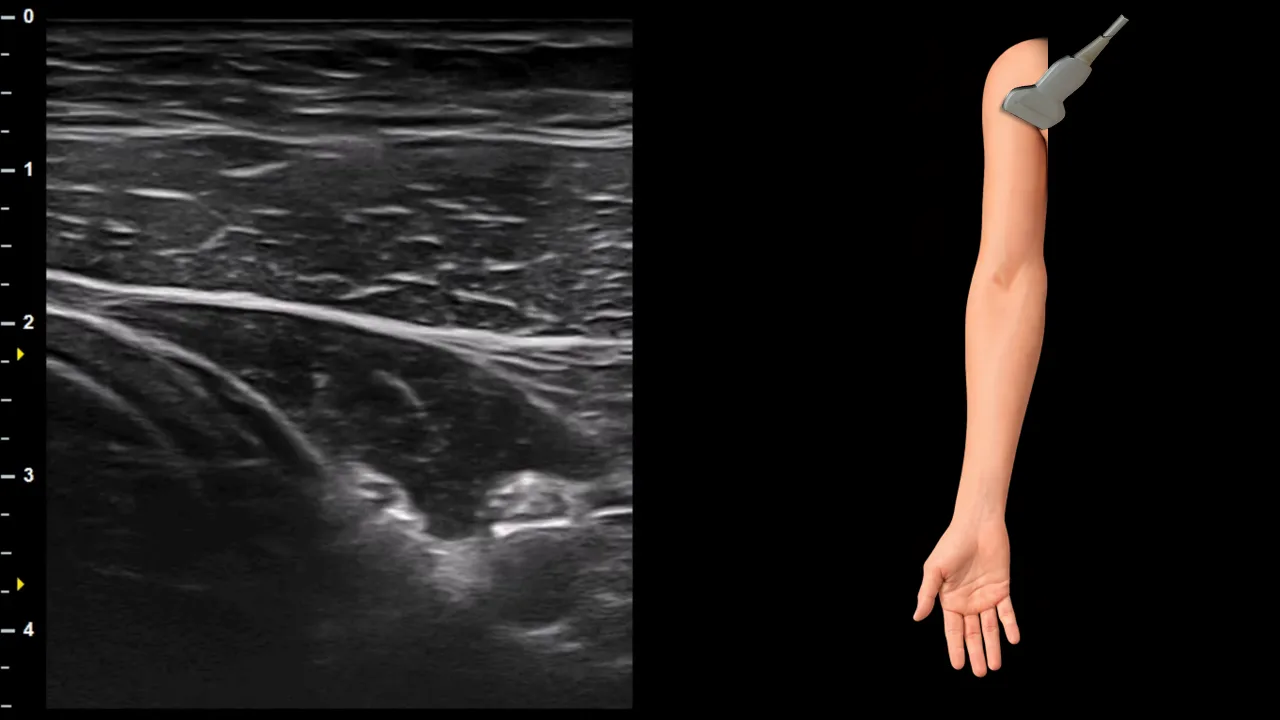
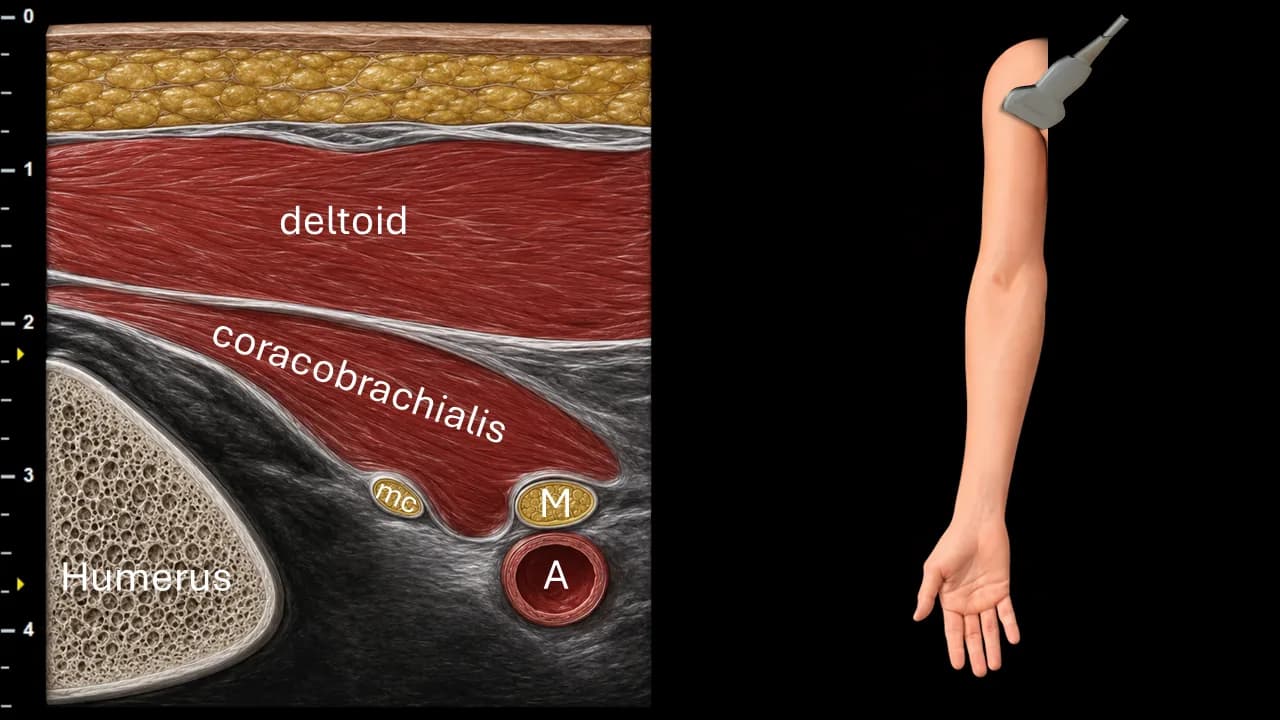
Abbildung 1. Axilla / proximaler Arm, Transversalebene. A: a. axillaris, M: n. medianus, mc: n. musculocutaneus
Transversaler sonografischer Schnitt der Axillarregion mit Fokus auf die Darstellung des n. musculocutaneus. Das Bild zeigt die a. axillaris (A) als markante Gefäßstruktur, wobei der n. medianus (M) ventral und oberflächlich in Relation zur Arterie liegt. Der n. musculocutaneus (mc) ist als kleine ovale Nervenstruktur lateral des neurovaskulären Bündels in enger Beziehung zum m. coracobrachialis sichtbar. In dieser Projektion ist der Nerv nahe der tiefen Oberfläche des M. coracobrachialis zu erkennen, die eine wichtige Landmarke für seine Identifikation darstellt. Das Bild zeigt außerdem die umgebenden muskulären Strukturen, insbesondere den m. coracobrachialis und den m. deltoideus, sowie die Kontur des Humerus.
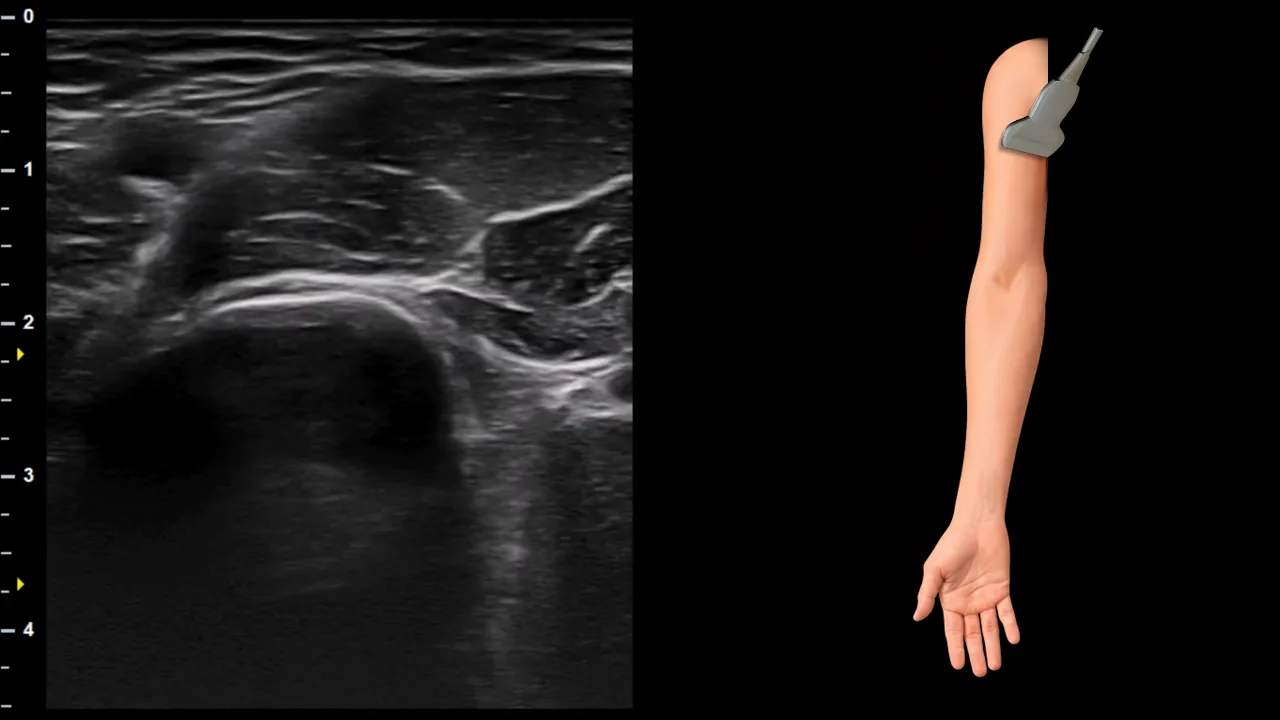
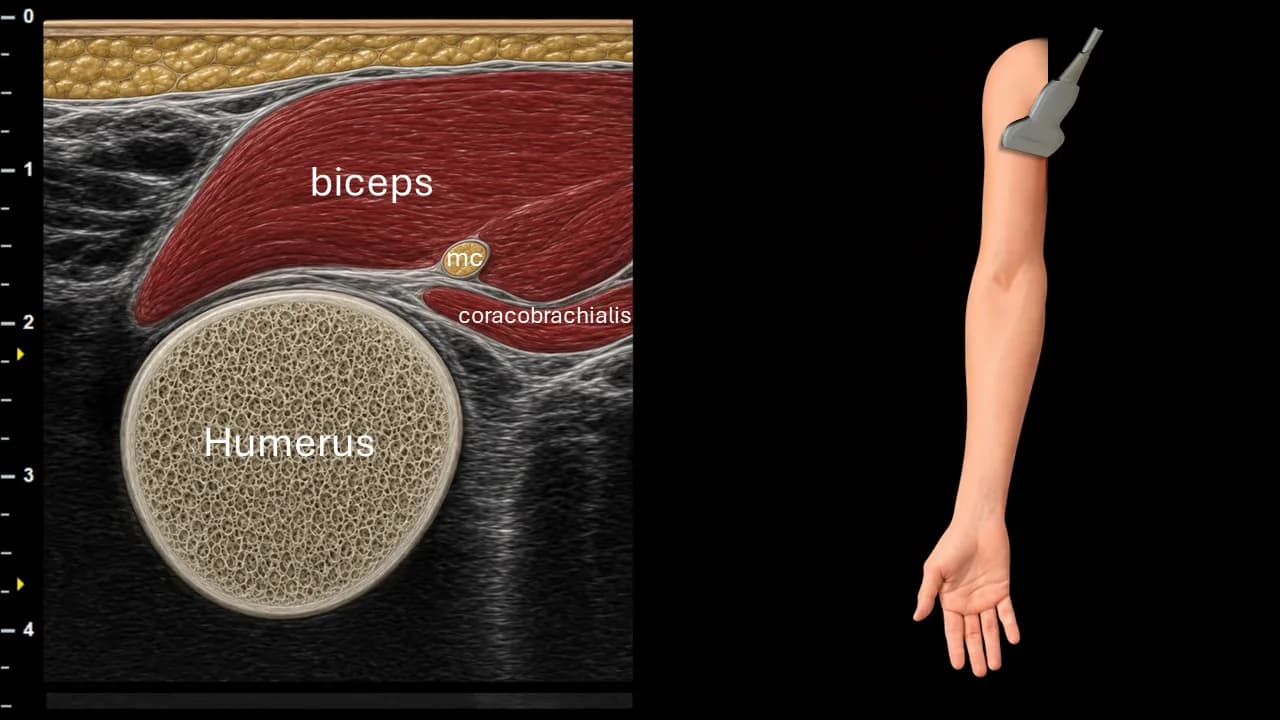
Abbildung 2. Proximaler Oberarm, Transversalebene. mc: n. musculocutaneus
Transversaler sonografischer Schnitt durch den proximalen Oberarm mit Fokus auf der Darstellung des n. musculocutaneus (mc). Der Nerv ist als kleine ovale hyperechogene faszikuläre Struktur zwischen dem m. biceps brachii und dem m. coracobrachialis zu erkennen, in engem Kontakt mit der tiefen Fläche des Bizeps und oberflächlich des Musculus coracobrachialis. In dieser Projektion bildet der humerus die wichtigste knöcherne Landmarke unter den muskulären Strukturen. Das Bild zeigt den typischen Verlauf des n. musculocutaneus nach Verlassen der Axillarregion, wo er im vorderen Kompartiment des Oberarms in Beziehung zum Musculus coracobrachialis und Musculus biceps brachii verläuft.
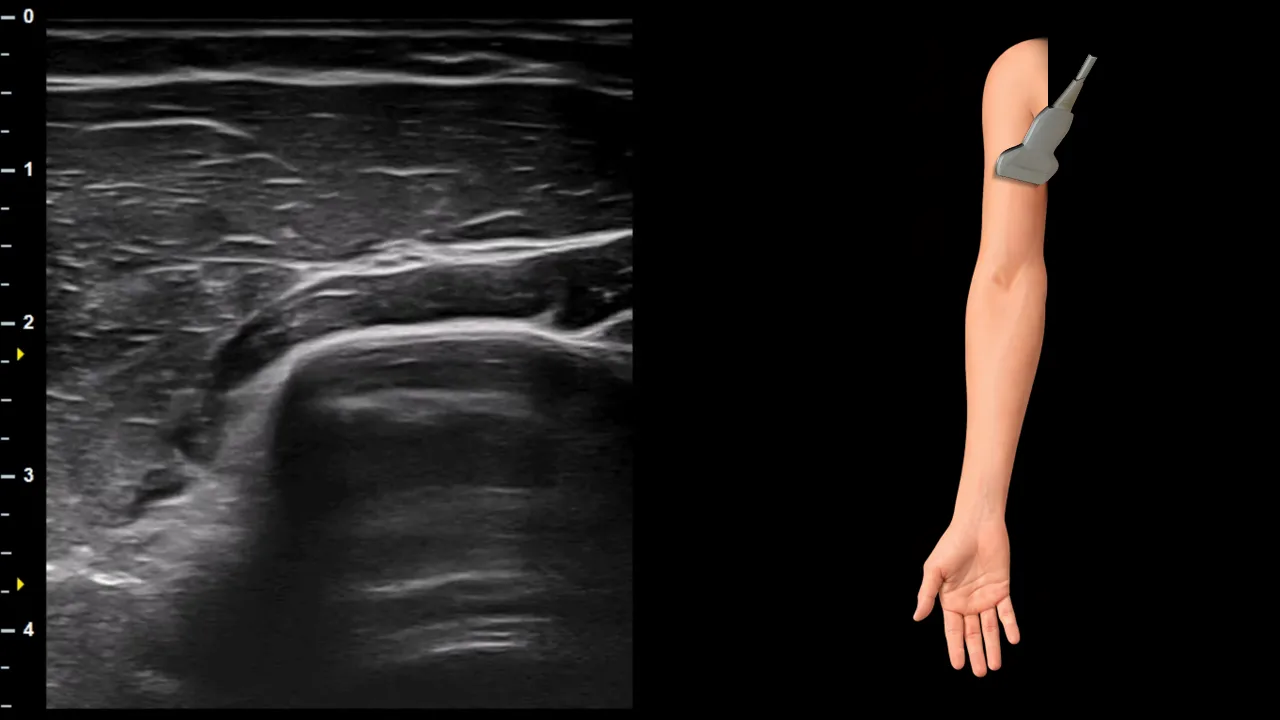
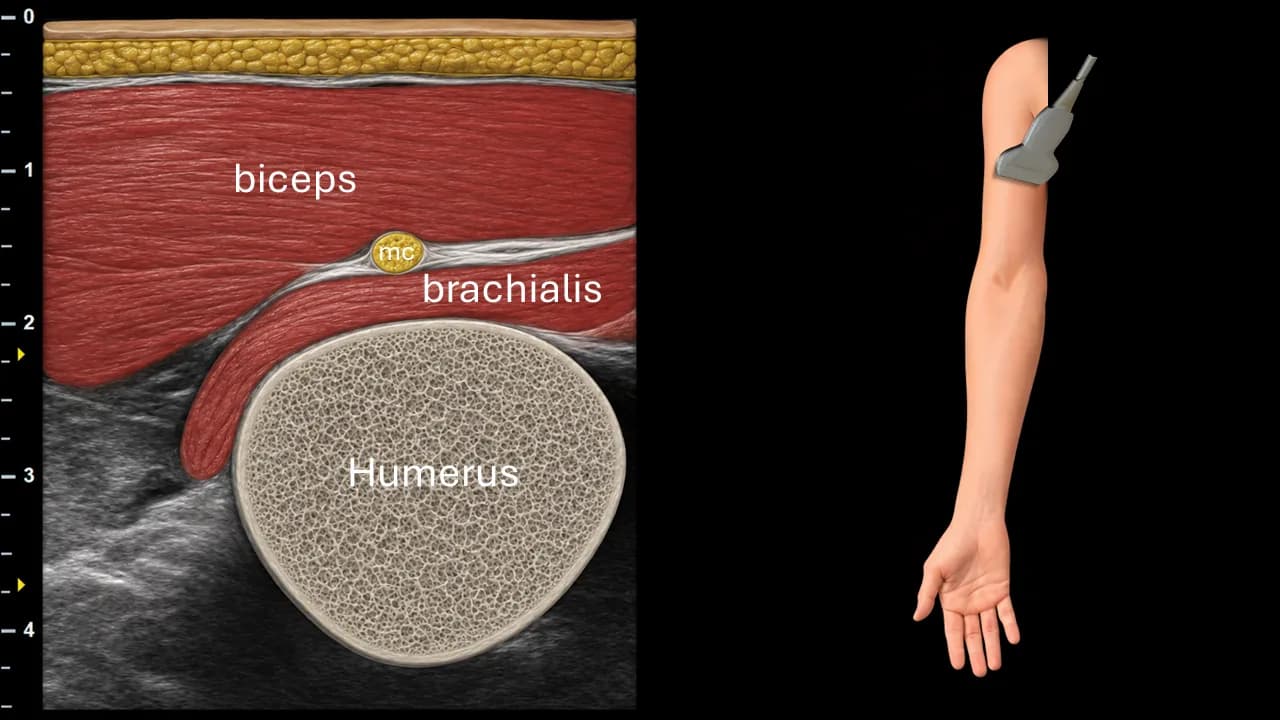
Abbildung 3. Oberarm, Transversalebene. mc: n. musculocutaneus
Transversaler Ultraschallschnitt des Oberarms mit Fokus auf der Darstellung des n. musculocutaneus (mc). Der Nerv ist als kleine ovale faszikuläre Struktur zwischen dem m. biceps brachii und dem m. brachialis im anterioren Kompartiment des Oberarms zu erkennen. In dieser Projektion hat der n. musculocutaneus die Region des M. coracobrachialis bereits nach distal passiert und verläuft in der intermuskulären Ebene zwischen Bizeps und Brachialis. Der Humerus bildet die wichtigste tiefe knöcherne Landmarke, wobei der M. brachialis direkt oberflächlich davon liegt. Das Bild zeigt den typischen distalen Verlauf des n. musculocutaneus, bevor er als N. cutaneus antebrachii lateralis zur lateralen Seite des Unterarms weiterzieht.
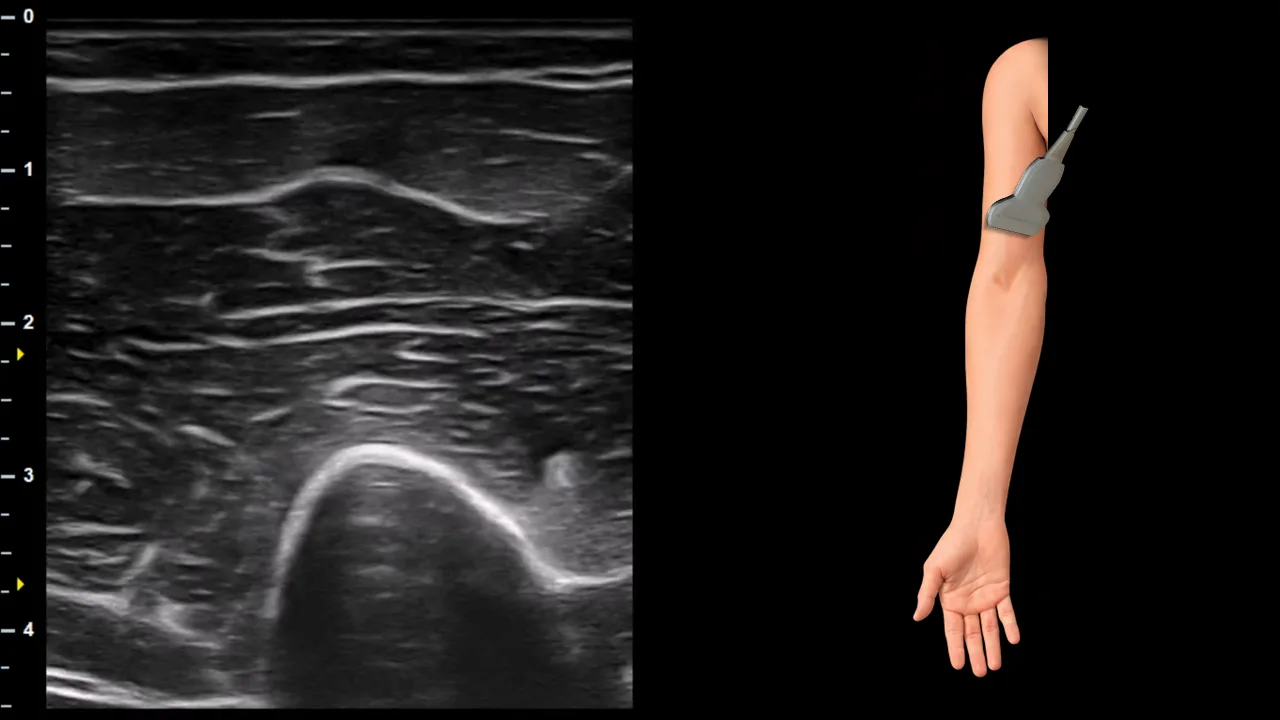
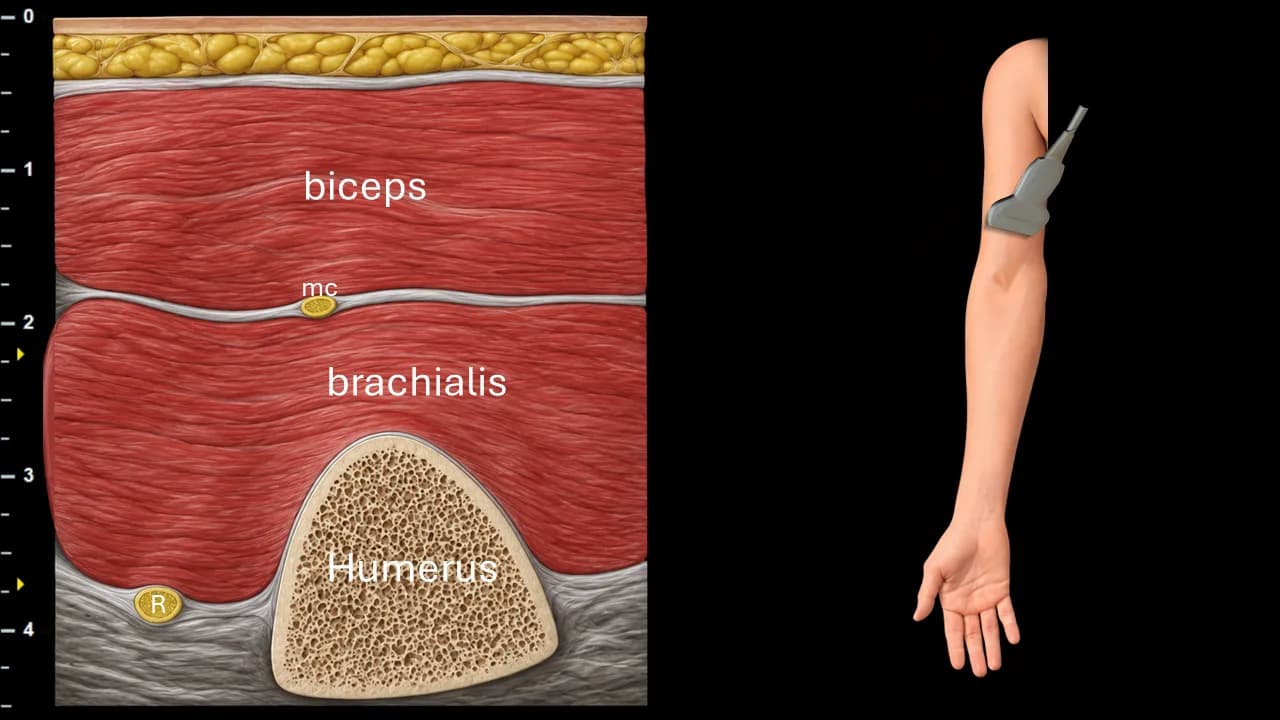
Abbildung 4. Mittlerer Oberarm, Transversalebene. mc: n. musculocutaneus, R: n. radialis
Transversaler sonografischer Schnitt des Oberarms mit Fokus auf der Darstellung des n. musculocutaneus (mc). Der Nerv ist als kleine ovale faszikuläre Struktur in der intermuskulären Ebene zwischen dem m. biceps brachii und dem m. brachialis zu erkennen. In dieser Projektion verläuft der n. musculocutaneus innerhalb der anterioren Muskelloge des Oberarms nach distal, oberflächlich des M. brachialis und unterhalb des M. biceps brachii. Der Humerus bildet die wichtigste tiefe knöcherne Landmarke, wobei der M. brachialis unmittelbar oberflächlich seiner anterioren Kontur liegt. Das Bild zeigt außerdem den n. radialis (R), der in Relation zum Humerus tiefer und weiter lateral liegt und durch den M. brachialis vom N. musculocutaneus getrennt ist.
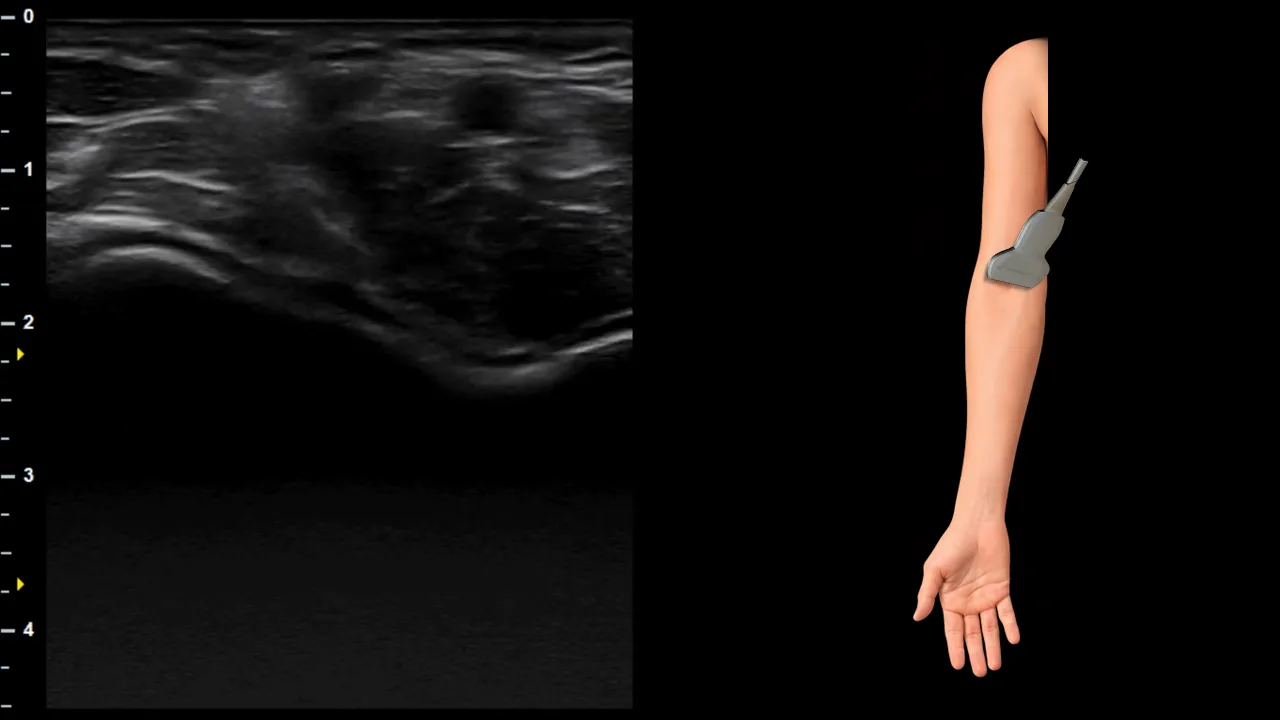
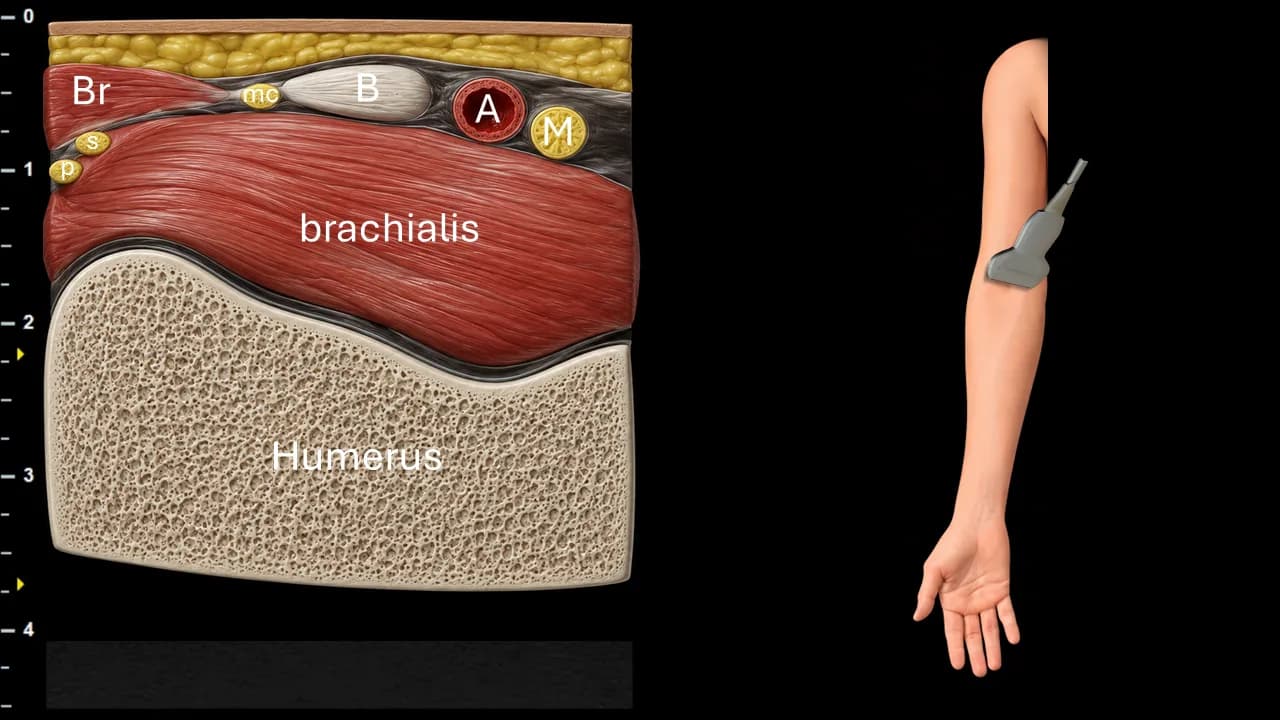
Abbildung 5. Distaler Oberarm / Kubitalregion, Transversalebene. mc: n. musculocutaneus / n. cutaneus antebrachii lateralis, A: a. brachialis, M: n. medianus, B: Bizepssehne, Br: m. brachioradialis
Transversaler sonografischer Schnitt des distalen Oberarms mit Fokus auf der Darstellung des n. musculocutaneus (mc) bei seiner Annäherung an die Kubitalregion. In dieser Projektion ist der Nerv oberflächlich und lateral, nahe der Bizepssehne (B) und am medialen Rand des m. brachioradialis (Br), zu sehen. Distal setzt sich der n. musculocutaneus als n. cutaneus antebrachii lateralis fort und tritt in Richtung der oberflächlichen Schicht des lateralen Unterarms aus.
Das Bild zeigt außerdem die a. brachialis (A) und den n. medianus (M), die innerhalb des neurovaskulären Bündels weiter medial liegen. Der m. brachialis liegt unmittelbar oberflächlich der anterioren Kontur des Humerus, die die wichtigste tiefe knöcherne Orientierung darstellt. Auf dieser Höhe zeigt sich der Übergang des N. musculocutaneus von seinem Verlauf zwischen M. biceps brachii und M. brachialis zu seinem terminalen sensiblen Ast im lateralen Unterarm.
Zugang zur gesamten Bibliothek
Voller Zugriff auf Scan-Protokolle, Anatomie und klinische Referenzen. Jederzeit kündbar.
- Alle Protokolle und Anatomiereferenzen
- Originale Ultraschall-Illustrationen und Video-Demonstrationen
- Synchronisierung zwischen Mobilgerät und Web