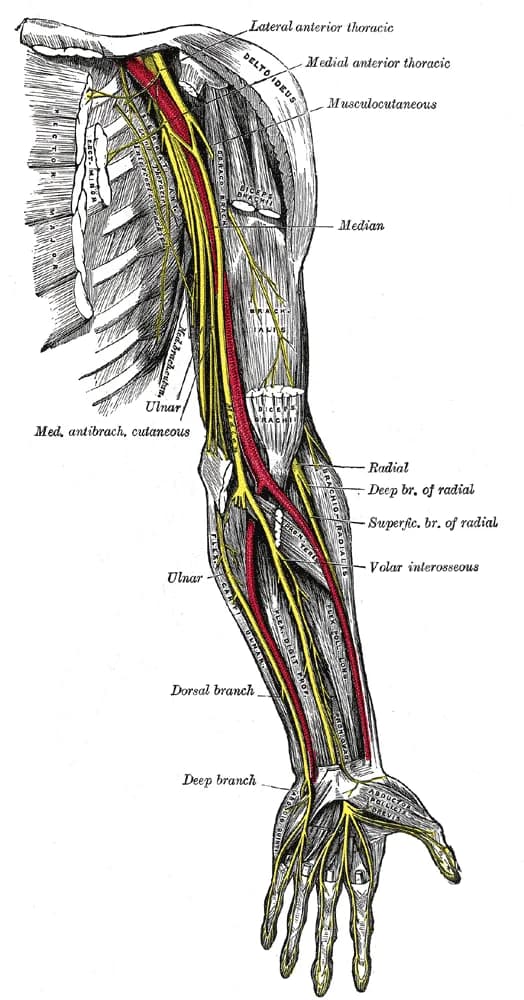
Die Sonografie des N. ulnaris ist besonders am medialen Ellenbogen und in der Guyon-Loge von hohem Wert, wo der Nerv häufig von Kompression oder dynamischer Irritation betroffen ist. Die Echtzeitbildgebung ermöglicht es, den Nerv durch den Kubitaltunnel zu verfolgen, Verdickungen, Veränderungen der Echotextur, eine Subluxation während der Ellenbogenflexion sowie seine Beziehung zum Retinaculum und zum FCU zu beurteilen, und hilft dabei, zwischen einer Einklemmung, einer Überlastung und einer posttraumatischen Pathologie zu unterscheiden. In der Praxis ist die Sonografie auch deshalb wertvoll, weil sie den Nerv während der Bewegung darstellt, wodurch intermittierende Probleme leichter erkannt werden können, während gleichzeitig die umgebenden Weichteile, Narbengewebe, Ganglien oder überlastungsbedingte strukturelle Veränderungen beurteilt werden.
 MSK Academy