 MSK Academy
Anatomie
Das Hüftgelenk ist eines der stabilsten Gelenke des menschlichen Körpers. Es ist daran angepasst, beim Stehen, Gehen und Laufen das Gewicht des Rumpfes zu tragen. Diese hohe Stabilität wird jedoch auf Kosten einer verminderten Beweglichkeit erreicht, weshalb die Hüfte weniger zu Luxationen neigt, jedoch häufig von Überlastung, Tendinopathien und degenerativen Veränderungen betroffen ist. Für die Ultraschalluntersuchung ist die Orientierung an knöchernen Landmarken, der Gelenkkapsel, den Sehnenansätzen, den Bursae und den umgebenden neurovaskulären Strukturen unerlässlich.
Knöcherne Landmarken
Knöcherne Landmarken sind grundlegende Referenzpunkte während der Untersuchung. Sie helfen dabei, den Schallkopf korrekt zu führen und normale Anatomie schnell von Pathologie zu unterscheiden.
- Medial epicondyle - orientation for the common flexor attachment and n. ulnaris.
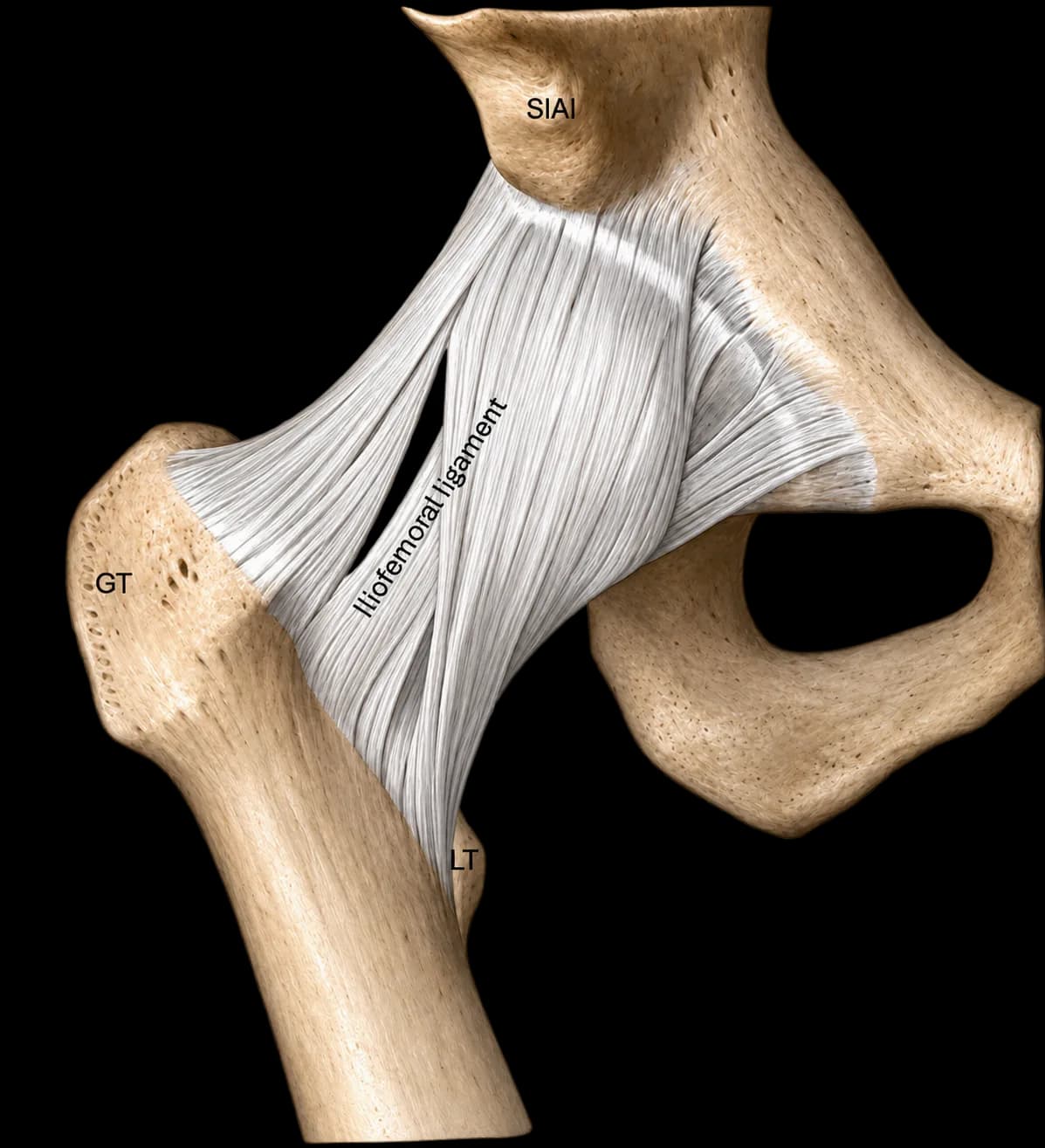
- Spina iliaca anterior inferior (SIAI) – liegt unterhalb der SIAS und ist der Ursprungsort des geraden Kopfes des M. rectus femoris.
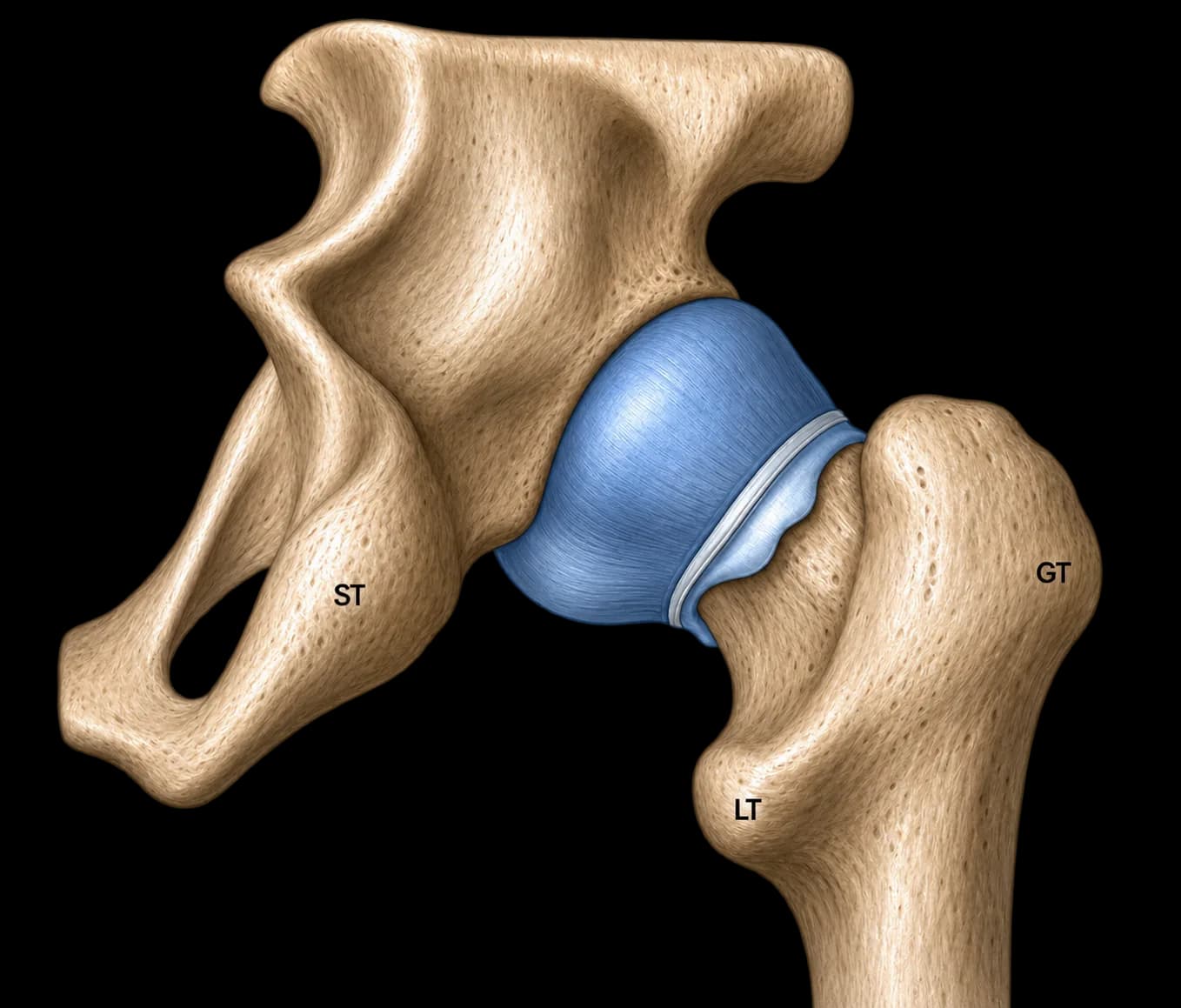
- Femurkopf – kugelförmiges proximales Ende des Femurs, Teil des Hüftgelenks, bei der Untersuchung eines Gelenkergusses und des anterioren Rezessus beurteilbar.
- Femurhals – schließt an den Kopf an und ist eine wichtige Landmarke bei der Darstellung des anterioren Anteils des Hüftgelenks.
- Trochanter major – großer, leicht palpabler lateraler Fortsatz des Femurs, Ansatzstelle der Glutealsehnen und wichtiger Orientierungspunkt bei der Untersuchung der lateralen Hüftregion.
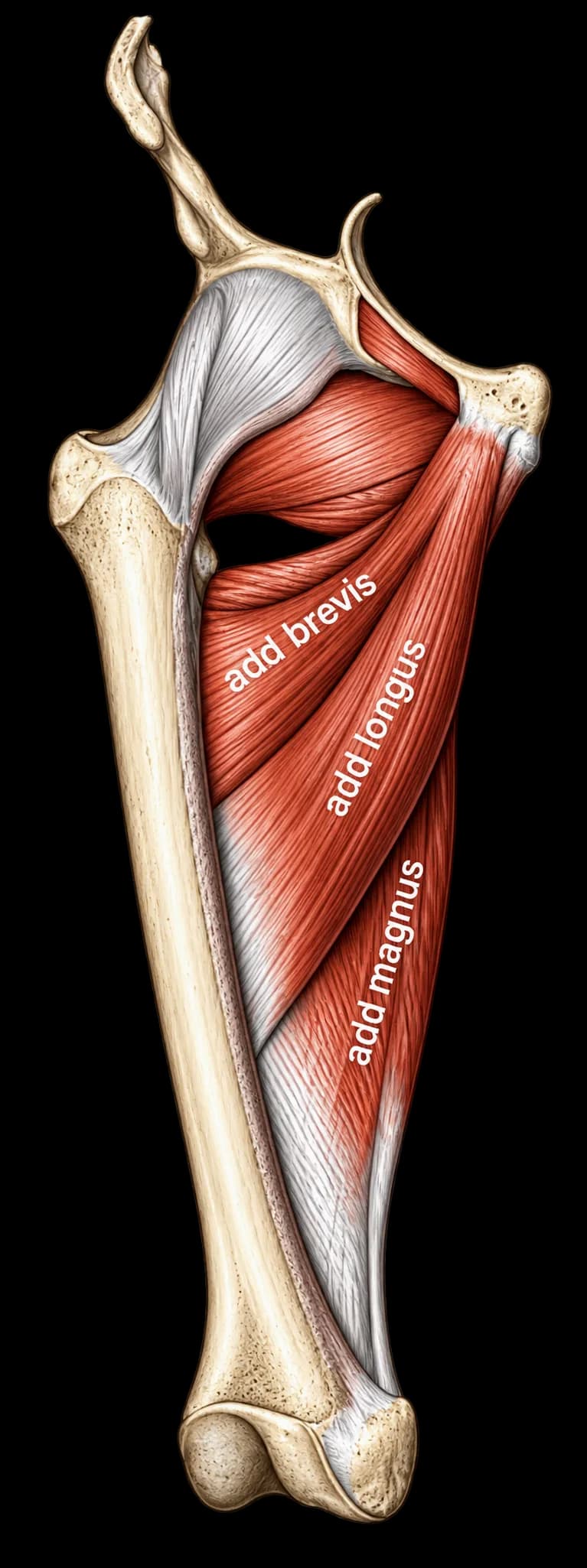
- Trochanter minor – kleinere knöcherne Prominenz an der mediokaudalen Seite des proximalen Femurs, Ansatzstelle des M. iliopsoas.
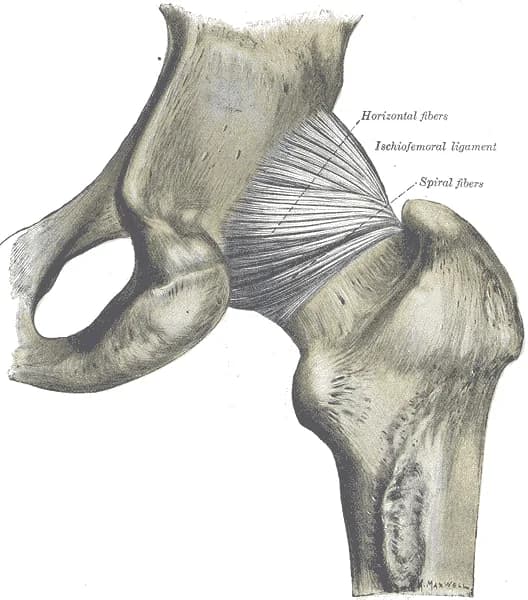
- Tuber ischiadicum – knöcherne Prominenz am posteroinferioren Anteil des Beckens, Ursprung der Hamstrings und wichtig bei der Untersuchung des posterioren Aspekts der Hüfte.
Muskeln
Muskeln – anteriore Gruppe
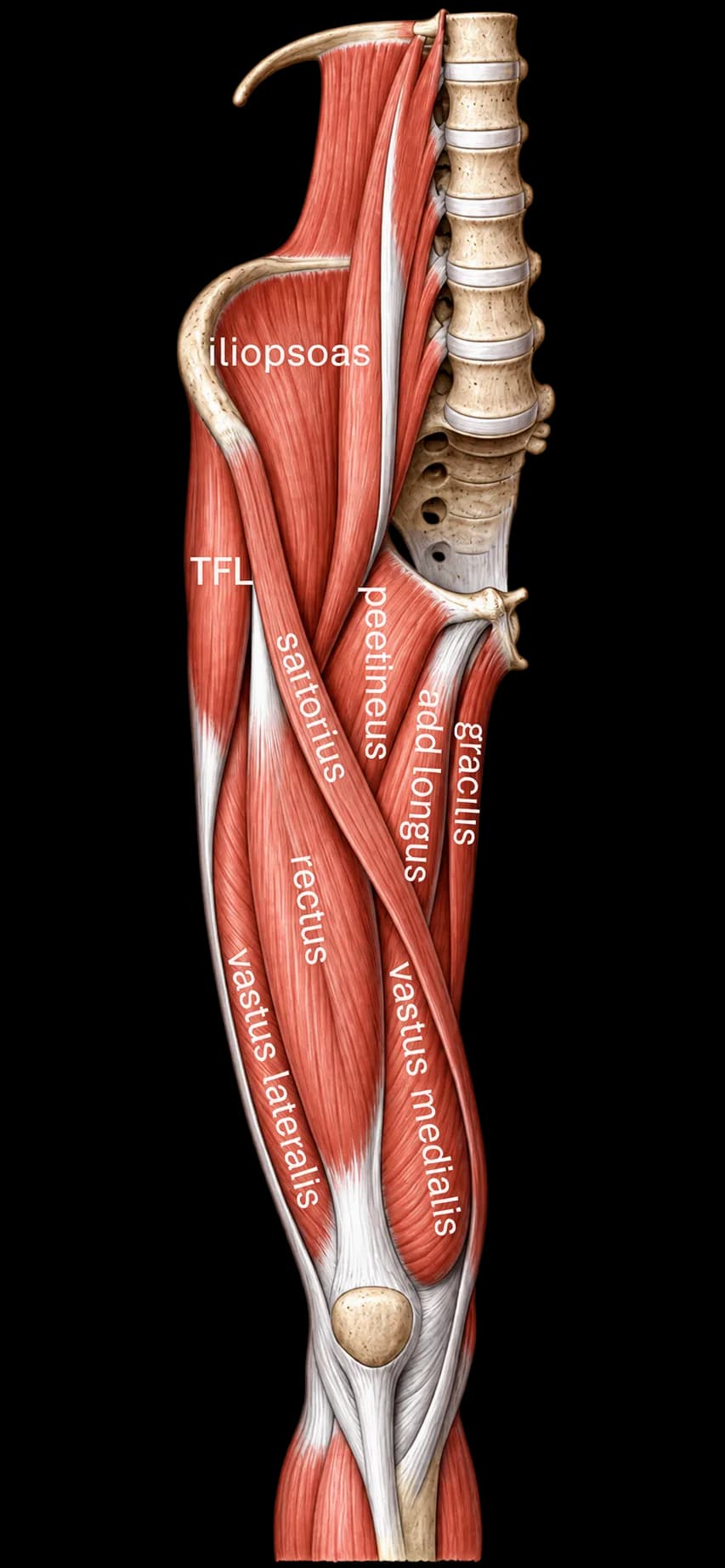
- Iliopsoas – primärer Hüftflexor.
- Rectus femoris – Hüftflexion und Knieextension.
- Sartorius – Flexion, Abduktion und Außenrotation der Hüfte sowie Flexion des Knies.
Muskeln – laterale Gruppe
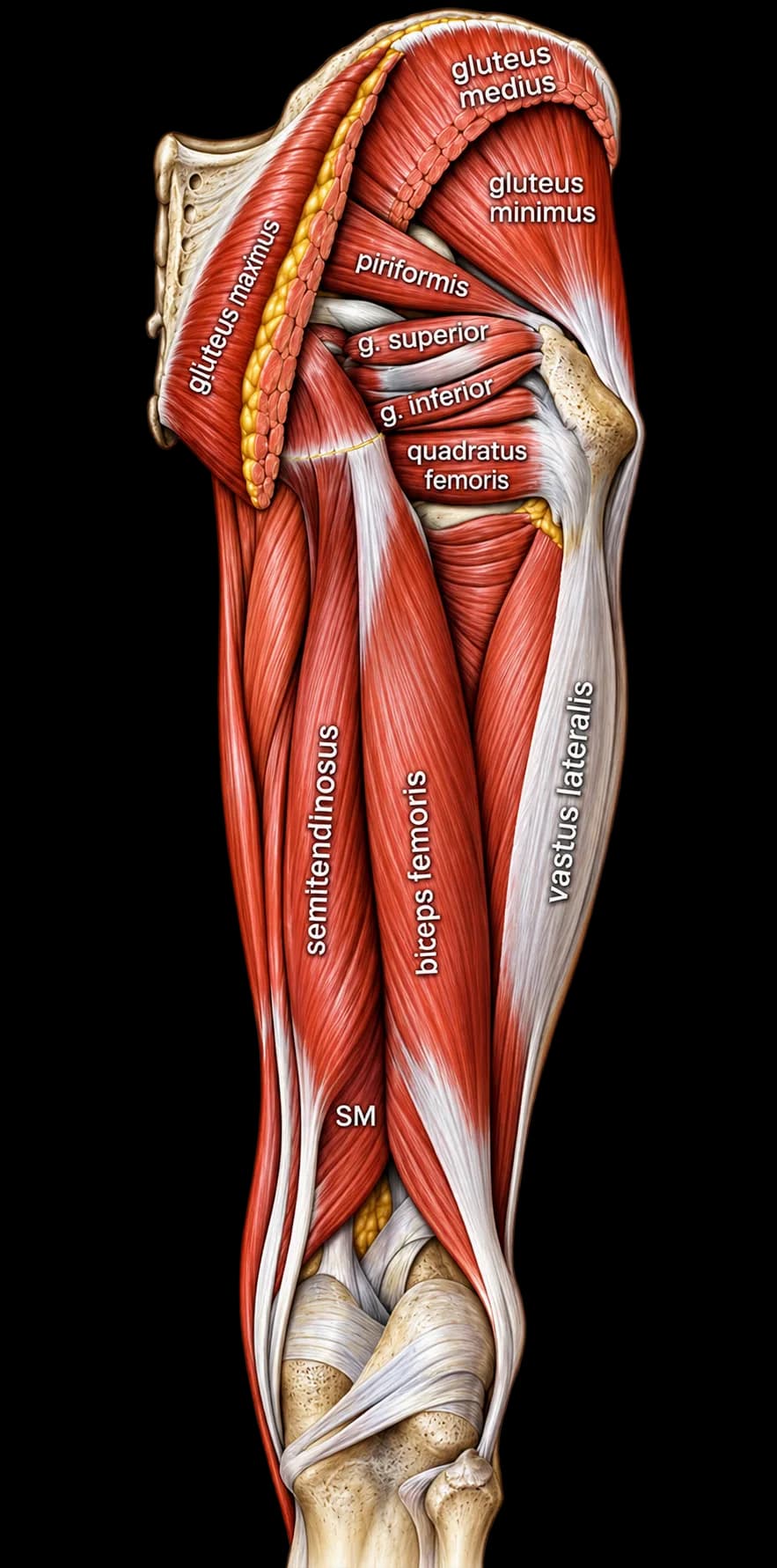
- Gluteus medius – Abduktion und Innenrotation der Hüfte sowie Stabilisierung des Beckens beim Gehen.
- Gluteus minimus – Abduktion und Innenrotation der Hüfte.
- Tensor fasciae latae – unterstützt die Flexion, Abduktion und Innenrotation der Hüfte.
- Gluteus maximus – kräftiger Extensor und Außenrotator der Hüfte, wobei die oberen Fasern auch zur Abduktion beitragen.
Muskeln – posteriore Gruppe
- Ischiokrurale Muskulatur (semitendinosus, semimembranosus, biceps femoris caput longum) – Hüftextension und Knieflexion.
- Piriformis – Außenrotation der Hüfte in Extension, unterstützt die Abduktion während der Flexion.
Zugang zur gesamten Bibliothek
Voller Zugriff auf Scan-Protokolle, Anatomie und klinische Referenzen. Jederzeit kündbar.
- Alle Protokolle und Anatomiereferenzen
- Originale Ultraschall-Illustrationen und Video-Demonstrationen
- Synchronisierung zwischen Mobilgerät und Web