 MSK Academy
Anatomie
Der N. radialis entspringt dem fasciculus posterior plexus brachialis, am häufigsten aus den Wurzeln C5–C8, manchmal unter Beteiligung von T1. Er ist der Hauptnerv des posterioren Kompartiments von Oberarm und Unterarm. Er versorgt motorisch die Extensoren von Ellenbogen, Handgelenk und Fingern und sensibel die Rückseite des Oberarms, des Unterarms und den radialen Anteil des Handrückens. Für die Sonografie sind sein charakteristischer Übergang von der Rückseite des Oberarms zur Vorderseite sowie seine terminale Aufteilung im Ellenbogenbereich in ramus superficialis und ramus profundus von Bedeutung. Die Schnittanatomie ist für das Verständnis des sonografischen Bildes entscheidend, da der Ultraschall Strukturen in einzelnen Schnitten darstellt.
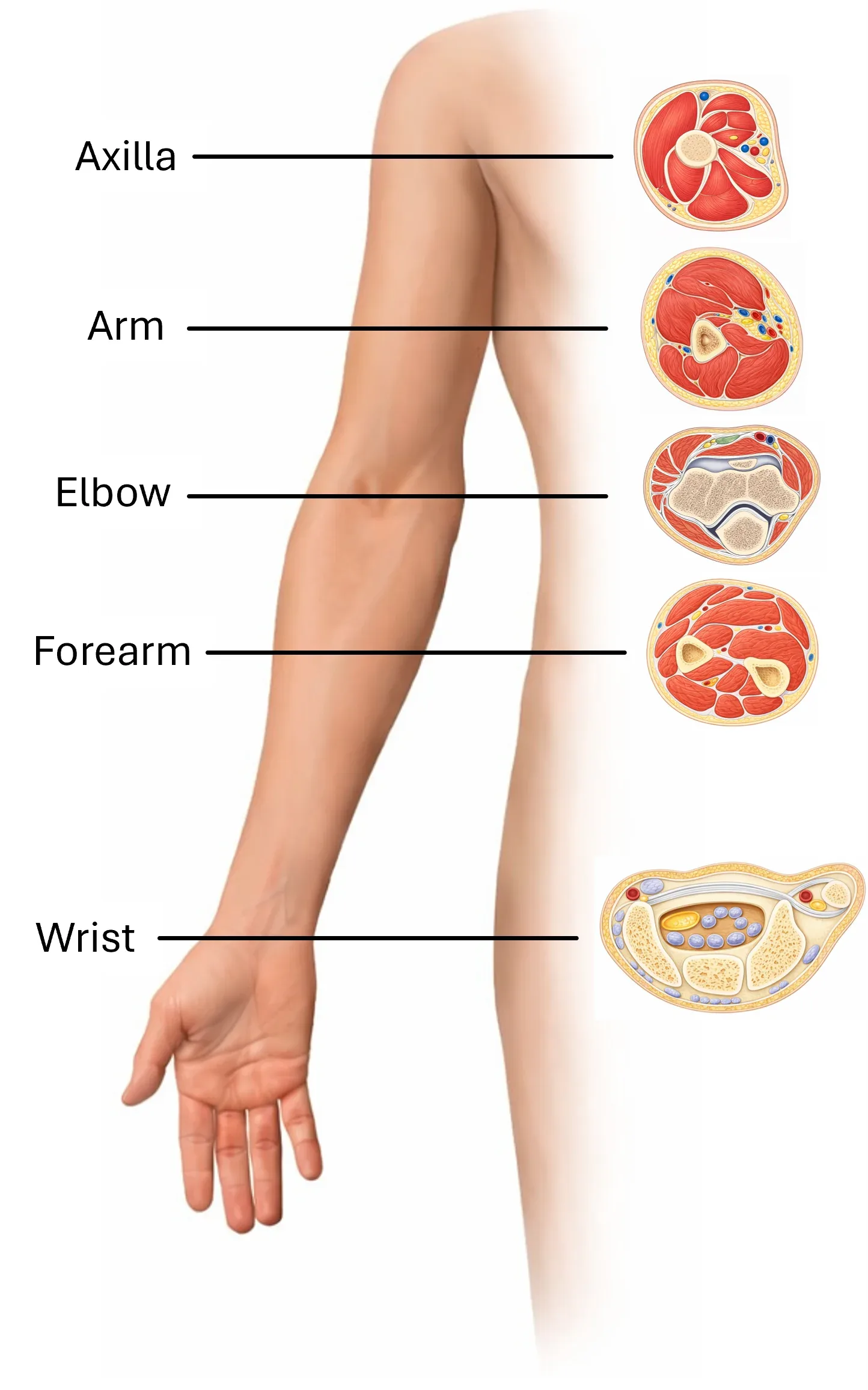
Axilla
In der Axilla liegt der N. radialis hinter der A. axillaris und verlässt den Plexus als dessen kräftiger hinterer Endast. Bereits in diesem Bereich gibt er Äste zum M. triceps brachii sowie einen sensiblen Ast zur Rückseite des Oberarms ab.
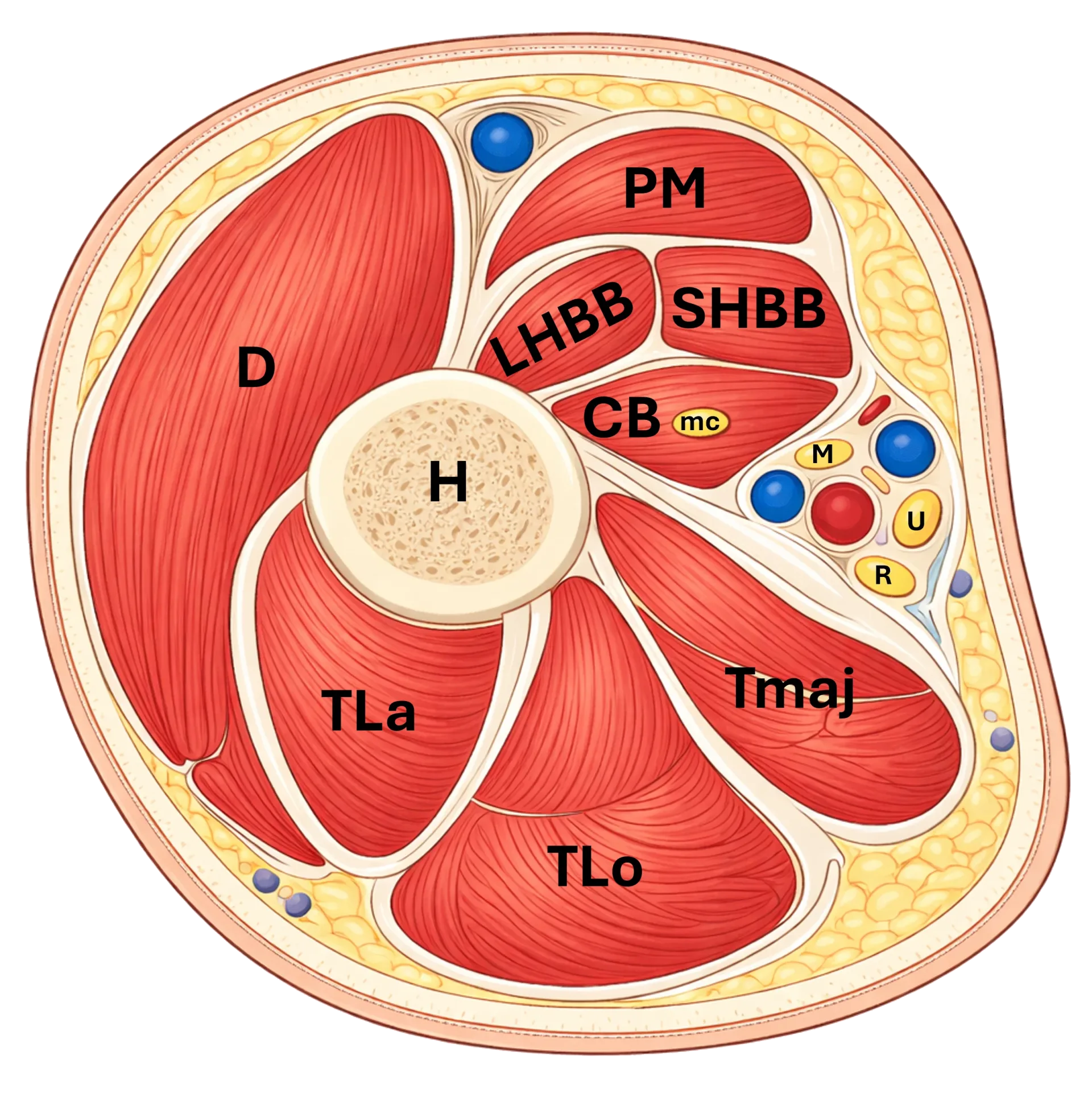
Abbildung 1: Axillärer Querschnitt. D – m. deltoideus, PM – m. pectoralis major, LHBB – caput longum m. biceps brachii, SHBB – caput breve m. biceps brachii, CB – m. coracobrachialis, mc – n. musculocutaneus, M – n. medianus, U – n. ulnaris, R – n. radialis, Tmaj – m. teres major, TLa – caput laterale m. triceps brachii, TLo – caput longum m. triceps brachii, H – humerus
Oberarm
Am Oberarm zieht der n. radialis durch die untere Achsellücke nach posterior und tritt in die dorsale Oberarmloge ein. Anschließend verläuft er gemeinsam mit der a. profunda brachii im sulcus n. radialis des Humerus zwischen den Köpfen des m. triceps brachii. Im mittleren Abschnitt des Oberarms windet er sich spiralförmig um den Humerus und durchtritt anschließend das septum intermusculare brachii laterale, wodurch er wieder auf die ventrale Seite des Oberarms gelangt. Distal liegt er dann zwischen dem m. brachialis und dem m. brachioradialis.
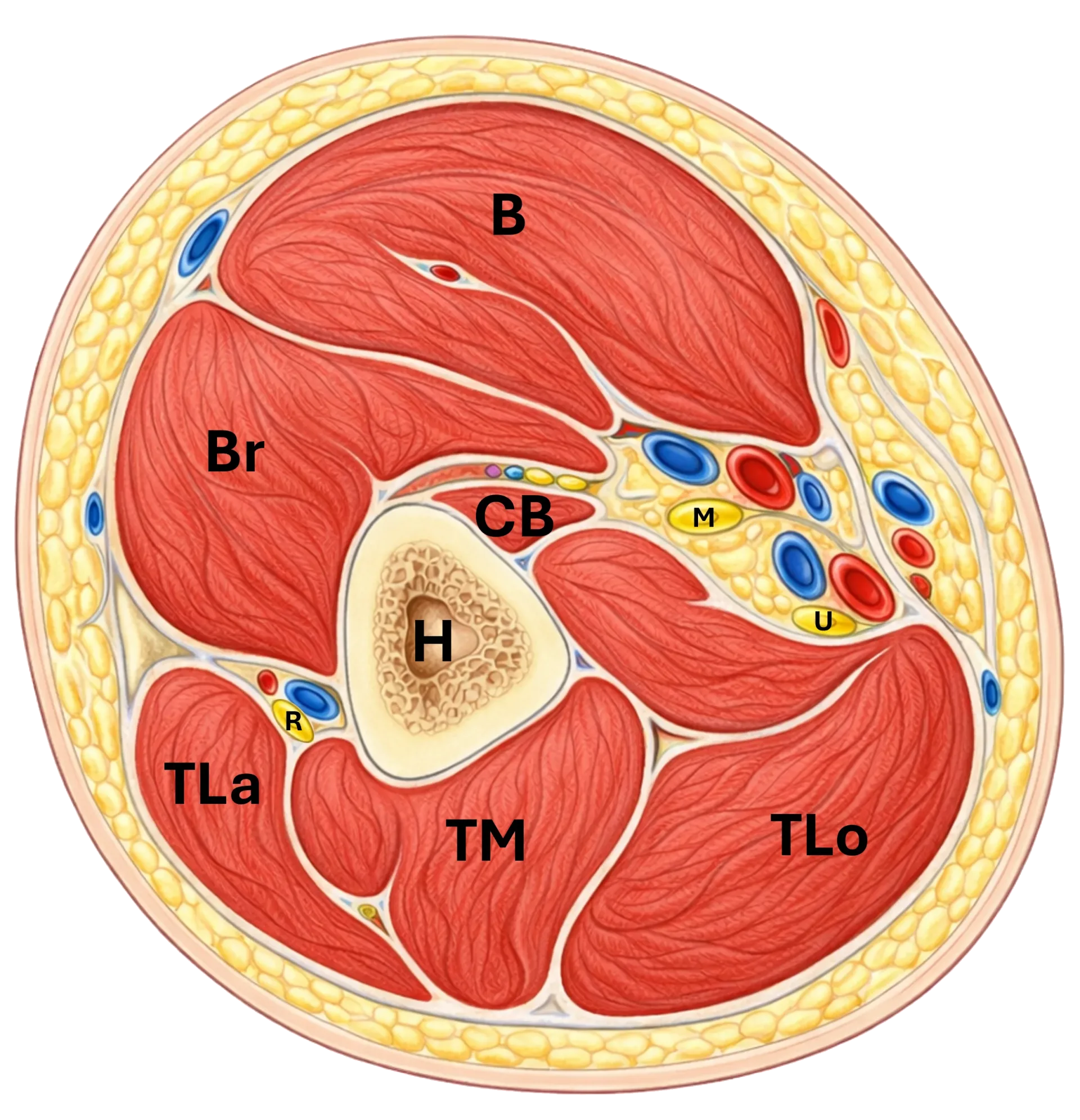
Abbildung 2: Querschnitt durch den Oberarm. B – m. biceps brachii, Br – m. brachialis, CB – m. coracobrachialis, H – humerus, TLa – caput laterale m. triceps brachii, TM – caput mediale m. triceps brachii, TLo – caput longum m. triceps brachii, R – n. radialis, M – n. medianus, U – n. ulnaris
Ellenbogen
In der Ellenbogenregion liegt der n. radialis in der Rinne zwischen dem m. brachialis und dem m. brachioradialis. Hier teilt er sich in:
ramus superficialis
ramus profundus
In diesem Bereich gehen auch motorische Äste für den m. brachioradialis, den m. extensor carpi radialis longus und häufig auch für den m. extensor carpi radialis brevis ab. Der Bifurkationsbereich des n. radialis ist für die sonografische Differenzierung des oberflächlichen sensiblen und des tiefen motorischen Astes entscheidend.
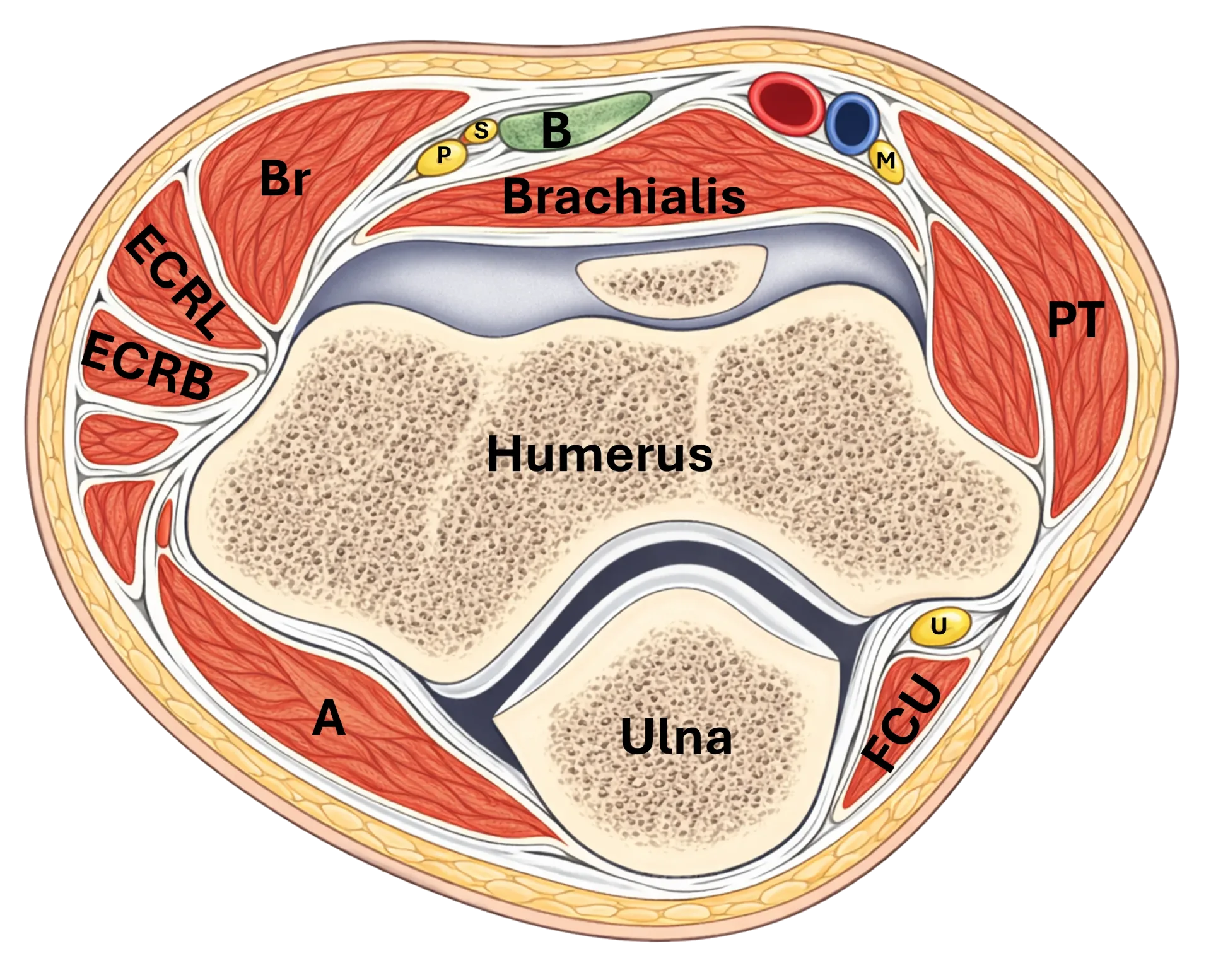
Abbildung 3: Querschnitt durch den Ellenbogen. Br – m. brachioradialis, ECRL – m. extensor carpi radialis longus, ECRB – m. extensor carpi radialis brevis, B – Sehne des m. biceps brachii, S – r. superficialis n. radialis, P – r. profundus n. radialis (n. interosseus posterior), M – n. medianus, PT – m. pronator teres, U – n. ulnaris, FCU – m. flexor carpi ulnaris, A – m. anconeus
Unterarm
Der Ramus superficialis verläuft am Unterarm unter dem m. brachioradialis lateral der A. radialis weiter. Im distalen Abschnitt des Unterarms durchdringt er die Faszie zwischen dem m. brachioradialis und dem m. extensor carpi radialis longus und verläuft anschließend subkutan.
Der Ramus profundus tritt unter der Frohse-Arkade in den Supinatortunnel ein und verläuft nach dem Durchtritt durch den m. supinator als n. interosseus posterior (PIN) weiter. Dieser verläuft im posterioren Kompartiment des Unterarms zwischen der oberflächlichen und der tiefen Extensorenschicht und innerviert den Großteil der Handgelenk- und Fingerextensoren. Distal verläuft der PIN tiefer entlang der membrana interossea und endet an der dorsalen Kapsel des Handgelenks.
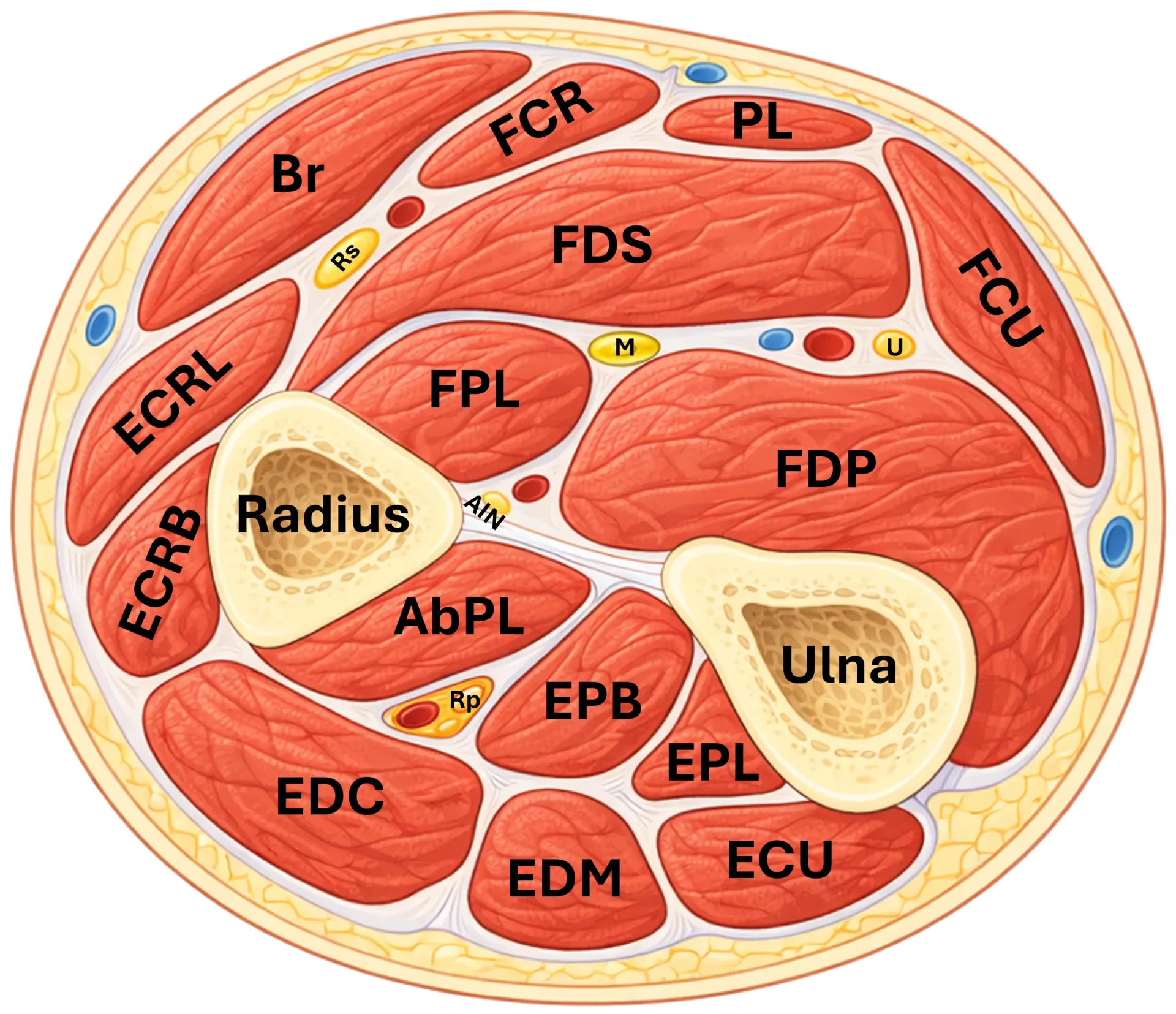
Abbildung 4: Querschnitt des Unterarms. Br – m. brachioradialis, ECRL – m. extensor carpi radialis longus, ECRB – m. extensor carpi radialis brevis, EDC – m. extensor digitorum communis, EDM – m. extensor digiti minimi, ECU – m. extensor carpi ulnaris, AbPL – m. abductor pollicis longus, EPB – m. extensor pollicis brevis, EPL – m. extensor pollicis longus, FCR – m. flexor carpi radialis, PL – m. palmaris longus, FDS – m. flexor digitorum superficialis, FPL – m. flexor pollicis longus, FDP – m. flexor digitorum profundus, FCU – m. flexor carpi ulnaris, M – n. medianus, U (Nerv) – n. ulnaris, Rs – r. superficialis n. radialis, Rp – r. profundus n. radialis (n. interosseus posterior), AIN – n. interosseus anterior, R – Radius, U (Knochen) – Ulna
Handgelenk
In der Handgelenkregion ist der ramus superficialis n. radialis von primärer klinischer Bedeutung. Nach seinem Austritt aus der subfaszialen Lage zieht er weiter zur dorsoradialen Seite des Handgelenks und in den Bereich der anatomischen Tabatière, wo er in enger Nachbarschaft zu den Sehnen des 1. und 2. dorsalen Strecksehnenfachs verläuft. In diesem Bereich kann er von der v. cephalica gekreuzt werden. Der Nerv gewährleistet die sensible Innervation des radialen Anteils des Handrückens sowie der Dorsalseite des Daumens, des Zeigefingers und eines Teils des Mittelfingers.
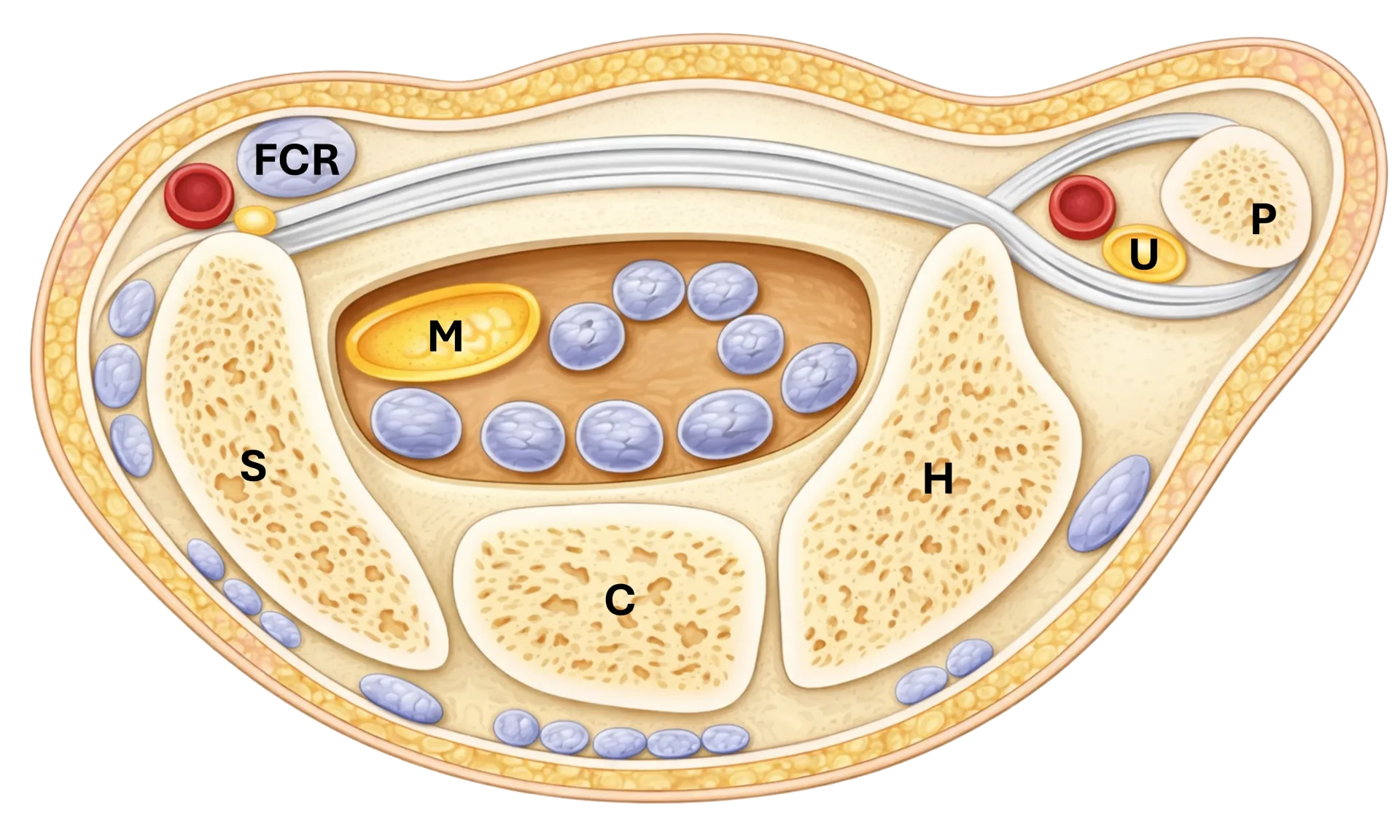
Figure 5: Cross-section of the wrist. FCR – m. flexor carpi radialis, M – n. medianus, U – n. ulnaris, P – os pisiforme, H – os hamatum, C – os capitatum, S – os scaphoideum
Practical landmarks for ultrasound
in axilla: behind a. axillaris
in brachium: in sulcus n. radialis together with a. profunda brachii
distally on arm: through septum intermusculare laterale anteriorly
in cubita: between m. brachialis and m. brachioradialis
on forearm:
ramus profundus under arcade of Frohse into supinator tunnel
ramus superficialis under m. brachioradialis
in wrist: ramus superficialis on dorsoradial side, in region of fossa tabatier
Zugang zur gesamten Bibliothek
Voller Zugriff auf Scan-Protokolle, Anatomie und klinische Referenzen. Jederzeit kündbar.
- Alle Protokolle und Anatomiereferenzen
- Originale Ultraschall-Illustrationen und Video-Demonstrationen
- Synchronisierung zwischen Mobilgerät und Web