 MSK Academy
Probe movements
In ultrasound examination, we distinguish 8 basic probe movements that form the foundation of proper examination technique. Knowledge of these movements is important because it enables better visualization of anatomical structures, proper interpretation, and reduction of errors caused by artifacts. Proper probe handling is essential for accurate image orientation and reliable identification of pathology.
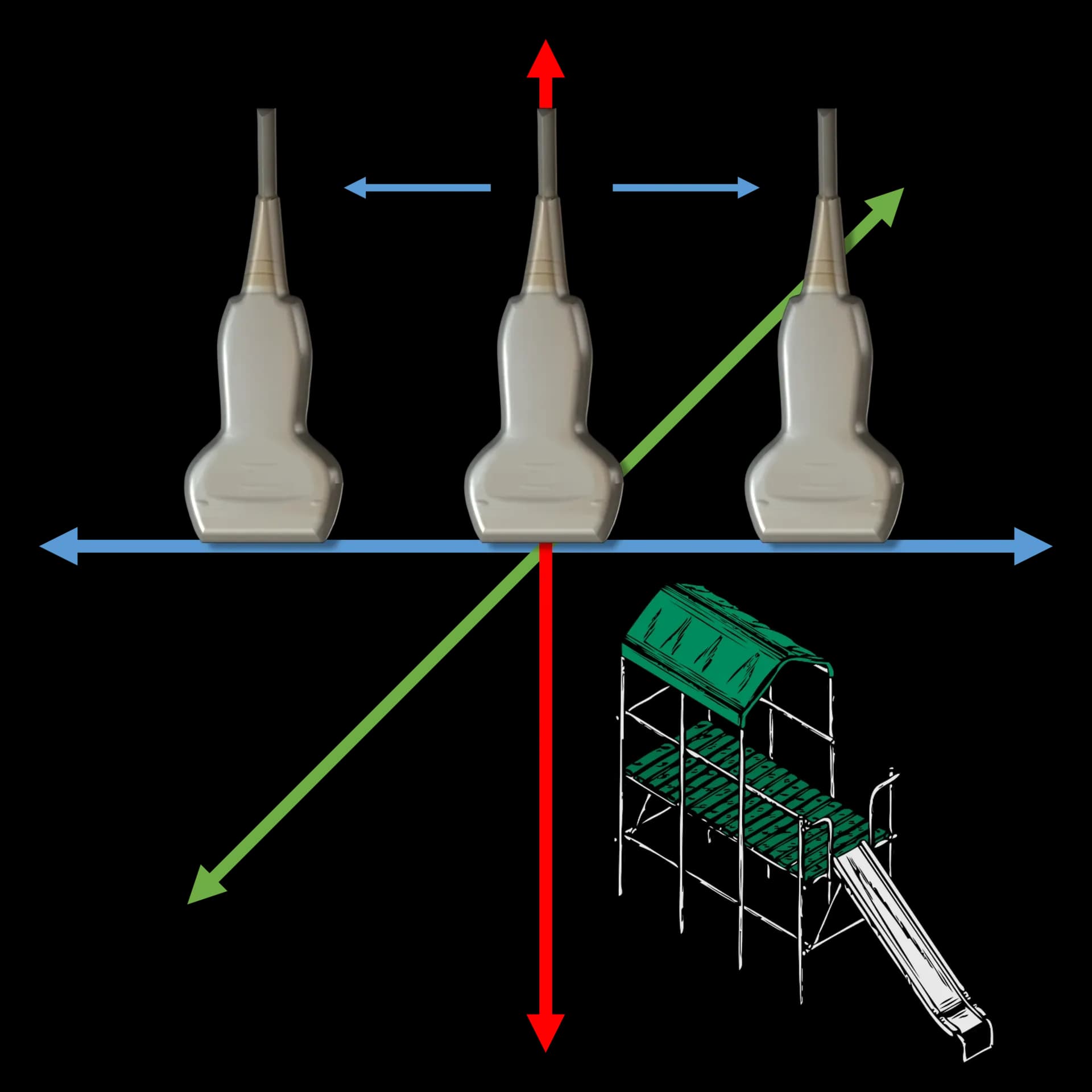
1. Sliding – smooth movement of the probe across the skin without changing orientation or tilt. Allows continuous tracking of anatomical structures, their course and spatial relationships. Suitable for tracing tendons, muscles, nerves and vessels, and for searching for focal changes.
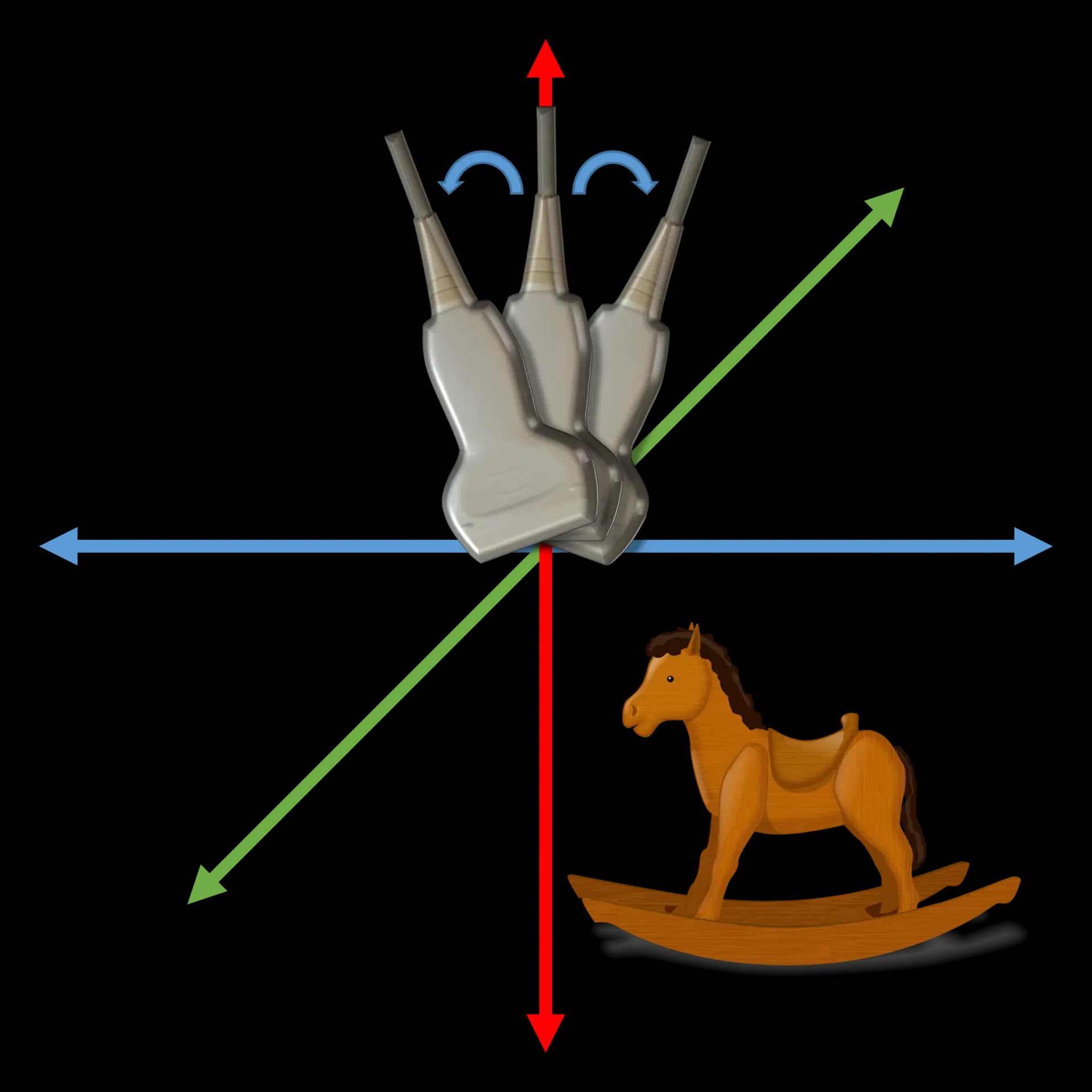
2. Rocking (heel–toe) – tilting the probe to one edge and the other without moving it across the skin. Changes the angle of beam incidence and helps suppress anisotropy, mainly in tendons and ligaments. Facilitates differentiation of artifacts from actual pathology.
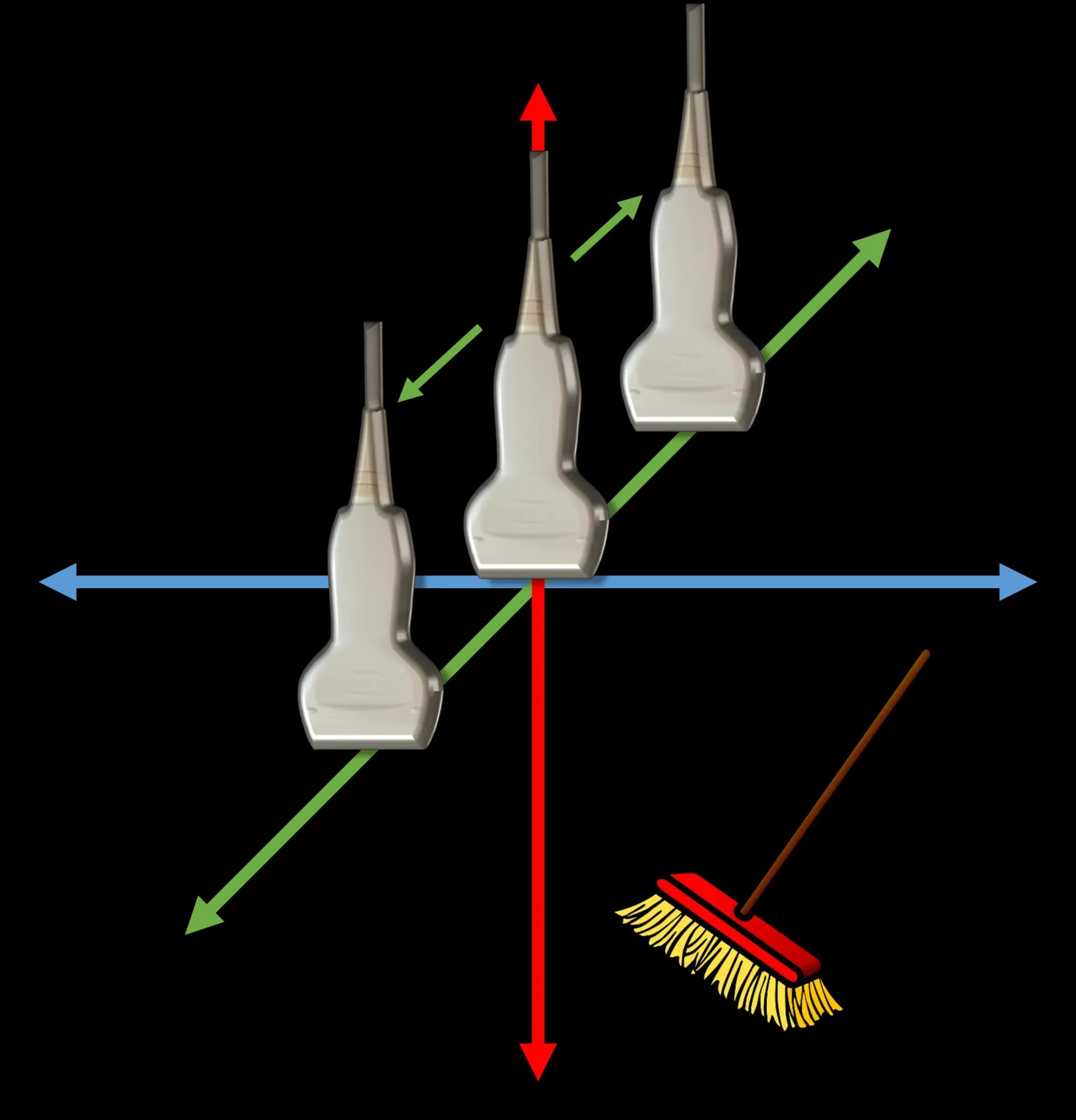
3. Sweeping – moving the probe perpendicular to its long axis without changing tilt or orientation. Displays the area in a series of adjacent sections and helps systematically search for pathologies. Suitable for evaluating muscles, tendons, nerves, and fluid collections.
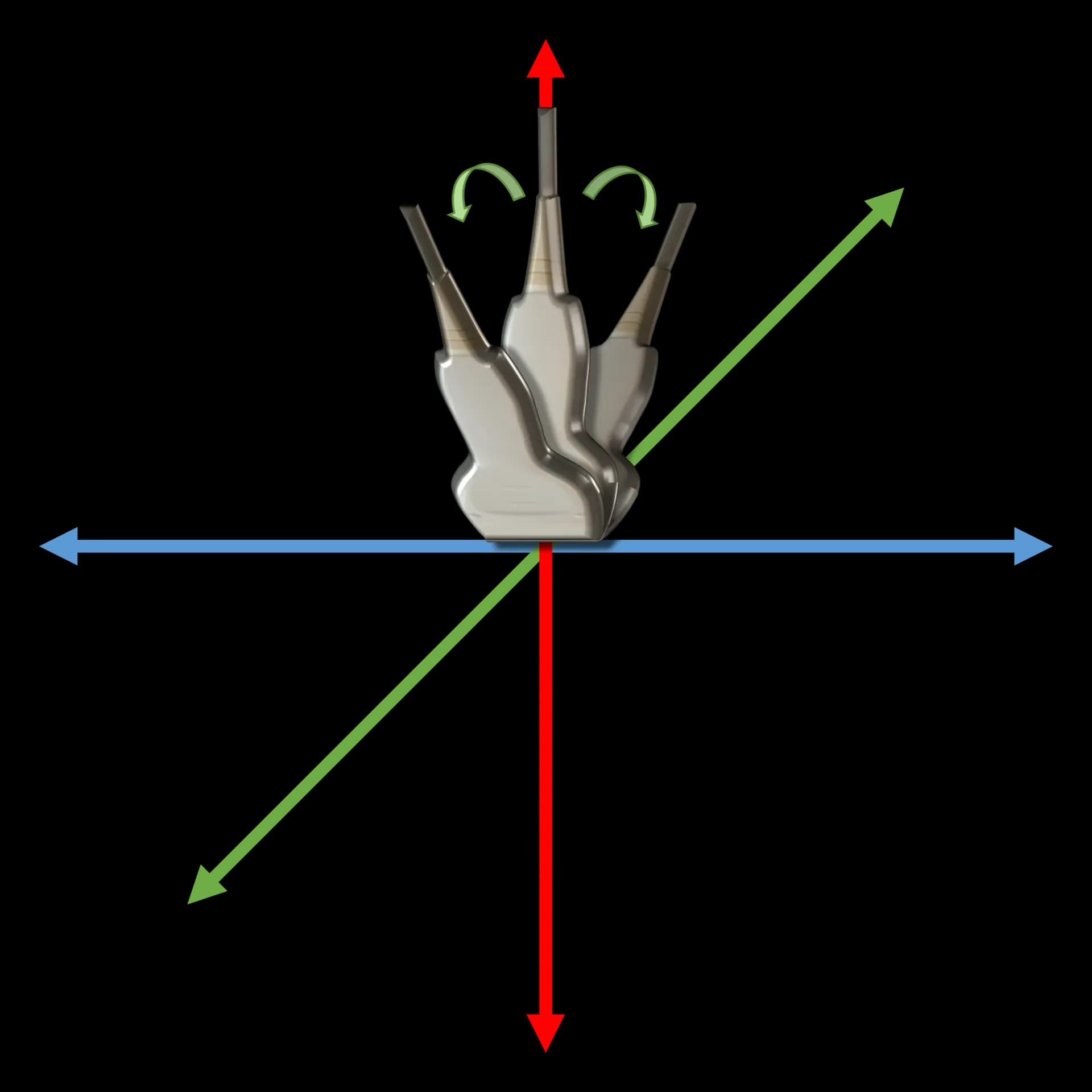
4. Fanning – tilting the probe along the short axis while maintaining the same skin contact point. Used to optimize the insonation angle, especially for structures prone to anisotropy. Helps better visualize fiber continuity and the edges of tendons or ligaments.
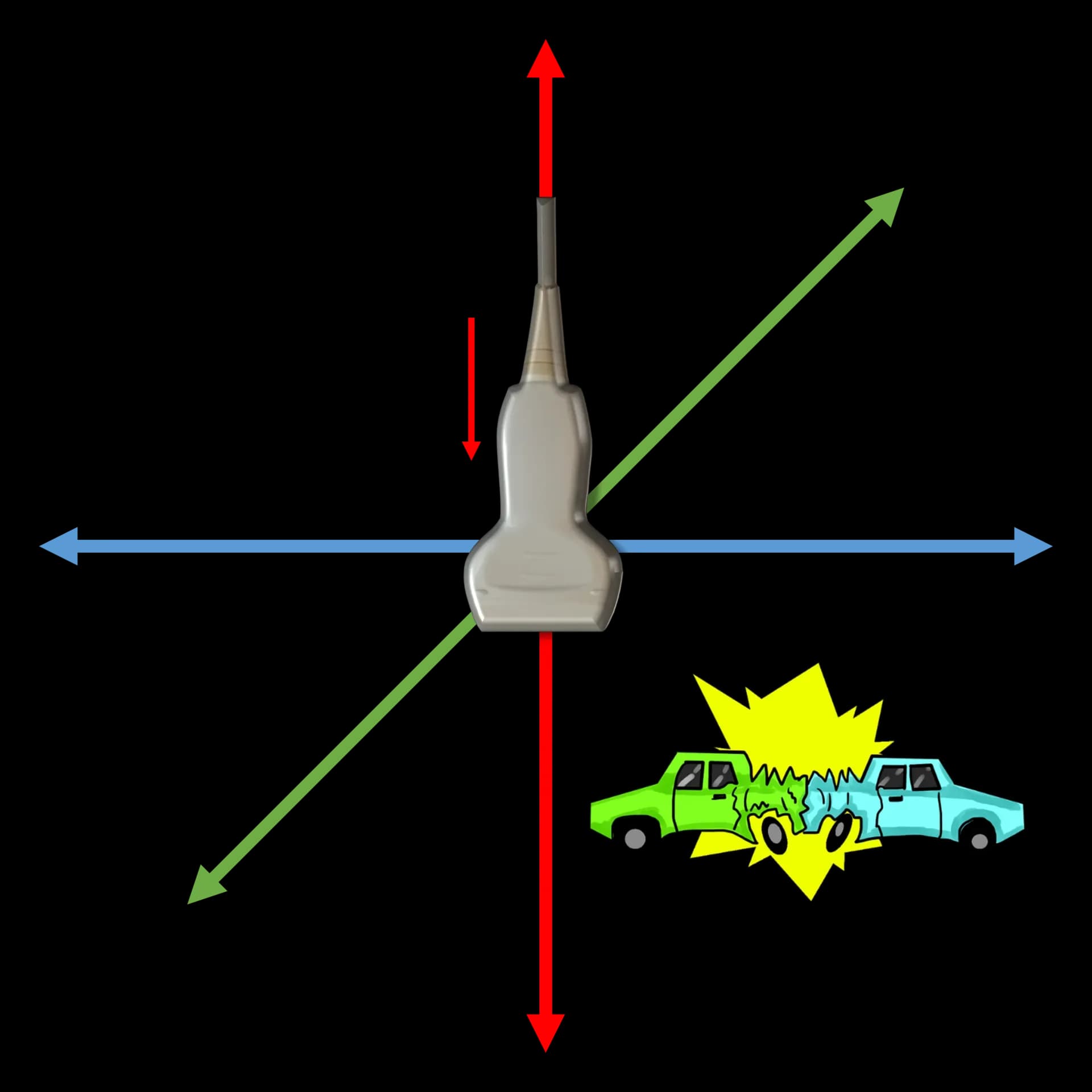
5. Compression – controlled pressure with the probe perpendicular to depth. Allows assessment of tissue compressibility and differentiation of fluid from solid structures. Also used in sonopalpation or eliciting the sono-Tinel sign.
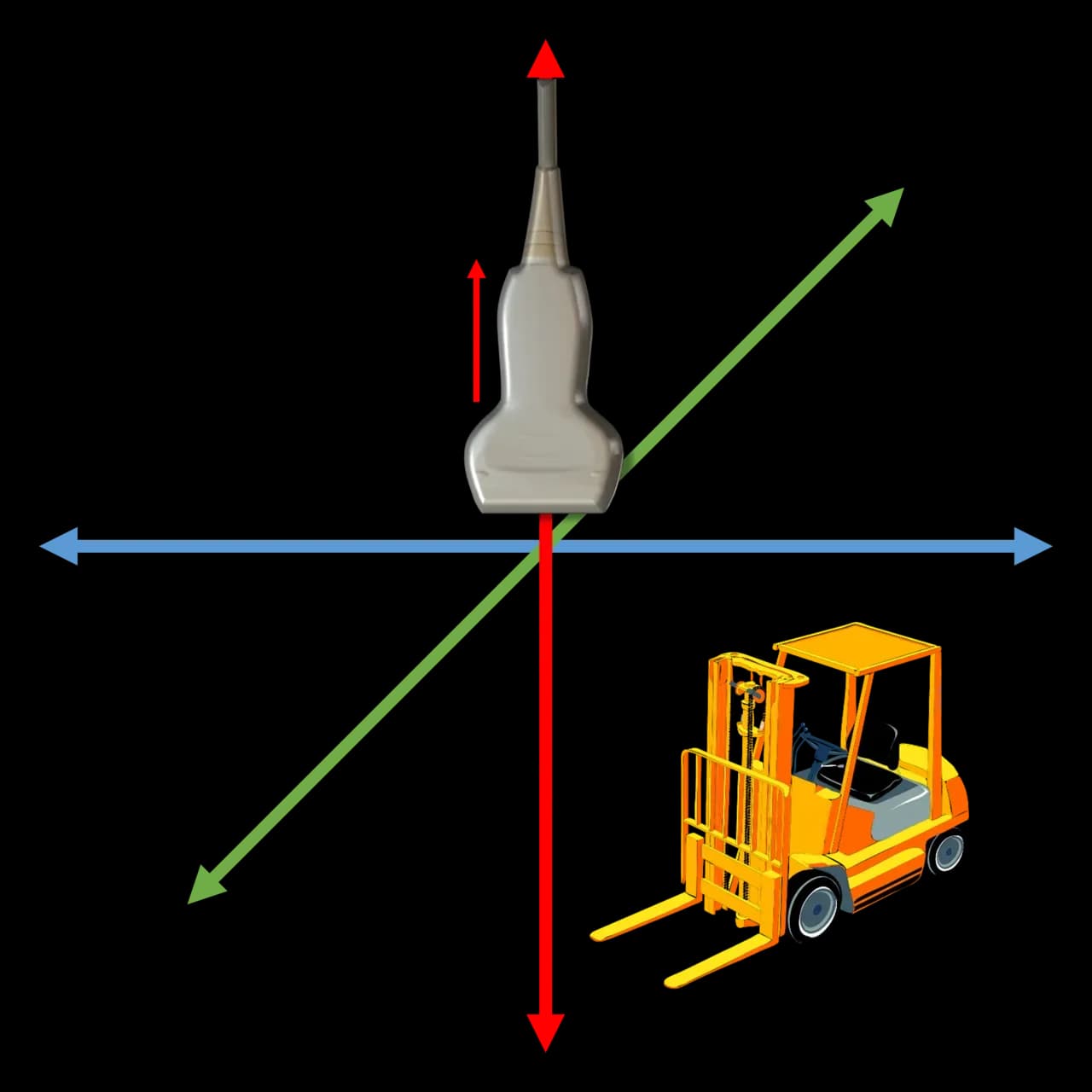
6. Decompression – releasing probe pressure on the examined area. This is essential mainly when evaluating vessels, which re-expand after pressure release. It also improves visualization of fluid collections.
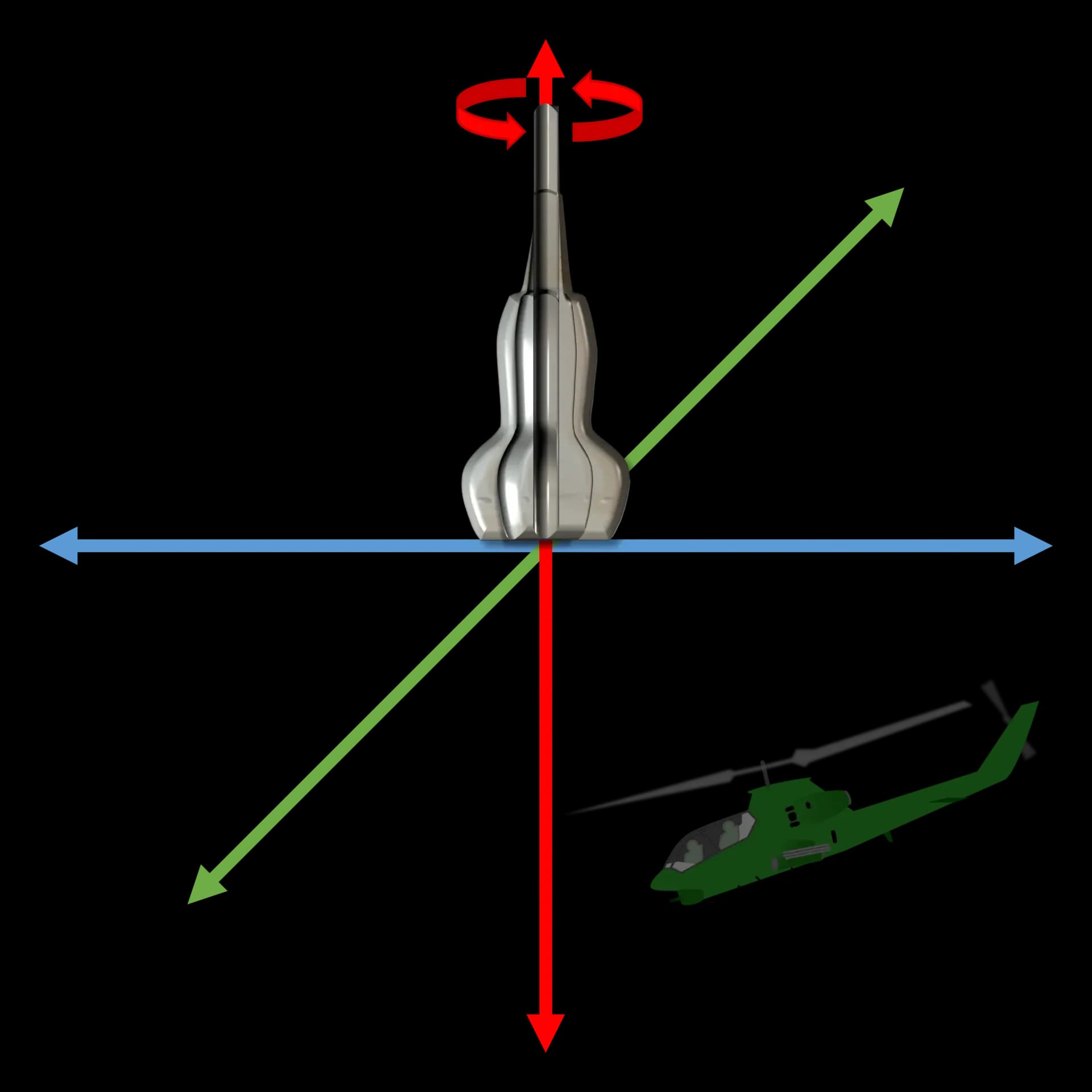
7. Rotation (helicopter) – rotating the probe around its center without moving it across the skin. Allows smooth transition of the imaging plane from transverse to longitudinal and vice versa. Important for following structural continuity and proper spatial orientation.
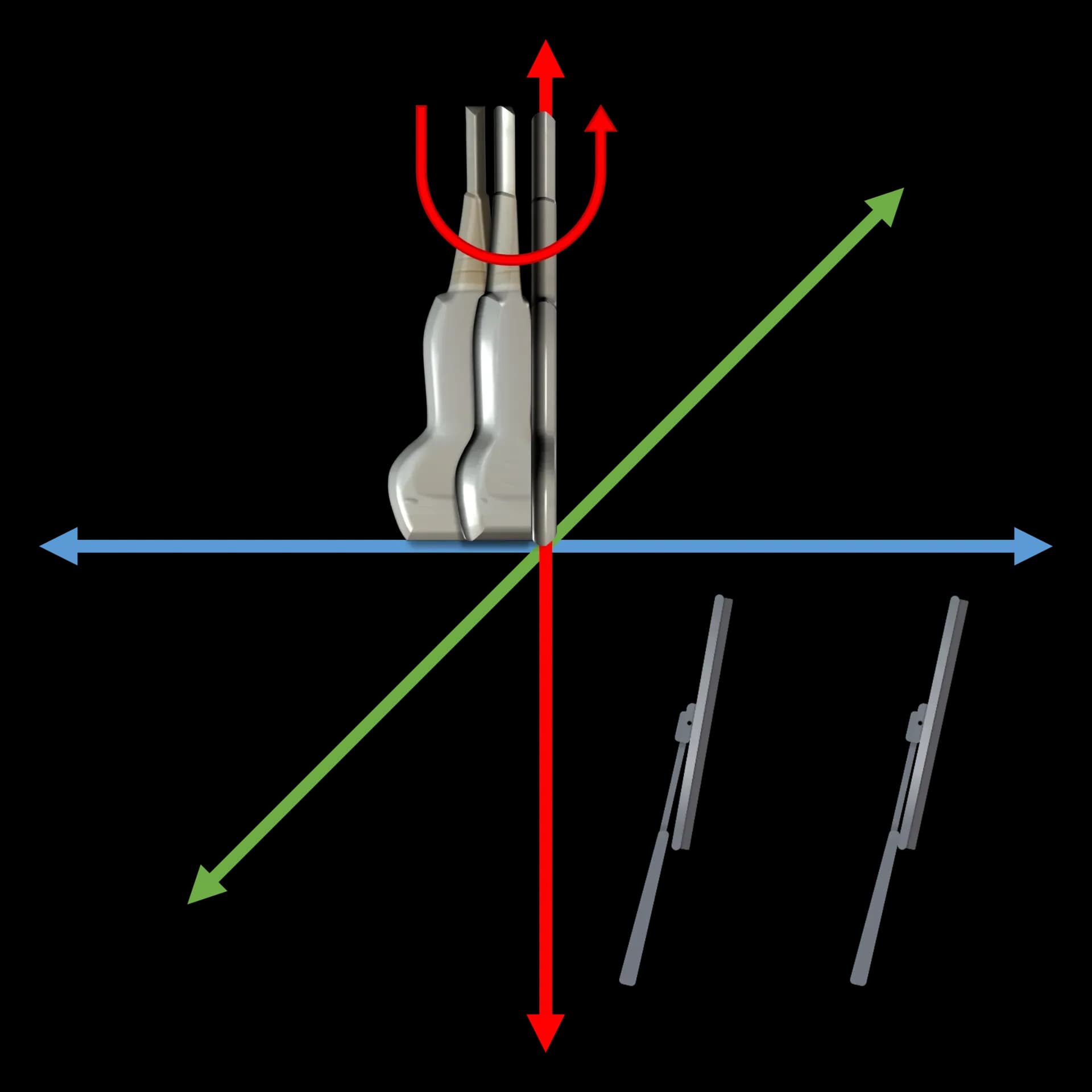
8. Wiper (sweeping, fanning) – one side of the probe remains fixed, the other traces an arc. Changes the angle of insonation while maintaining the reference point. Particularly useful in areas with complex anatomy or fan-like arrangement of structures.