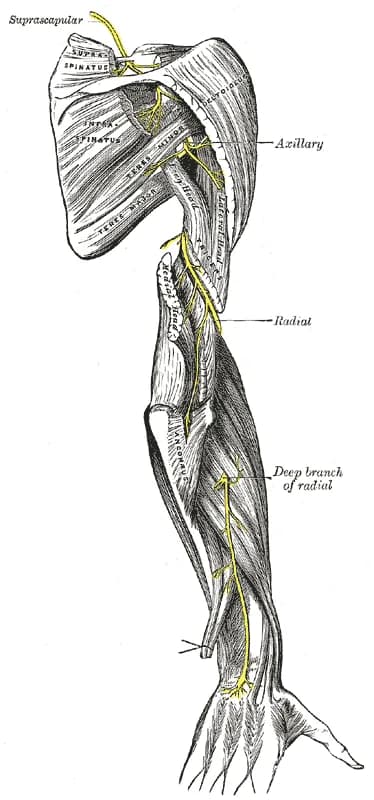
Ultrasound of the radial nerve is very useful in lateral elbow pain, extensor weakness, and after arm trauma because it clearly shows the nerve in the radial groove, the division point in the cubital fossa, and the deep branch beneath the arcade of Frohse. This helps reveal entrapment, traction injury, or scarring and also distinguish radial neuropathy from isolated lateral epicondylar tendinopathy. It is also important after humeral fractures or when posterior interosseous nerve syndrome is suspected, because ultrasound helps define the exact level of involvement and the nerve's relationship to surrounding fascial and muscular structures.
 MSK Academy