 MSK Academy
Anatomy
Written by Jakub Jacisko, MD, PhDUpdated
The shoulder is the most mobile joint complex in the body. The large range of motion improves function, but also reduces stability, which is why the shoulder is a common site of injury. For ultrasound, orientation to bony landmarks and tendon attachments is essential.
Bony Landmarks
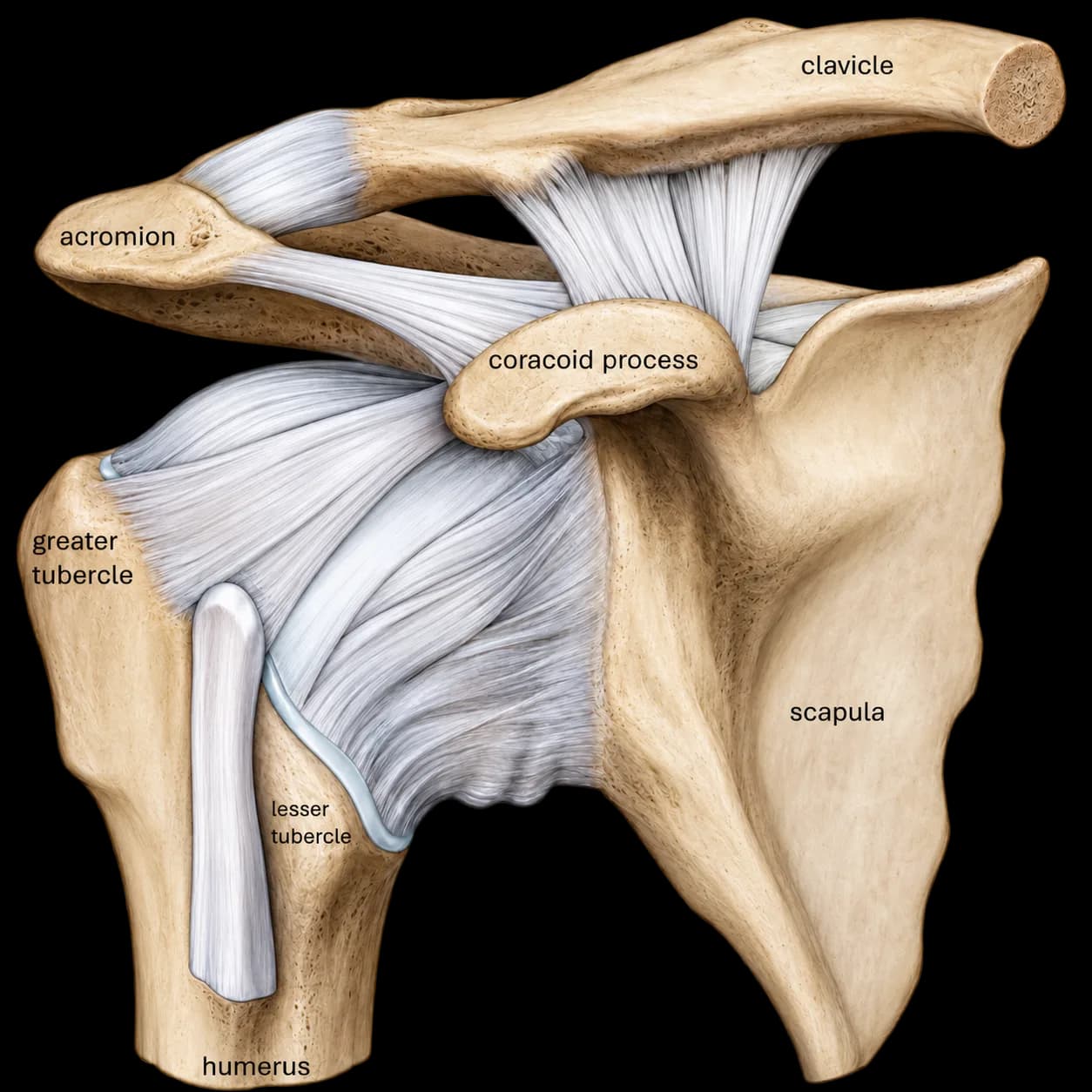
Bony landmarks are fundamental reference points during scanning. They help guide the probe correctly and quickly distinguish normal anatomy from pathology.
- Clavicle - anterior support and a guide for AC and SC joints.
- Acromion - the superior bony roof of the shoulder.
- Coracoid process - anterior landmark for biceps and subscapularis scanning.
- Greater tuberosity - insertion site of supraspinatus, infraspinatus, and teres minor.
- Lesser tuberosity - insertion of subscapularis.
- Intertubercular (bicipital) groove - pathway of the long head of the biceps.
- Scapular spine - posterior orientation ridge of the scapula.
Muscles
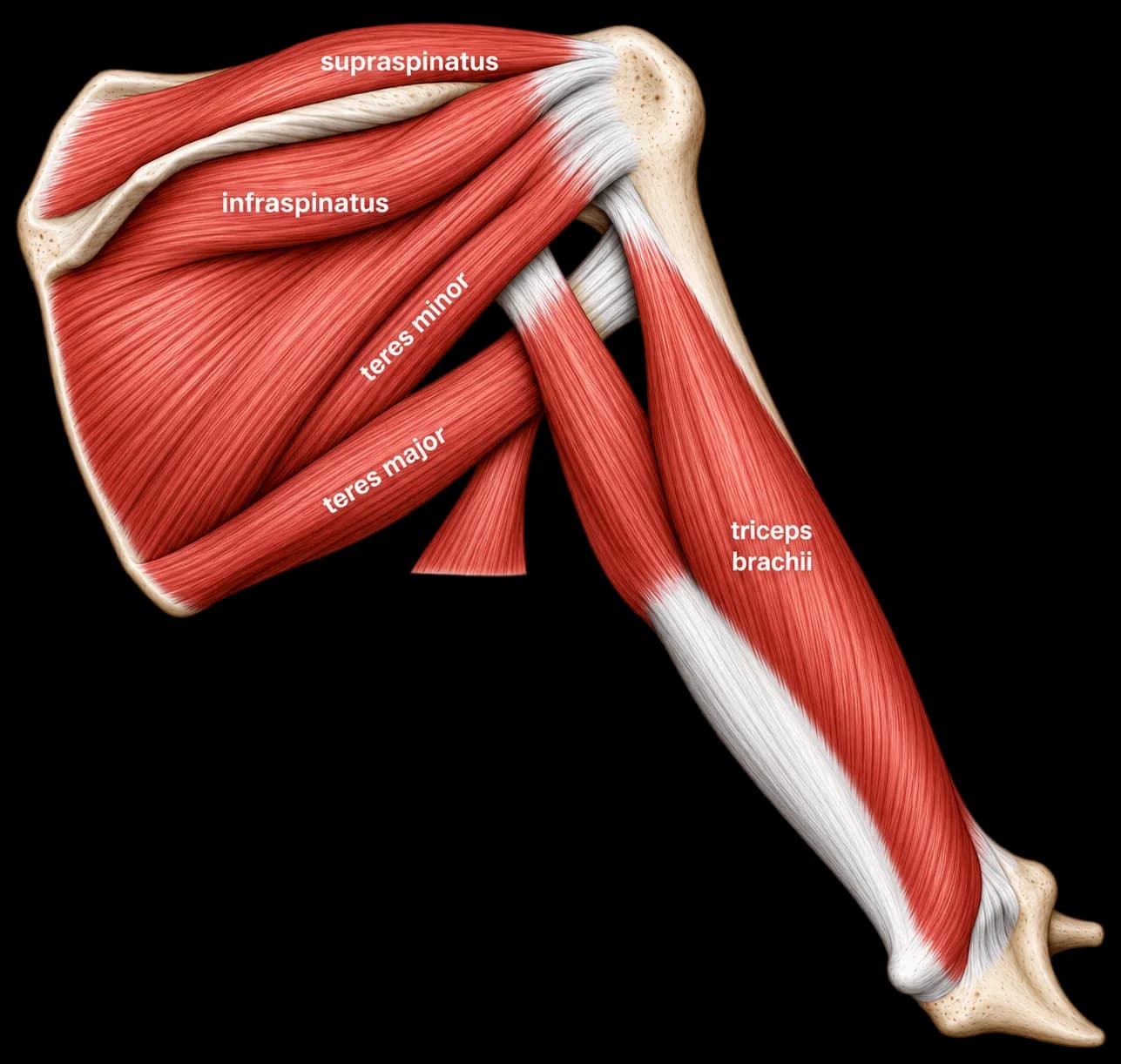
Rotator cuff
- Subscapularis - internal rotation.
- Supraspinatus - initiates abduction.
- Infraspinatus - external rotation.
- Teres minor - external rotation and adduction.
Other important muscles
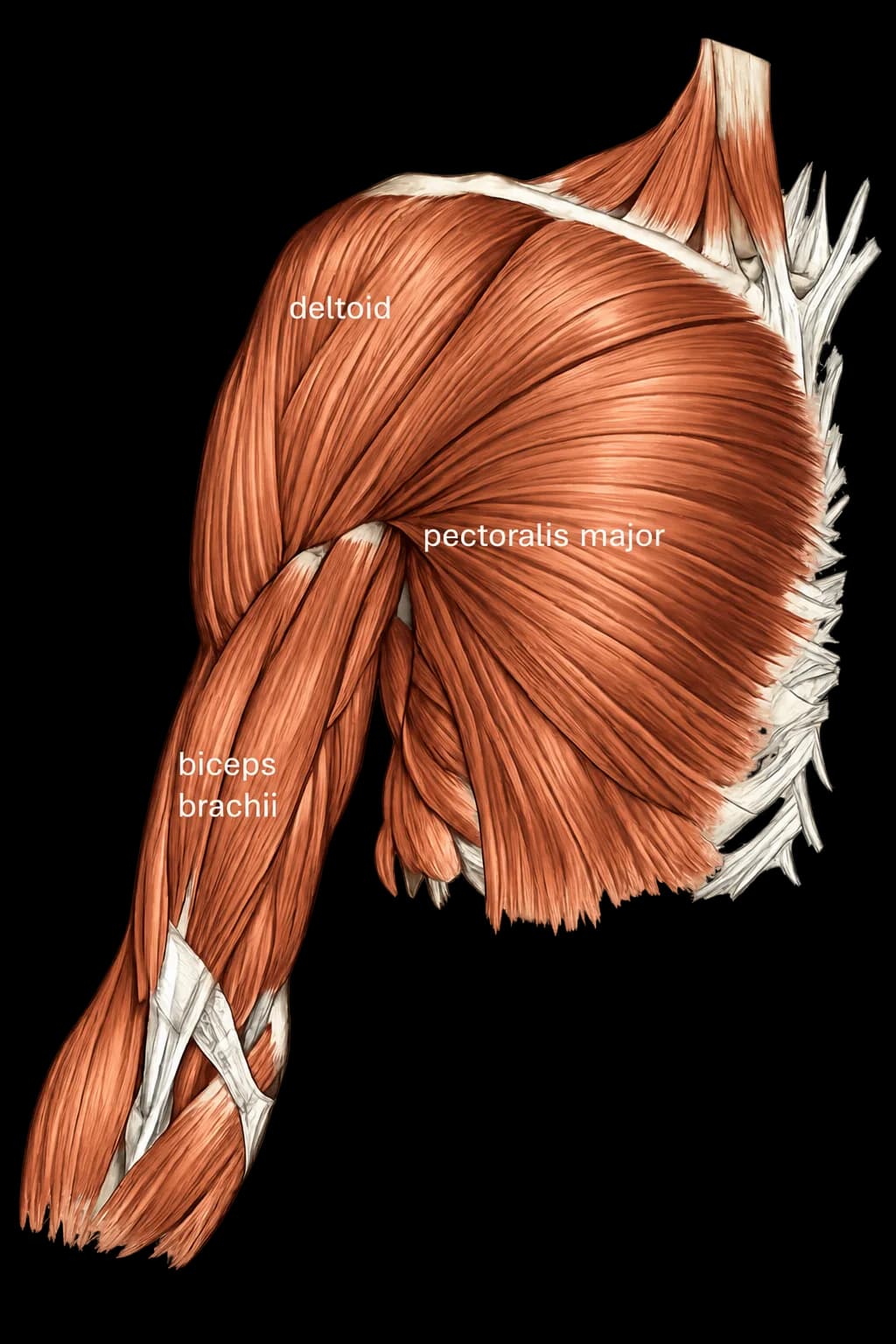
- Deltoid - primary abduction with anterior/posterior fibers assisting flexion and extension.
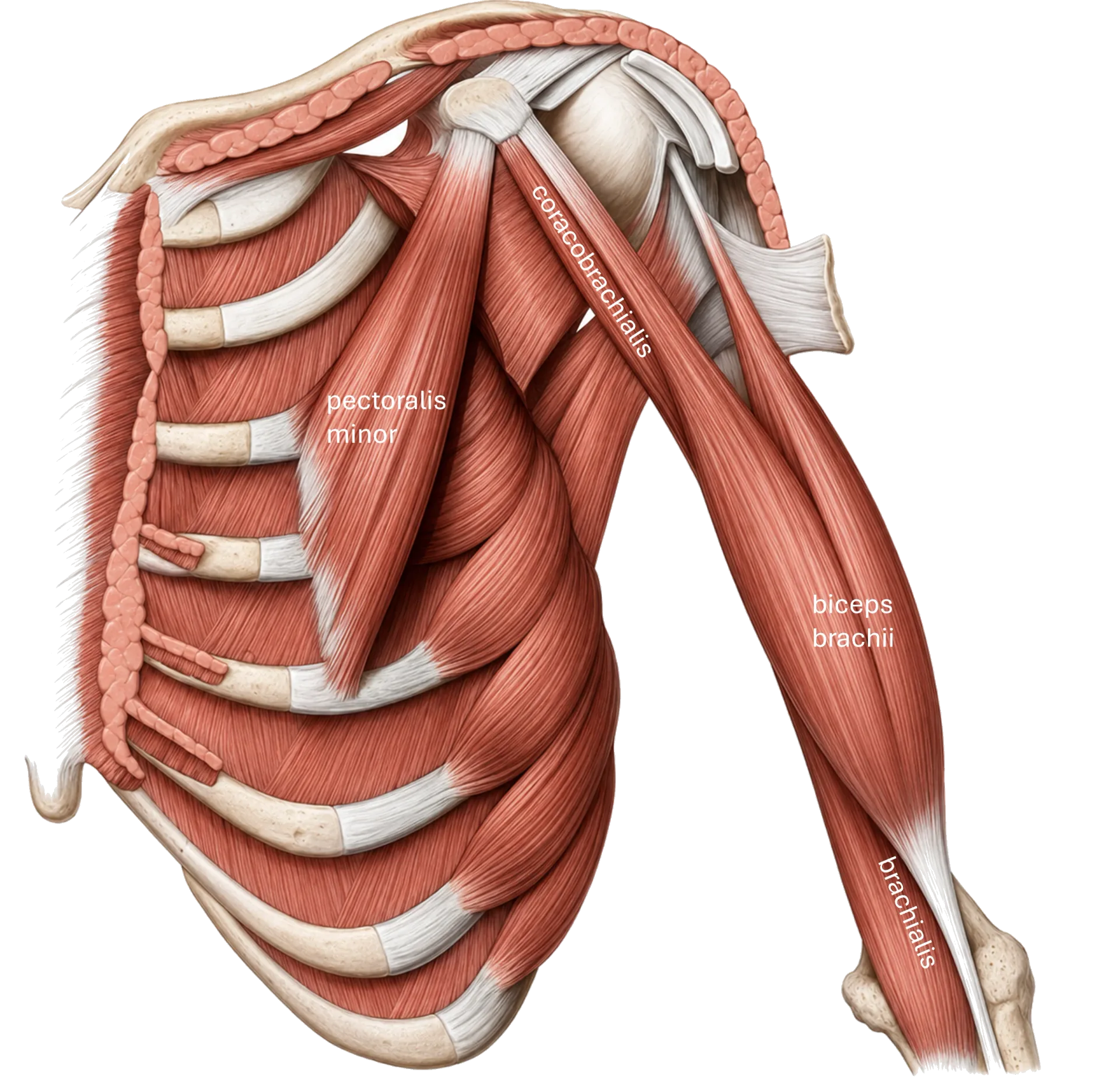
- Long head of biceps - shoulder stabilization with flexion and supination support.